
There is a particular kind of memory that only adventure travel makes. Not the postcard — the body memory: the burn in your thighs on the fourth switchback, the cold that gets into your fingers above 4,000 meters, the moment the cloud lifts and the thing you came for is simply there, enormous and indifferent and yours to look at. You cannot get that from a viewpoint you drove to. You have to earn it, and the earning is the point.
This is a list for people who understand that. It is organized not by geography but by the shape of the effort — the long walks, the high climbs, the deep water — because the way an adventure asks something of you matters more than where it sits on a map. Some of these you could do next season with a decent base of fitness. Others deserve years of anticipation. All of them are worth building a trip, and maybe a little of your life, around.
A word on the numbers that follow. Every distance, duration and altitude here comes from operators and trekking guides who run these routes, and they matter more than they might seem: the gap between a four-day and a five-day itinerary, or between a five-day and an eight-day summit push, is often the gap between a triumph and a miserable failure. Adventure travel rewards respect for the specifics. Read them, train for them, and the trip will meet you where you are.
The great treks: walking as pilgrimage
If there is a single trip that belongs at the top of a hiking bucket list, it is the W Trek in Chile's Torres del Paine. Over four to five days it traces a rough "W" through three glacial valleys — Grey, French and Ascencio — covering roughly 80 kilometers past the colossal Grey Glacier, the hanging glaciers of the French Valley, and the granite towers that give the park its name, all while sleeping in a chain of mountain refugios that mean you carry a light pack rather than a full expedition load.

The W Trek in Torres del Paine covers approximately 80 kilometers over four to five days, linking the Grey, French and Ascencio valleys, with daily distances of 15 to 22 kilometers, according to Patagonia Hub's trekking guide. [2]
The Inca Trail to Machu Picchu is the pilgrimage every hiker knows: the classic route runs 42 kilometers over four days, and its power lies in the finish — arriving on foot through the Sun Gate at dawn to see the ruins emerge from the mist, exactly as its builders intended. For those who want more mountain and fewer people, the Salkantay Trek is the alternative, a wilder 74-kilometer, five-day route that climbs to a 4,600-meter pass beneath Salkantay's ice before descending into cloud forest toward the same destination. Europe's answer is the Tour du Mont Blanc, a roughly 170-kilometer circuit of the Mont Blanc massif through France, Italy and Switzerland — village-to-village walking with real beds and enormous dinners, the civilized end of the epic-trek spectrum.
- The W Trek, Patagonia (Chile) — ~80 km, 4–5 days; glaciers, granite towers, refugios.
- Inca Trail, Peru — 42 km, 4 days; the Sun Gate arrival into Machu Picchu.
- Salkantay Trek, Peru — 74 km, 5 days; a wilder, higher, less-crowded route to Machu Picchu, topping out at 4,600 m.
- Tour du Mont Blanc — ~170 km through France, Italy and Switzerland; hut-to-hut alpine walking.
One planning note that catches out first-timers: the Inca Trail is the most heavily regulated of these. Permits are strictly capped, sell out months ahead, and cannot be bought independently — only licensed operators registered with Peru's SERNANP can secure them — so a spontaneous booking is simply impossible in high season. If your heart is set on walking through the Sun Gate, plan six to eight months out; if you miss the window, the Salkantay route needs no permit at all and many hikers end up preferring its wildness.
Inca Trail permits are strictly limited, cannot be purchased by independent hikers, and are available only through licensed tour operators registered with Peru's SERNANP, with operators advising booking six to eight months in advance for the classic four-day route. [4]
High altitude: the mountains that make you small
The Everest Base Camp trek is the most famous high-altitude walk in the world, and deservedly so. From the airstrip at Lukla it covers roughly 130 kilometers round trip over 12 to 14 days, climbing through the Sherpa villages of Namche Bazaar and Tengboche to a high point of 5,545 meters at Kala Patthar, the viewpoint above base camp where the sunrise on Everest's summit turns the whole massif gold. The distance is modest; the altitude is everything, which is why the standard itinerary builds in mandatory acclimatization days rather than rushing.
The Everest Base Camp trek covers approximately 130 kilometers round trip from Lukla over 12 to 14 days, reaching a high point of 5,545 meters at Kala Patthar, with built-in acclimatization days at Namche Bazaar and Dingboche, according to Endless Sherpa Adventures. [3]
Kilimanjaro's routes each strike a different bargain between comfort, scenery and success. The gradual eight-day Lemosho route posts the highest summit rates and the finest views; the crowded five-day Marangu, with its dormitory huts, is cheaper and faster but succeeds barely half the time; the Northern Circuit, longest of all, offers the best acclimatization and near-empty trails. The mountain is walkable by any reasonably fit person — there is no rope, no crampon, no technical skill required — which is precisely why so many underestimate it. Altitude, not terrain, is the whole difficulty.
For those who want the Himalaya without the crowds, the Kanchenjunga region of far eastern Nepal is the connoisseur's choice — the world's third-highest mountain at 8,586 meters, reached on rough trails through bamboo and rhododendron forest, with simple teahouses and a genuine sense of seclusion that the Everest route long ago lost. And on a different continent entirely, Kilimanjaro remains the great non-technical high-altitude prize: at 5,895 meters it is the highest point in Africa, walkable by anyone fit enough to endure the cold and the thin air, with the multi-day approach doing double duty as your acclimatization.
Kilimanjaro also teaches the single most important lesson of high-altitude travel in the clearest possible terms: time on the mountain beats fitness. Overall summit success hovers around 65% across all routes, but that average conceals an enormous spread — climbers on rushed five-day itineraries summit barely half the time, while those who take eight or nine days, giving their bodies room to acclimatize, reach the top at rates above 85%. The mountain does not reward hurrying, and neither does any objective at altitude. Choose the longer itinerary; your summit odds roughly double.
Mount Kilimanjaro's overall summit success rate is around 65%, but it ranges from roughly 50% or below on five-day routes to over 85% on eight- and nine-day itineraries, with Uhuru Peak standing at 5,895 meters, the highest point in Africa, according to Kilimanjaro operator and summit-data analyses. [6]
Below the surface: the world's great dives
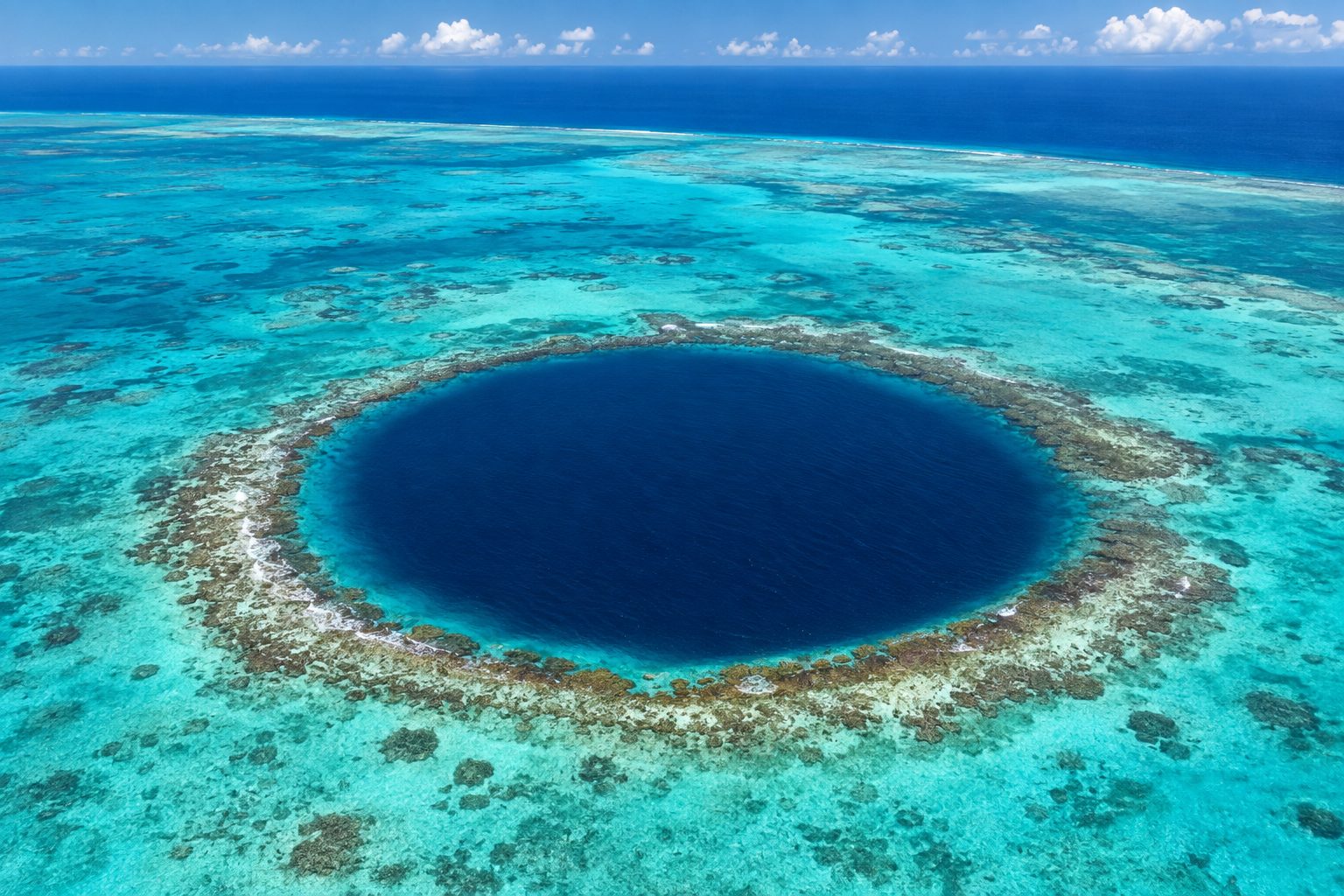
Adventure isn't only vertical. Some of the most transformative trips happen underwater, and none more so than diving the Galápagos, where the convergence of cold and warm currents draws hammerhead schools, marine iguanas, sea lions and whale sharks into an ecosystem found nowhere else on earth — a live-aboard trip here is one of the few dive experiences that genuinely rivals its own reputation. Australia's Great Barrier Reef, for all the headlines about its fragility, remains the largest living structure on the planet and an unmissable dive, especially on the outer reef and the Ribbon Reefs where the coral and pelagic life are at their richest.

That reef is under real pressure — climate-driven bleaching events have hit it repeatedly — which is one more argument for diving it thoughtfully and soon, with an operator committed to reef-safe practices. Its scale is genuinely hard to grasp: a structure so vast it is visible from space, built by billions of tiny coral polyps over millennia. To hang weightless above it as a turtle glides past is to feel, briefly, like a guest in a world that predates and will outlast you.
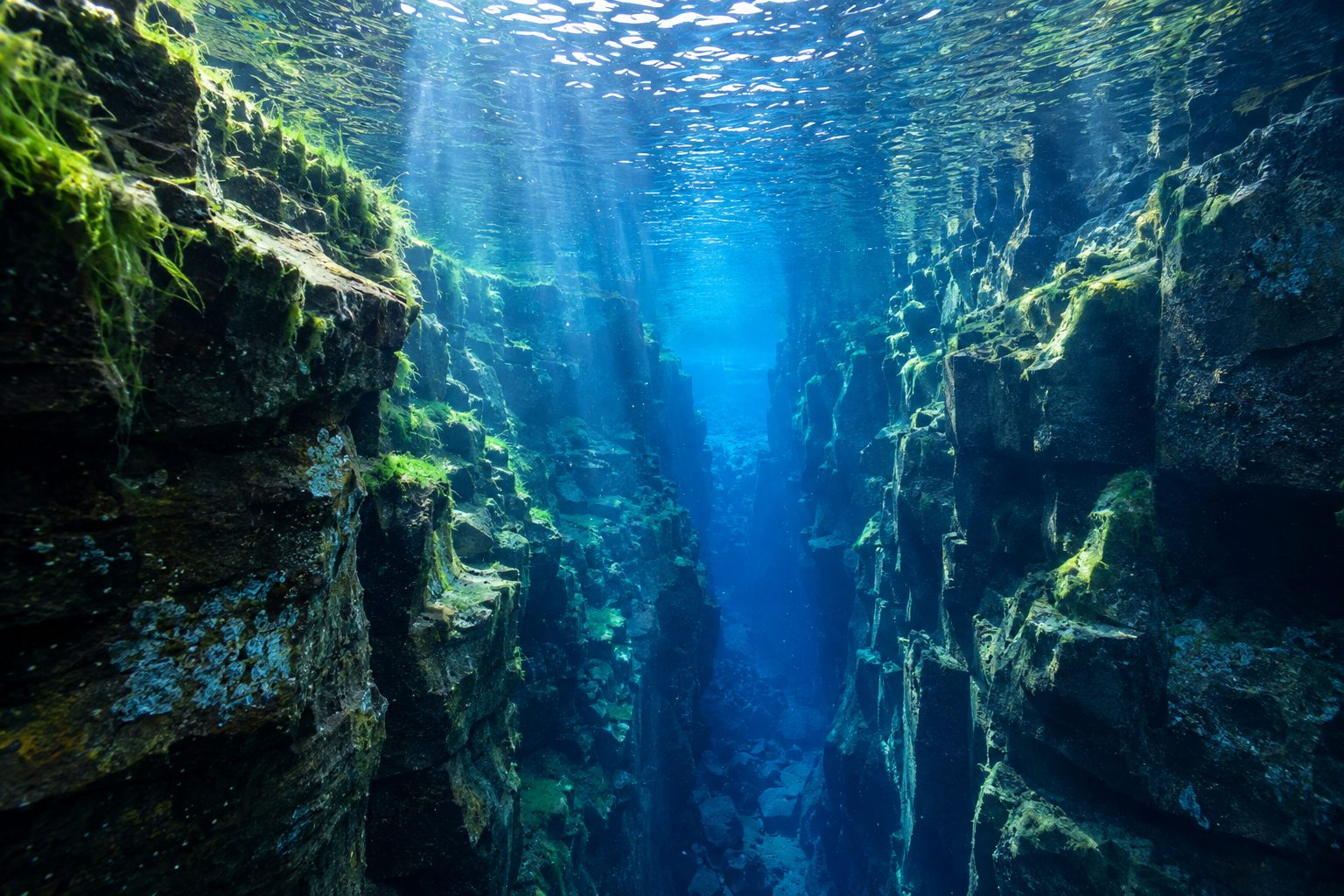
For sheer strangeness, the cenotes of Mexico's Yucatán offer freshwater cave diving through crystalline sinkholes strung with light beams, and Iceland's Silfra fissure lets you dive between two tectonic plates in water so clear the visibility runs past 100 meters. These are trips that reward certification and a little experience — but the barrier to entry is lower than the payoff suggests, and the sensation of weightlessness in a great dive site is its own kind of summit.
The Great Barrier Reef spans over 344,400 square kilometers — an area roughly the size of Japan — and is recognized as the largest living structure on Earth, according to WWF Australia and the U.S. National Ocean Service. [7]
The best adventures don't just show you a place — they change the scale at which you understand yourself. You come home smaller, in the good way.
— Priya Raman
Wild water and open road: paddling and expedition
Whitewater rafting delivers a compressed, adrenal version of the multi-day expedition, and the Grand Canyon of the Colorado is its ultimate expression — a multi-week float through 277 river miles of the canyon, camping on beaches beneath a mile of geological time, running rapids that have humbled far better paddlers than most of us. Closer to home for many, the whitewater of Japan's Iya Valley on Shikoku offers a wilder, greener day-trip version amid mountains and historic farmhouses, one of the country's premier rafting destinations.
Then there is the expedition proper — the trip that is mostly about getting somewhere the road doesn't go. An expedition cruise to Antarctica has become the defining bucket-list voyage of the era, crossing the Drake Passage to a continent of penguins, whales and unimaginable silence; visitor numbers have climbed steeply, with roughly 120,000 people traveling to Antarctica in the 2023–24 season and forecasts suggesting that figure could double by 2033. The lesson embedded in that statistic is the one that should shape any adventure list: the wildest places are also the most fragile, and the privilege of reaching them carries an obligation to tread lightly and go before the crowds — or the changes — arrive.
Approximately 120,000 people traveled to Antarctica in the 2023–24 season, a figure estimated to double by 2033, according to Fodor's Travel data reported by USA Today. [5]
Beyond the marquee expeditions there is a whole tier of adventures that ask less of your calendar but just as much of your nerve. Sea kayaking among the fjords and glaciers of Alaska's Kenai coast, cycling the length of Vietnam or the wine roads of the Caucasus, canyoning through the slot canyons of the American Southwest, dog-sledding across the Norwegian Arctic under the aurora — each delivers the essential adventure-travel transaction of discomfort exchanged for a memory that won't fade. The point is not the extremity; it is the moment the effort tips into something you'll be telling people about for the rest of your life.
You don't have to do all twelve. You probably shouldn't try. Pick the one whose particular difficulty speaks to you — the long walk, the thin air, the deep water, the far edge of the map — and give it the training and the anticipation it deserves. The trip will be hard in exactly the way you hoped, and the memory it leaves will outlast almost everything else you buy this decade.
Sources & further reading
- 1. The W Trek in Torres del Paine — Swoop Patagonia
- 2. W Trek Torres del Paine (2026) Complete Multi-Day Hiking Guide — Patagonia Hub
- 3. Everest Base Camp Trek Itinerary 2026: 14-Day Guide — Endless Sherpa Adventures
- 4. Inca Trail Permits in 2026: What Changes This Year — Yapa Explorers
- 5. 8 destinations that you should rethink visiting in 2026 (Fodor's No List) — USA Today
- 6. Kilimanjaro Success Rate 2026: By Route, Days & Tips — Duma Explorer
- 7. Great Barrier Reef: Why It Matters & How We Can Protect It — WWF Australia
- 8. Inca Trail vs Salkantay: Which Is Best? — Journey By Backpack