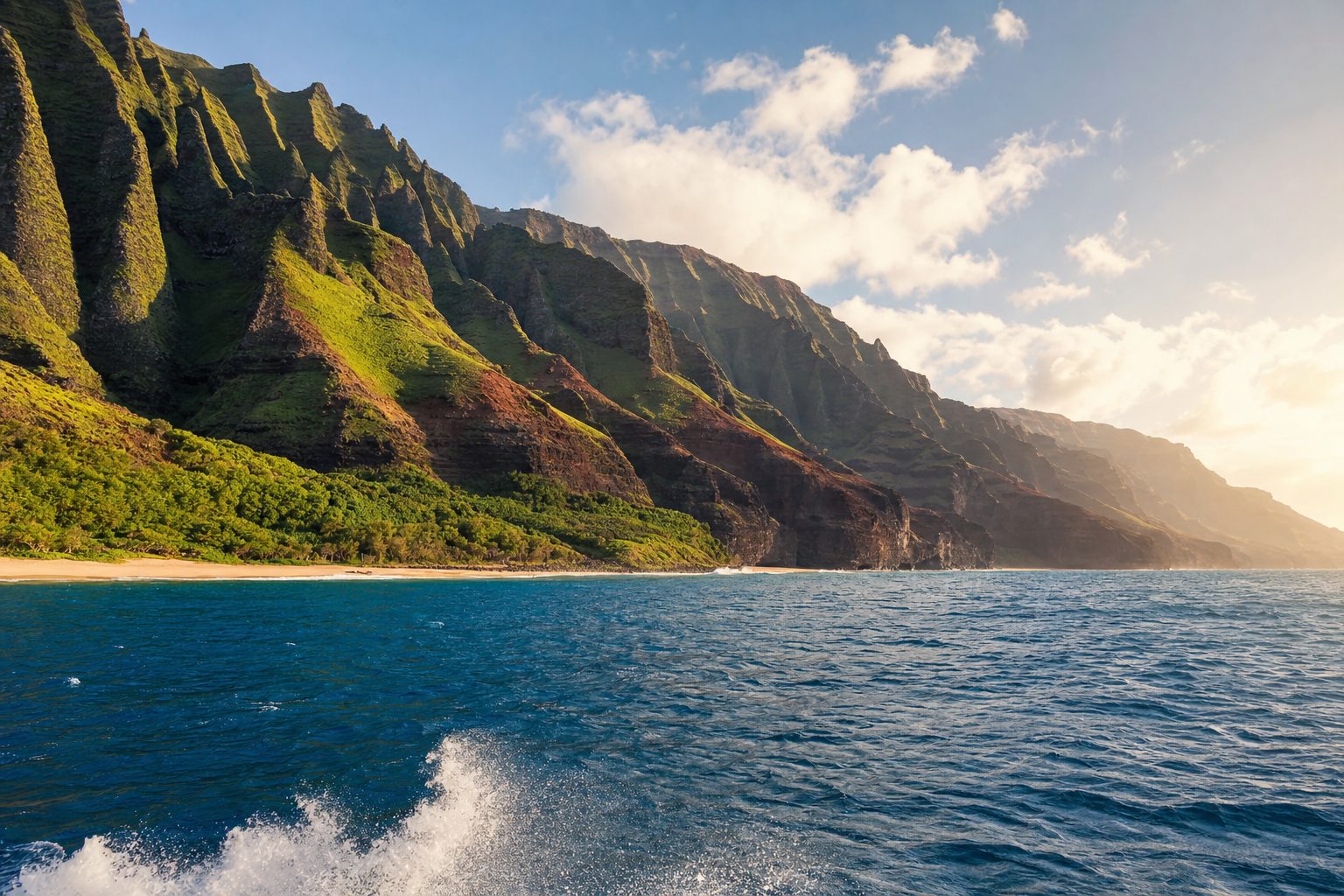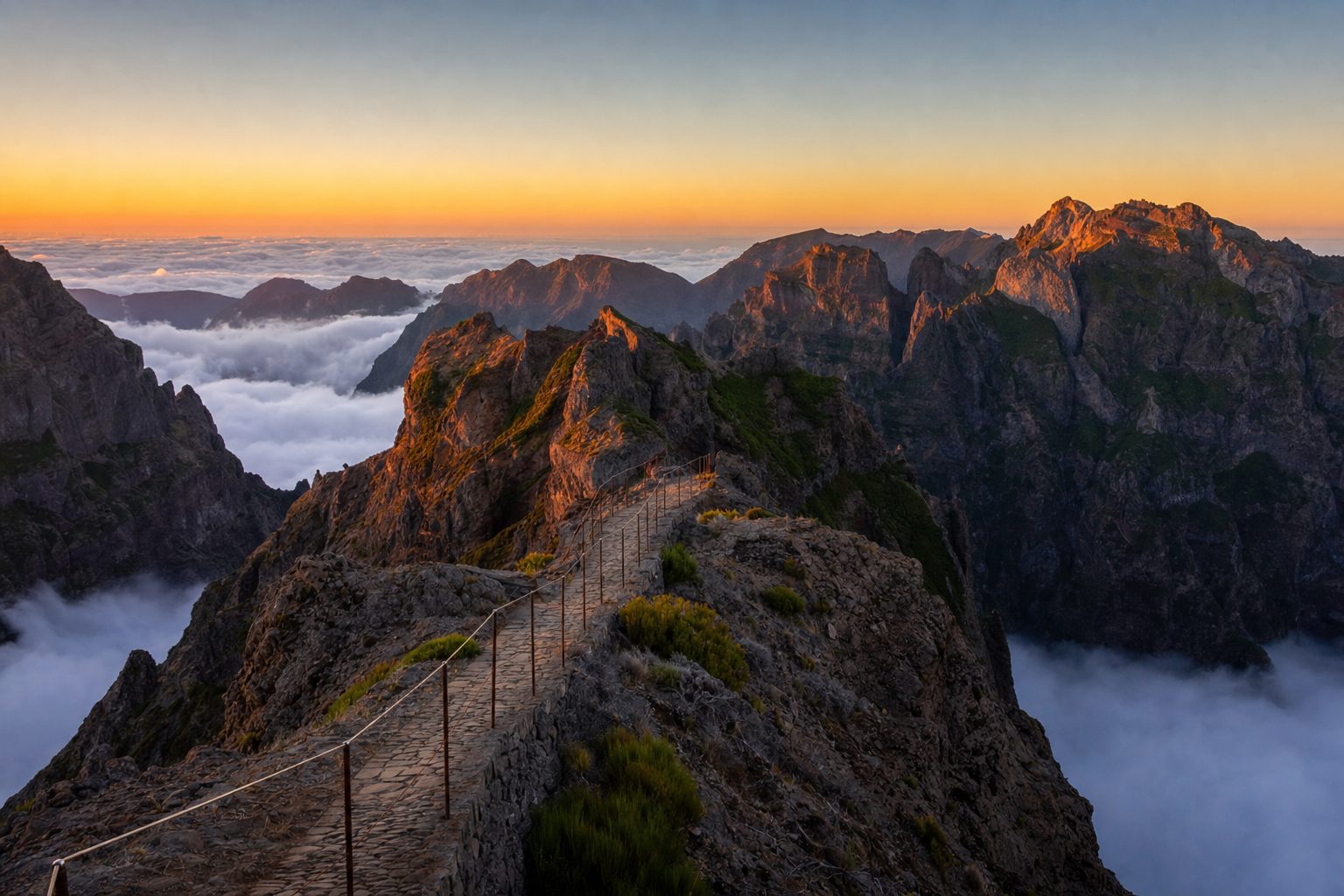

A coast is the one place on earth where geography argues with itself, and a good coastal road is a front-row seat to the fight. Cliffs shear into surf, headlands fold back on themselves, and the horizon keeps rearranging itself around every hairpin. The best of these drives are not simply pretty; they are engineered dares, cut into rock by people who decided a view was worth the trouble and the expense and, occasionally, the lives it cost to build. What follows is not a ranking so much as a survey — a circuit of the shorelines where the driving is as memorable as the destination, organized by the coasts that made them.
A caveat before we set out: the finest coastal roads are almost never about speed. They are about the discipline of stopping — pulling into the lay-by, killing the engine, and letting the place do its work. Every route below rewards the slow traveller and punishes the one in a hurry, and several of them, being cut into cliffs that the sea is actively trying to reclaim, close without warning. Treat the drive itself as the attraction rather than the connective tissue between attractions, and even a modest stretch of tarmac becomes one of travel's great pleasures. These are the ones worth planning a trip around.
The Pacific edge of North America
No stretch of tarmac has done more for the coastal-drive mythology than California's Highway 1. At 656 miles it is the longest state route in California and the second-longest in the United States, threading almost the entire Pacific coastline of the state before it fragments into five pieces broken up by US-101.
California State Route 1 runs 655.8 miles (1,055 km), making it the longest state route in California and the second-longest in the US after Montana Highway 200. [3]
The route's beating heart is Big Sur, the 90-odd-mile section where the Santa Lucia Mountains drop straight into the ocean and the road clings to the cliff on a shelf of its own making. It is also a reminder that these roads are fragile: a series of landslides and a road collapse closed a long stretch of the highway beginning in January 2023, a recurring hazard on a coast that is quite literally crumbling into the sea. Drive it north to south and the sun stays on the water; the light at Bixby Creek Bridge in late afternoon is the reason half of Instagram exists.
Further north, the North American Pacific keeps its drama but swaps the golden light for silver. British Columbia's Vancouver Island runs to the wild surf town of Tofino, where the shoreline is all rainforest, tide pools and winter swell — a moodier, greener cousin to the Californian original.
Highway 1's genius is its variety over those 656 miles. The southern run through Malibu is all convertible-and-sunglasses glamour; the central section past San Simeon delivers elephant seals hauled out on the sand below Hearst Castle; and the far north, where the road becomes US-101 and plunges into the redwoods of Mendocino and Humboldt, trades cliffs for fog-drenched forest that meets the surf. Purists argue the finest single stretch is the run from Carmel to Big Sur's Nepenthe, where the road, the Santa Lucias and the Pacific compress into something close to the platonic ideal of a drive.
There is a case, too, for treating the entire American Pacific as one continuous route. The wider Pacific Coast Highway — Highway 1 in the south, US-101 in the north — runs some 1,650 miles from Port Townsend, Washington, all the way to San Diego, taking in Oregon's Cannon Beach and its offshore Haystack Rock, the wind-scoured dunes of the central Oregon coast, and Washington's Olympic Peninsula before it ever reaches California. Driven whole, it is less a road trip than an expedition — a fortnight of shifting weather, light and ecology strung along a single ocean.
Europe's cliff-carved classics
Italy's Amalfi Coast road, the SS163, is the drive that launched a thousand nervous passengers. Carved out of the rocky cliffs in the mid-19th century, it corkscrews roughly 50 kilometres between Sorrento and Salerno, passing the postcard towns of Positano and Amalfi on a ledge engineered to be, famously, a little narrower than two cars side by side.

Flaming like a meteor we hit the coast, a road, high, high above the blue sea, that hooked and corkscrewed on the edge of nothing... In the back seat my wife and I lay clutched in each other's arms, weeping hysterically.
— John Steinbeck, 'My Positano' (1953)
Steinbeck's terror is, if anything, an endorsement — the same white-knuckle beauty greets drivers today, minus the assorted livestock he complained about. In high summer the road is one of the most congested in the world, and local authorities now run alternating odd- and even-plate access rules to thin the traffic. Go in the shoulder season, and let someone else drive: a bus seat on the SS163 is a legitimate luxury.
Ireland's Wild Atlantic Way takes the opposite approach to Amalfi's operatic tightness — it is vast, weather-lashed and gloriously empty. Launched by Fáilte Ireland in 2014, the route runs some 2,500 kilometres from the Inishowen Peninsula in Donegal down to Kinsale in Cork, passing through nine counties on the way.
The Wild Atlantic Way stretches roughly 2,500 km (about 1,550 miles) from Donegal's Inishowen Peninsula to Kinsale in County Cork, and is billed as the longest defined coastal touring route in the world. [5]
You could drive its non-stop length in around 44 hours; sanity suggests 10 to 14 days. The Cliffs of Moher, the Dingle Peninsula and the surf beaches of Sligo are the marquee names, but the Way's real pleasure is its unhurried in-between — single-track lanes, harbour towns and the roughly 150 bronze Discovery Point markers that reward the traveller willing to detour. The MICHELIN Guide, which mapped the route as a road trip of its own, calls it simply the longest coastal route in the world, and the appeal is as much cultural as scenic: trad sessions in Dingle pubs, oysters in Galway, and the sense, on the emptiest peninsulas, of having the whole raw edge of Europe to yourself.
For a shorter, sunnier European fix, few drives beat Spain's Costa Brava corniche north of Barcelona, where the GI-682 twists past pine-clad coves and the whitewashed cliffside village of Begur, or the Sea to Sky-style corniche roads of the French and Italian Rivieras, where the three Grande Corniche routes above Monaco stack one atop another, each higher and more vertiginous than the last. The Riviera cornices were built for carriages and film-star convertibles alike; Hitchcock filmed Grace Kelly and Cary Grant tearing along them in To Catch a Thief, and the glamour has never quite worn off.
Engineering as spectacle: Norway and South Africa
Some coastal roads are famous less for their length than for the audacity of getting built at all. Norway's Atlantic Ocean Road — the Atlanterhavsveien — is barely 8.3 kilometres long, a seven-minute drive on paper, but it hops between a scatter of skerries on eight bridges, the most theatrical of which, the Storseisundet, appears from certain angles to launch cars off a ramp into the sea.

Norway's Atlantic Ocean Road, an 8.3-km stretch of County Road 64 opened in 1989 and built across eight bridges, was voted 'Norwegian Construction of the Century' by the country's construction industry in 2005. [7]
It is now a designated National Tourist Route and a magnet for car commercials for good reason: on a stormy day, waves break clean over the carriageway. On a calm one, the eight bridges skip across the skerries like stepping stones, framed by fishing huts and the flat grey light of the Norwegian Sea. It is proof that a great coastal road need not be long — this one is barely the length of a city commute — to be unforgettable.
At the other end of the continent, Cape Town's Chapman's Peak Drive — 'Chappies' to locals — is a nine-kilometre toll road blasted into a near-vertical cliff between Hout Bay and Noordhoek, its 114 curves routinely mentioned in the same breath as Big Sur and Amalfi. Cut into a living rockface, it closes in high winds and after heavy rain, which only adds to its reputation as one of the world's most exquisite — and precarious — marine drives. Time it for late afternoon and you drive west into a Cape sunset with the Atlantic breaking against the rocks a couple of hundred metres straight down; the lookout points, wisely, come with substantial barriers.
The Southern Ocean and the far Pacific
Australia's Great Ocean Road is the rare drive that is also a monument. Built between 1919 and 1932 by returned soldiers to commemorate comrades killed in the First World War, the 240-kilometre road is acknowledged as the world's largest war memorial.
The 240-km Great Ocean Road in Victoria was built by returning WWI soldiers between 1919 and 1932 and is recognised as the world's largest war memorial. [2]
Its climax is the Twelve Apostles, a row of limestone stacks marooned offshore where the Southern Ocean is steadily dismantling the coast — a geological drama playing out in slow motion, and one that has already claimed several of the original stacks to collapse. Beyond the headline stops, the road threads koala-filled eucalyptus forest, the surf mecca of Bells Beach, and quiet lay-bys near Apollo Bay and Loch Ard Gorge that reward the driver willing to pull over. Sunrise and sunset are when the Apostles glow amber and the tour buses have not yet arrived; time your drive for either and the road transforms.
For two final, lesser-known contenders, cross the Tasman to New Zealand's South Island, where the Great Coast Road between Greymouth and Westport was named by Lonely Planet among the world's top ten coastal drives. It runs where the Tasman Sea meets the rainforest of the West Coast, a wild, uncrowded ribbon of rock arches, seal colonies and brooding surf — the Pancake Rocks at Punakaiki, where the sea blasts up through blowholes, are the theatrical highlight. It feels, appropriately, like the edge of the world, because more or less, it is.
And back in the Pacific, Hawaii's Road to Hana on Maui compresses everything a coastal drive can be into 64 miles and some 600 curves: waterfalls, black-sand beaches, one-lane bridges and rainforest pressing in from both sides. It is the counter-argument to Big Sur's grandeur — not vast and sweeping but intimate and tangled, a reminder that the best coastal drives are defined less by distance than by the intensity of what happens at every bend.
How to choose your drive
With so many contenders, the right route depends less on which is objectively 'best' than on what kind of journey you want — the epic expedition, the white-knuckle thrill, the engineering marvel, or the intimate half-day loop. A rough guide to matching the drive to the traveller:
- For the grand expedition: Ireland's Wild Atlantic Way (2,500 km, 10–14 days) or the full Pacific Coast Highway from Washington to San Diego (1,650 miles).
- For cinematic drama in a day: California's Big Sur, Italy's Amalfi Coast, or Cape Town's Chapman's Peak Drive.
- For engineering as spectacle: Norway's Atlantic Ocean Road, barely 8 km but built across eight bridges over open sea.
- For a monument with a view: Australia's Great Ocean Road and its Twelve Apostles, the world's largest war memorial.
- For lush, intimate variety: Hawaii's Road to Hana or New Zealand's Great Coast Road.
The common thread across all of them, from Donegal to Maui, is a simple, stubborn human impulse: to build a road where a road had no business going, purely so that someone might one day stop the car, get out, and look. That, in the end, is what every great coastal drive is really for — not to get you somewhere faster, but to make the getting there the thing you remember.
Sources & further reading
- 1. Lonely Planet — Australia's Great Ocean Road
- 2. Wikipedia — Great Ocean Road
- 3. Wikipedia — California State Route 1
- 4. Time — California Highway 1 (World's Greatest Places)
- 5. Wikipedia — Wild Atlantic Way
- 6. MICHELIN Guide — The Wild Atlantic Way Road Trip
- 7. Wikipedia — Atlantic Ocean Road
- 8. Charming Italy — Driving the Amalfi Coast (SS163)
- 9. South African Tourism — Chapman's Peak Drive
- 10. Business Insider — New Zealand's Great Coast Road