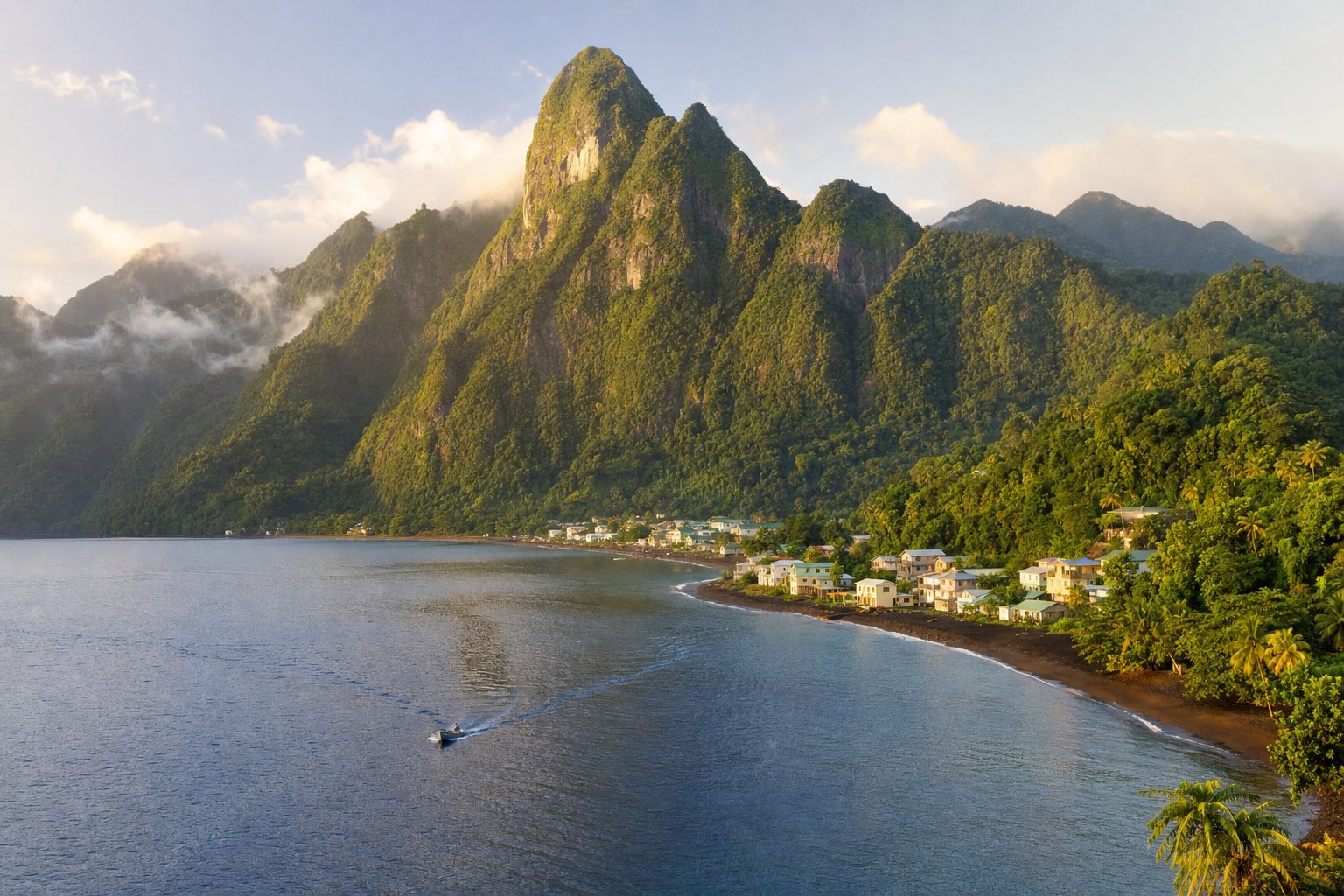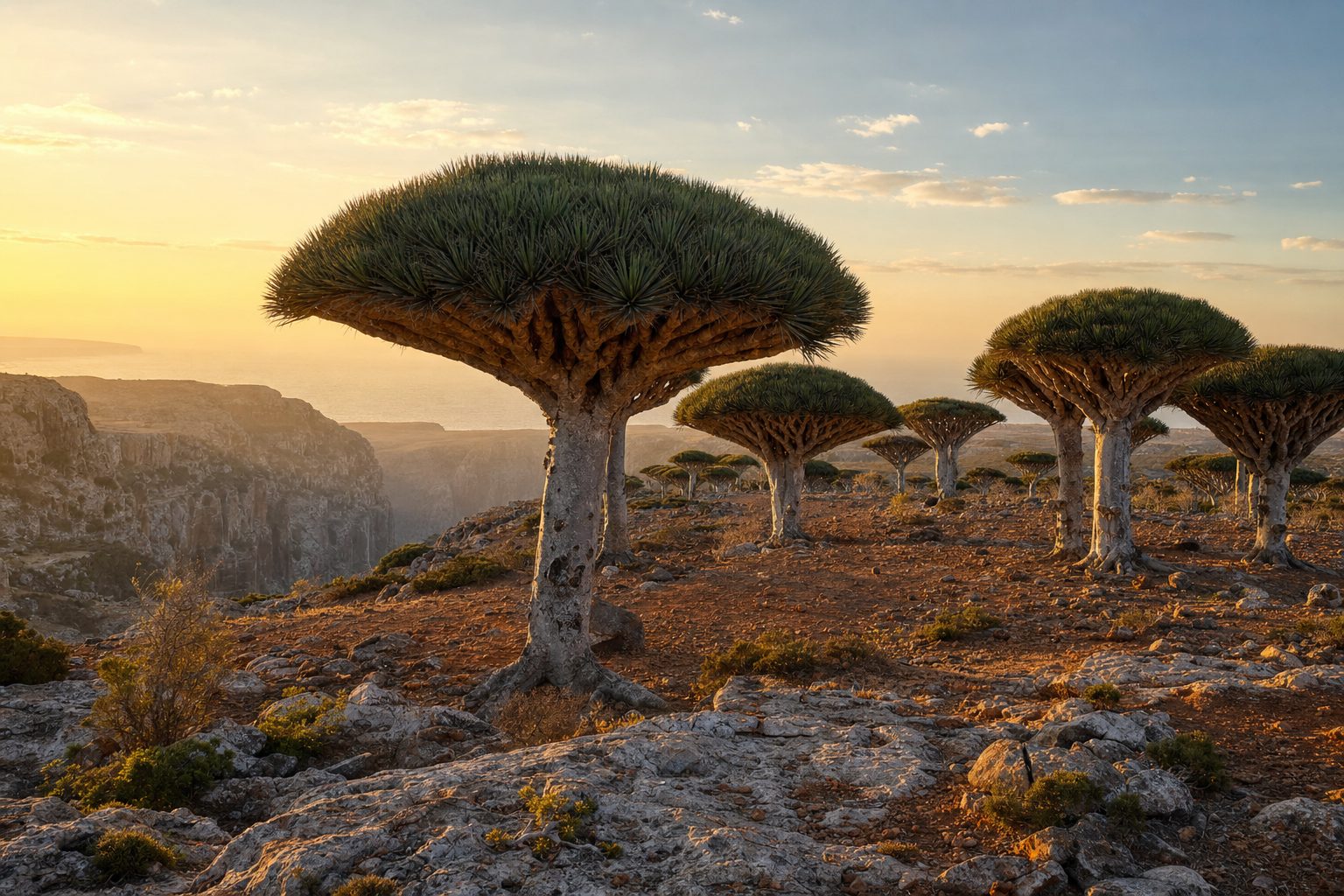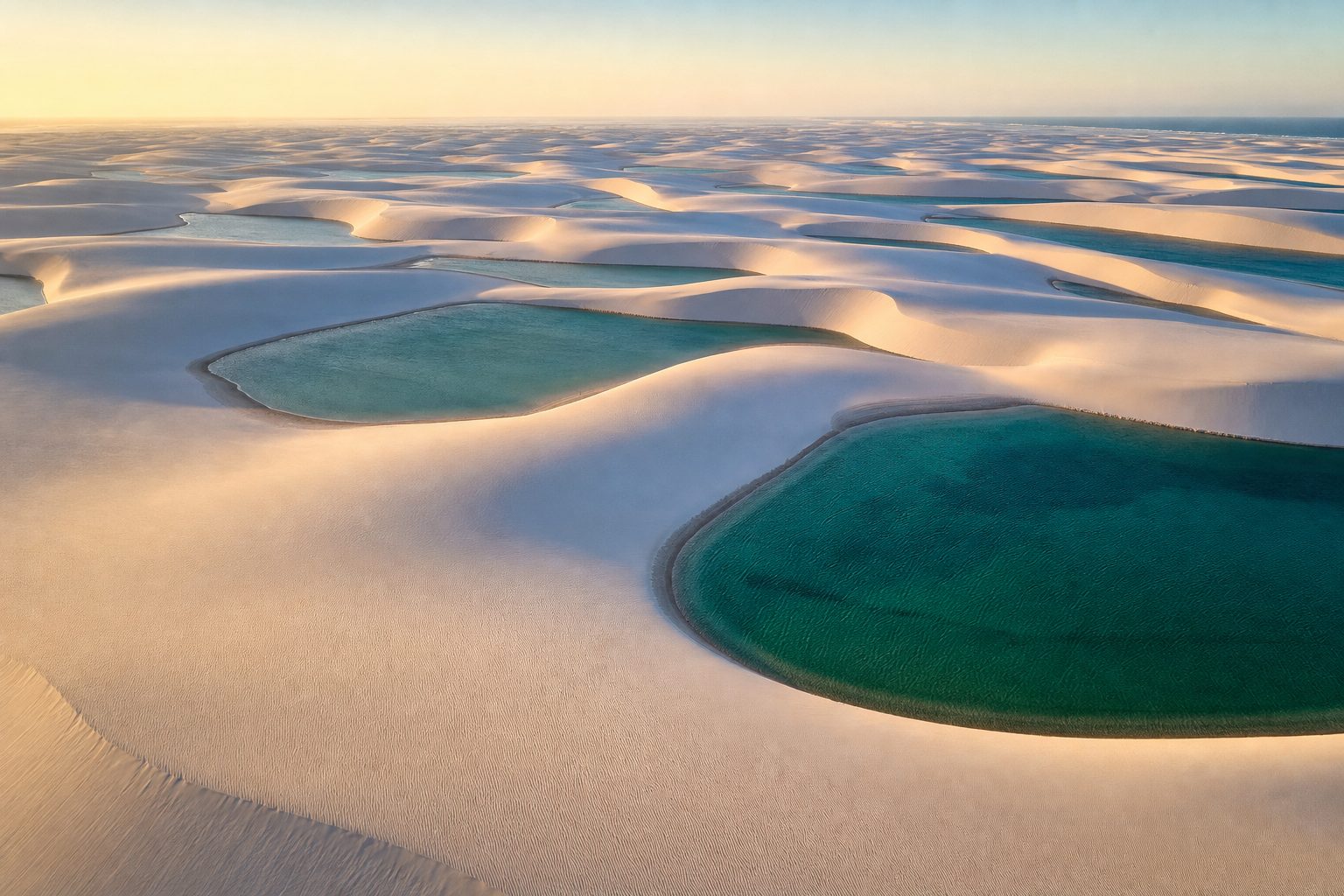

There is a moment on every trip to a famous place when you realize you are looking at the back of someone's phone. The view you traveled across the world for is there, technically, behind a scrum of raised arms and selfie sticks, and something curdles a little in the experience. It is not the crowd's fault — everyone came for the same good reason — but it does raise a quiet question: what if you went somewhere else?
The case for the off-the-beaten-path destination has never been stronger. Overtourism has pushed cities from Venice to the Canary Islands to protest and impose limits, while Fodor's now publishes an annual "No List" of places asking for a break. The flip side is a growing map of destinations that offer everything the famous ones do — beauty, history, culture, welcome — without the crush. Here are the ones worth the extra effort in 2026, organized by region, drawn largely from Lonely Planet's off-grid picks and the destinations experts are quietly betting on.
Even remote Antarctica is straining under its own popularity: roughly 120,000 people traveled there in the 2023–24 season, a figure Fodor's Travel estimates could double by 2033 — part of the overtourism pressure that landed several destinations on Fodor's 2026 'No List.' [3]
Africa: a mountain kingdom and a Moroccan secret
Lesotho is the great overlooked destination of southern Africa — a mountainous kingdom entirely enclosed by South Africa, where the lowest point still exceeds 4,500 feet and life revolves around horses, livestock and the elements. Shepherds in wool blankets move along high passes, villages of circular thatched dwellings cling to the Maluti and Drakensberg slopes, and the tourism is refreshingly unpolished: think Basotho pony treks to hidden waterfalls, lunch in a village, a night in a lodge at the end of the road rather than a manicured safari lodge.

Lesotho is a mountainous kingdom entirely enclosed by South Africa whose lowest elevation still exceeds 4,500 feet, with a lifestyle centered on horses, livestock and the elements, according to Lonely Planet's 2026 off-grid destinations, as reported by Forbes. [1]
In Morocco, the crowds funnel into Marrakech, Fez and Chefchaouen — which is exactly why Tetouan, just beneath the Rif Mountains and reachable from Tangier, is such a find. Its UNESCO-recognized medina is compact and easy to navigate, its architecture carries the imprint of the Muslims and Jews who fled Spain and the Spanish protectorate that followed, and its whitewashed streets deliver the authentic Moroccan atmosphere without the hustle. It also makes an ideal launchpad for day trips into the Rif. The pattern here is instructive: the overlooked place is almost always a short hop from the famous one, offering the same landscape and heritage minus the tour buses — you simply have to be willing to skip the name everyone recognizes.
Asia: prison islands, tribal highlands and the fourth main island
Con Son, the largest island in Vietnam's Con Dao archipelago, is the antidote to the country's busier beaches — clear water, green hills and empty sand, layered over a haunting history as a French and later South Vietnamese prison colony whose old cellblocks and "tiger cages" still stand. Much of the island sits within a national park, with coral reefs, turtle nesting grounds and forest trails, making it a rare combination of the beautiful and the profound.
Japan's Shikoku is the island most travelers skip, and it attracts less than 1% of the country's tourists despite offering temples, surf beaches, river gorges and the famous 88-temple pilgrimage route associated with the monk Kobo Daishi. Its Iya Valley is a premier whitewater destination of historic farmhouses and winding roads, and the village of Kamikatsu is globally known for its zero-waste program. As Japan's headline cities buckle under record inbound tourism, Shikoku offers the country's celebrated order, cuisine and courtesy with almost none of the congestion — a reminder that even the most-visited nations hide vast quiet regions just off the main circuit.
Further afield, two Asian destinations reward the traveler willing to trade comfort for authenticity. Nagaland, in India's far northeast against the Myanmar border, is a land of forested mountains and Indigenous communities whose architecture, rituals and daily life still carry traces of pre-Christian animism; time a visit for December's Hornbill Festival, when the region's tribes gather for music, crafts and performance. North Luzon in the Philippines offers a version of the country beyond the beaches — the superbly preserved Spanish-colonial city of Vigan, the living rice terraces of the Cordillera, and the hanging coffins of Sagada — all on rough roads and at a slower pace that filters out all but the curious. And Kyrgyzstan, in the high Tien Shan, has become the darling of adventurous travelers for its alpine lakes, yurt stays and nomadic traditions largely unchanged for centuries.
Japan's Shikoku attracts less than 1% of the country's tourists despite its 88-temple pilgrimage route, surf beaches and the whitewater rafting of the Iya Valley, according to Lonely Planet's 2026 off-grid list reported by Forbes. [1]
- Con Son, Vietnam — empty beaches, national-park reefs, and a sobering prison-island history.
- Shikoku, Japan — the 88-temple pilgrimage, Iya Valley rafting, and Naoshima's art nearby.
- Nagaland, India — remote tribal highlands; time it for December's Hornbill Festival.
- North Luzon, Philippines — colonial Vigan, the Cordillera rice terraces, and Sagada's hanging coffins.
- Kyrgyzstan — untouched alpine lakes and centuries-old nomadic traditions in the high Tien Shan.
Europe: alternatives to the postcard cities
Europe rewards the traveler willing to look one town over from the famous one. Kufstein, an Alpine town on Austria's border with Bavaria, feels like a hidden treasure beside Salzburg — a fortress on the skyline, the Inn River running through, the Kaisergebirge mountains behind, and hiking, biking and quiet ski slopes all within reach. In southern France, Hyères sits overshadowed by Saint-Tropez and Cap d'Antibes, yet its hillside old town and the offshore Îles d'Or — Porquerolles with its pine forests and bike paths, wilder Port-Cros with one of France's oldest marine parks — deliver the Riviera without the swagger.
North Macedonia may be the most overlooked country on the continent: no coastline, no marquee tourism identity, and therefore no crowds around the extraordinary Lake Ohrid, whose stone churches and terraces give it a Mediterranean-resort feel without the sea, while the capital Skopje layers Ottoman bazaars, socialist-era architecture and modern monuments into one walkable whole. Germany's Black Forest, freed of its cuckoo-clock clichés, offers dense fir forests, spa towns and the sustainable university city of Freiburg, one of the country's sunniest, whose car-light Vauban district is a model of green urban planning. Northern Iceland — Akureyri, Lake Mývatn, the Diamond Circle — trades the traffic of the Golden Circle for lava fields, hot springs and empty roads. And Albania, which Newsweek's experts call "essentially the hidden gem version of Greece or Croatia," still delivers beaches, cuisine and historic towns without the throngs or the inflated prices.
The places that reward you most are rarely the ones everyone agrees on. They're the ones you have to explain when you get home — the country your friends can't quite place on a map.
— Marcus Feld
The other overlooked Europe: hidden gems and value in one
A useful truth about off-the-beaten-path travel is that the crowds and the prices usually thin together — the places tourism has overlooked tend to be the ones your money goes furthest. Newsweek's panel of experts leaned hard into this overlap for 2026, championing Malta (newly served by direct Delta flights and offering everything from the walled silence of Mdina to the horse-roamed lanes of Gozo), Sardinia (long a European favorite but still barely explored by Americans), and Budapest as a cheaper, equally grand alternative to Vienna, its two halves split by the Danube. Portugal's Alentejo earns a place too, its medieval hilltop town of Monsaraz and the Alqueva Dark Sky Reserve — recognized as the world's first certified Starlight Tourism Destination — delivering a sense of space the experts call increasingly rare in Europe.
Portugal's Alentejo is home to the Alqueva reserve, recognized as the world's first certified 'Starlight Tourism Destination,' and to the medieval hilltop town of Monsaraz, offering what travel experts describe to Newsweek as an exceptional sense of space becoming increasingly rare in Europe. [2]
France's Basque coast makes the same case: Biarritz, with its dramatic surf breaks and Basque culinary heritage, is the low-key answer to a Riviera that has priced out and crowded out much of its charm. The lesson across all of these is that Europe still has quiet corners — you just have to look one country, one region or one coastline over from wherever the guidebooks point first.
The Americas: rainforests, hill towns and undiscovered wine country
Suriname is the least-visited country in South America and one of its most culturally dense — a nation of rainforest between Guyana and French Guiana where Paramaribo's Dutch colonial wooden architecture stands among mosques, Hindu temples, churches and synagogues, and where a cuisine fusing Creole, Indonesian, Indian and Chinese influences reflects one of the continent's most layered histories. Much of the country is roadless rainforest, reachable only by river or small aircraft, which is exactly what keeps it wild and lightly trodden. In the Dominican Republic, Tubagua offers the antithesis of the all-inclusive coast: a village in the cool hills above Puerto Plata with terrace breakfasts, roadside stalls, farm visits and panoramic mountain views, no buffets in sight — proof that even the most package-tourism-saturated countries hide a slower, realer version just up the hill.

Closer to the United States, Valle de Guadalupe in Baja California is the wine region Newsweek's experts describe as "one of the few that still feels very local and undiscovered," a short drive from San Diego yet worlds from Napa's polish. El Salvador has quietly become one of the premier international surf destinations, pairing its breaks with Mayan history and the UNESCO ruins of Joya de Cerén, while Panama offers what one expert calls a trifecta of beaches, culture and cuisine, newly accessible on direct flights from a growing list of U.S. cities.
And for those who want wilderness without leaving the country, Big Bend National Park in far west Texas is the great overlooked reward — wrapped around a long stretch of the Rio Grande, its Chisos Mountains rising abruptly from the Chihuahuan Desert, its night skies among the darkest in North America. Roads run for miles between services, cell coverage is patchy, and summer heat can be punishing, all of which keeps the crowds away and preserves one of the finest wilderness experiences in the country at a fraction of the traffic of Yosemite or the Grand Canyon. It is the domestic embodiment of this entire list's argument: the reward and the emptiness are the same thing.
Big Bend National Park in far west Texas encloses a long stretch of the Rio Grande and the Chisos Mountains, drawing far fewer visitors than Yosemite or the Grand Canyon, according to Lonely Planet's 2026 off-grid destinations reported by Forbes. [1]
None of these places is truly secret — as Lonely Planet notes, each is "vibrant, rich in traditions, and steeped in history" rather than untouched. What they share is breathing room: the space to encounter a place on something like its own terms, before the arms and the phones close in. That space is the rarest luxury in travel right now, and the map above is a guide to where it still exists.
Sources & further reading
- 1. The 15 Best Off-Grid Destinations For 2026, Per Lonely Planet — Forbes
- 2. 10 Underrated Travel Destinations To Visit in 2026, According to Experts — Newsweek
- 3. 8 destinations that you should rethink visiting in 2026 (Fodor's No List) — USA Today
- 4. 15 Lesser Known Destinations To Visit In 2026 — Travel Off Path
- 5. The 15 Most Underrated Travel Destinations — Uncompromised Travel
- 6. 16 Cheapest Countries to Travel To in 2026 — Condé Nast Traveler