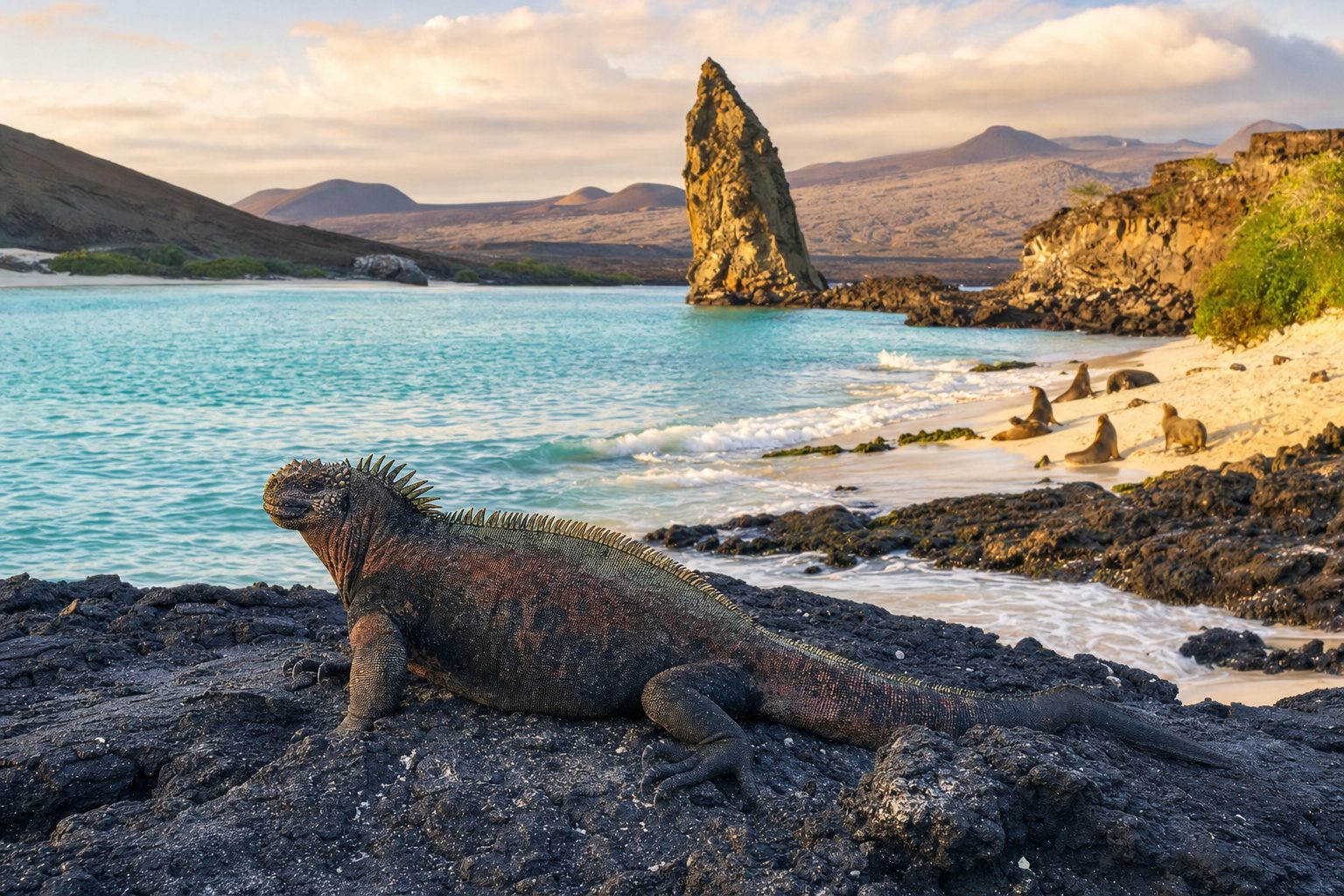
The Galápagos can look effortless on a reel: a marine iguana on black lava, a sea lion slipping into clear water, a blue-footed booby close enough to fill a frame. The useful version of the trip starts before that moment. First-time visitors need to decide whether a cruise or an island-hopping stay best fits their budget and tolerance for transfers; which season suits the wildlife or water conditions they want; and how much cash, paperwork and guided activity their itinerary requires.
The archipelago is not a beach break with a few optional nature excursions. Its visitor system puts conservation at the centre of the journey, from the mainland-airport forms to the route a boat may take. That makes a better trip, provided the practical pieces are done in the right order: prepare the documents, bring the entry money, choose a base or vessel, then leave enough unscheduled room for weather and wildlife rules.
Set the entry budget before you price the holiday
The unavoidable headline cost is the Galápagos National Park entrance fee. As checked in August 2026, foreign adults pay US$200 on arrival at Baltra or San Cristóbal, double the former US$100 rate introduced in August 2024. Children under 12 pay US$100; adult citizens of CAN or Mercosur countries pay US$100; and Ecuadorian adults pay US$30. Treat this as a separate arrival expense rather than assuming it is buried in a cruise or hotel quote. The current entry guidance also notes that the Park Directorate can revise fees, so check again shortly before departure.
As checked in August 2026, the National Park fee is US$200 for a foreign adult, US$100 for a foreign child under 12, US$100 for an adult CAN/Mercosur citizen and US$30 for an Ecuadorian adult; the foreign-adult amount changed in August 2024. [1]
Bring the exact park-fee cash in usable US dollars before the island flight. The fee is paid at the National Park counter on arrival at Baltra (GPS) or San Cristóbal (SCY), and the practical guidance is unequivocal: do not count on a card terminal. The Galápagos entry-rules guide says the fee is officially cash-only and advises withdrawing on the mainland; its advice to use clean, smaller notes is sensible. Keep the fee separate from spending money and remember that a package may or may not include it—ask the operator in writing.
Add the US$20 Transit Control Card (TCT, also called TCC) for every visitor. Since May 2025 it must be registered online before the domestic flight and paid by card, using passport, flight and accommodation or vessel details. At Quito or Guayaquil, show the resulting QR code at the INGALA/CGREG counter before airline check-in. It is an administrative check, not a formality to leave for a tight connection: without the valid record, the airline can refuse boarding. Allow a substantial airport buffer even if the online form is already complete.
The mandatory TCT/TCC costs US$20 per person and, since 29 May 2025, requires online registration before the Galápagos flight; the QR code is then validated at the mainland airport counter. [4]
Complete the forms in the right sequence
A passport should have at least six months’ validity, and the name and passport details should match the airline booking and TCT registration exactly. Those small consistency checks matter because the cards, QR codes and boarding pass meet at the same mainland-airport process. Keep a return or onward itinerary and your island hotel confirmation or cruise voucher ready too; they are useful both for the TCT and for Ecuador entry requirements. The passport guidance is a useful final cross-check before submitting the form.
There are now two more digital declarations to recognise. Since July 2025, travellers entering or leaving Ecuador complete the free online FRA customs form; it is separate from Galápagos paperwork and can be done up to 72 hours before entering Ecuador. Within 48 hours of the island flight, complete the free ABG biosecurity sworn declaration. It asks about food, plants, seeds, animal contact and other potential biosecurity risks. From February 2026 it is fully digital, so do not expect a paper form on the plane. Answer it honestly and leave prohibited fresh food, plants and soil off the packing list.
The FRA customs form has been required online for Ecuador travellers since July 2025, while the free Galápagos biosecurity declaration must be completed within 48 hours of the flight and has been fully digital since February 2026. [5]
Flights reach the islands only through mainland Ecuador. Build the itinerary around Quito (UIO) or Guayaquil (GYE), then a domestic flight to Baltra or San Cristóbal. Baltra is the usual gateway for Santa Cruz: reaching Puerto Ayora involves the airport transfer, Itabaca Channel ferry and another bus or taxi. San Cristóbal airport is close to Puerto Baquerizo Moreno. This is why a one-night mainland buffer is practical rather than indulgent, especially when an international arrival is meant to connect to a fixed cruise departure the following day.
Choose cruise or island-hopping by the days you want ashore
A live-aboard cruise is the better fit when the priority is range. Licensed guides accompany visits, boats move while guests sleep, and a four- to eight-day itinerary can reach remote visitor sites that would be unrealistic from a hotel base. The trade-off is a fixed departure, a concentrated upfront cost and less control over meals, cabin style and daily tempo. It is often the clearer way to see several islands without spending daylight on public-boat connections, but it is not automatically the cheaper route.
Island-hopping, usually based from Santa Cruz, San Cristóbal or Isabela, suits travellers who value restaurant choice, locally run lodging and free time in towns. It can lower the accommodation cost and let a visitor slow down, yet inter-island speedboats, day tours and restaurant meals add up quickly. More importantly, the accessible wildlife range is narrower: a land-based itinerary depends on day excursions, their weather and their permitted routes. Price flights, entry charges, transfers, tours and meals as a whole instead of comparing only a cruise brochure with a nightly hotel rate.
Cruising trades flexibility for reach: boats travel at night to bring visitors to the next site, while hotel stays allow a more local rhythm but a more limited spread of islands and wildlife.
— Paraphrased from Galápagos Conservation’s planning-a-trip guidance
- Choose a cruise if seeing remote visitor sites matters more than choosing each day’s pace; confirm the guide, cabin category, inclusions and whether the park fee is included.
- Choose a hotel base if you want town time and adjustable days, then price speedboats, day tours and meals alongside the room rate.
- Use Santa Cruz for the broadest concentration of services and day-tour departures; use San Cristóbal or Isabela when their specific landscapes deserve several nights.
- Keep the first and last island days light, particularly if a cruise has a fixed boarding hour or a mainland connection to protect.
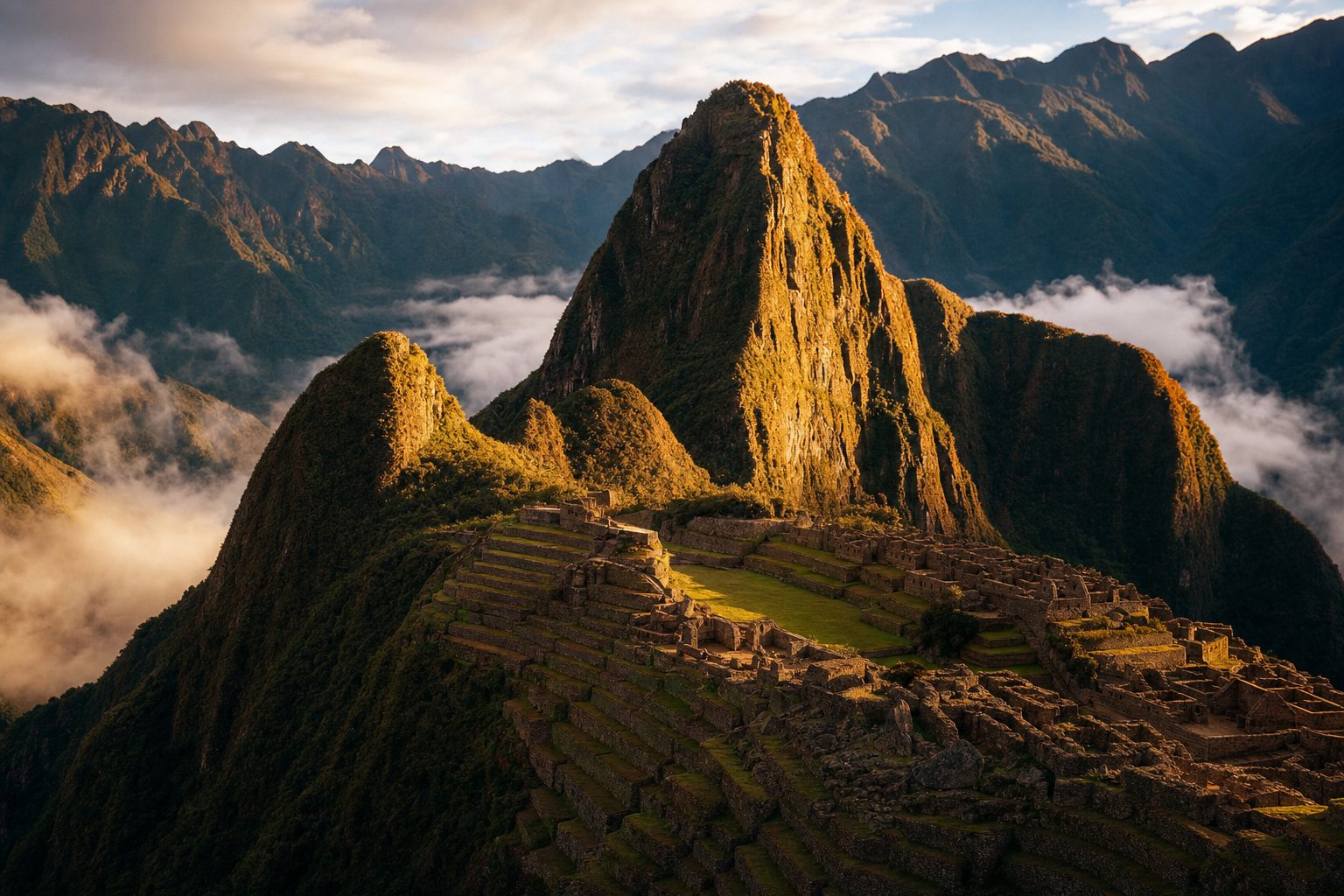
For a wider Ecuador route, the contrast with a highland itinerary can be useful: a Sacred Valley trek rewards acclimatisation and land-based pacing, while Galápagos demands route and guide discipline. The common lesson is not to try to see everything. Choose one trip style that preserves time for the setting rather than spending every morning repacking or every afternoon in transit.
Plan the season around sea conditions and wildlife
There is no unusable season, but there are two distinct planning windows. December to May is generally warmer and wetter, with calmer seas, warmer water and short bursts of rain followed by sun. It is a strong choice for travellers who prioritise swimming, snorkelling comfort, green landscapes, nesting sea turtles and bird activity. Because the islands sit on the equator, the weather decision is less about escaping winter than about choosing the water and sea state that fit the trip.
June to November brings the cooler Humboldt Current, garúa mist, stronger winds and rougher seas. The compensation is nutrient-rich water and concentrated marine life: penguins are easier to encounter, albatross arrive on Española, and blue-footed boobies are in breeding season. Experienced divers often prefer this period, but anyone prone to seasickness should choose cabin position carefully or consider a land-based plan with only selected boat days. Peak booking periods run roughly mid-June to early September and mid-December to mid-January, so reserve flights and the particular vessel or lodge early.
December to May tends to bring warmer, calmer water and nesting activity, while June to November is cooler and rougher but draws nutrient-loving marine life; albatross arrive on Española and penguins are easier to encounter in the latter period. [3]
Understand where independent exploring ends
The Galápagos National Park covers about 97% of the archipelago’s land area. Protected areas can only be visited with a naturalist guide authorised by the Galápagos National Park Directorate; the remaining roughly 3%, including towns and selected sites, is where guide-free time is possible. This distinction is the practical key to a land-based holiday. A stroll in Puerto Ayora, Puerto Baquerizo Moreno or Puerto Villamil has a different rhythm from a booked visitor-site excursion, even when wildlife is visible on the shoreline.
Do not assume an uninhabited island or a photogenic cove is an independent outing. On Santa Cruz, for example, some town-adjacent places can be visited without a guide, but visitor sites and day tours fall within the managed park system. Use authorised operators and verify the day’s exact landing, snorkelling and guide arrangements before paying. This is also an argument for keeping a buffer day: sea conditions, boat availability or a protected-site schedule can change the order of plans without making the entire holiday feel compromised.
Follow the rules that protect the encounter
Wildlife may look indifferent to people, but it is not an invitation to close the gap. Stay on marked trails, follow signs, keep at least two metres from animals and never feed them. Flash photography is forbidden for wildlife. Those rules apply even when a sea lion, iguana or bird chooses to approach: the visitor steps back, not the animal. Take all rubbish back to populated areas or the tour boat, and cooperate with every luggage inspection rather than treating it as a delay from the holiday.
Galápagos visitors must remain on marked trails, keep at least two metres from wildlife, avoid flash photography, travel with authorised operators in protected areas and follow a GNPD-authorised naturalist guide there. [2]
The same restraint applies to what leaves the islands. Do not buy or remove shells, lava, coral, animal parts or native plants, and do not bring food, plants or animals into the archipelago. A drone or commercial shoot needs prior authorisation; a tour booking is not permission to make exceptions. These are not decorative rules around an otherwise normal resort holiday. They are the operating conditions of a small, protected place where the most memorable encounters depend on visitors making themselves less intrusive.
Plan for the islands’ limits and the experience becomes less transactional. Carry the right cash, complete each declaration before the airport, choose cruise or island-hopping for the rhythm you genuinely prefer, and let a guide-led wildlife day remain a wildlife day rather than a content shoot. For another protected-islands contrast after Ecuador, Fernando de Noronha’s visitor fees and park rules offer a useful next read—but the Galápagos starts with accepting that its boundaries are part of the visit.
Sources & further reading
- 1. Galapagos Islands Travel: Entry requirements and permits
- 2. Galápagos Conservation: National Park rules
- 3. Galápagos Conservation: Planning a trip
- 4. Latin Memories: Galápagos entry rules
- 5. Cruises to Galápagos Islands: Entry requirements, transit card and fees
- 6. Galapagos Land-Based: Visitor information
- 7. Galakiwi: Galápagos entry requirements