
There is a stretch of road in northwest Wyoming where the world seems to hold two impossibilities at once. Behind you, the ground itself breathes — geysers venting, mud pots gulping, hot springs bleeding turquoise and ochre across a scalded plain. Ahead, the Teton Range erupts from the valley floor without foothills or apology, a wall of granite and snow reflected in glassy lakes. To drive from Yellowstone into Grand Teton is to travel between two of the oldest and most theatrical landscapes in North America in the space of an afternoon, and no single itinerary in the American West packs more wonder per mile.
The two parks share a border and a road, which makes them a natural pairing, but they are temperamentally opposite. Yellowstone is vast, volcanic, and strange — a supervolcano's cauldron dressed as a wildlife park. Grand Teton is compact, vertical, and almost impossibly photogenic. Treat them as a single loop and give yourself a minimum of five days; a week is better. What follows is how to build the drive, when to attempt it, what not to miss, and where to eat when you come down off the mountain.
Getting there and framing the route
The single most convenient gateway is Jackson Hole Airport — remarkably, the only commercial airport located inside a U.S. national park, sitting within Grand Teton itself, so your first moose may appear before you reach the highway. From there the classic loop runs north through Grand Teton, into Yellowstone via the South Entrance, around Yellowstone's figure-eight Grand Loop Road, and back down. Alternatively, fly into Bozeman, Montana, and enter Yellowstone from the north at Gardiner through the historic Roosevelt Arch, working your way south. Either direction works; the point is to make it a loop rather than a there-and-back.
Distances inside the parks are deceptive. Yellowstone alone is enormous, its main roads a rough figure-eight totaling well over a hundred miles, and the posted speed limits are low for good reason: a bison herd crossing the road will stop traffic for twenty minutes, and you will not mind. Budget far more driving time than the map suggests, fuel up whenever you can, and download offline maps, because cell service inside the parks is close to nonexistent.
Lodging is the other logistical hurdle, and the one that trips up the most travelers. The historic in-park lodges — the log-cathedral Old Faithful Inn, Lake Yellowstone Hotel, Jackson Lake Lodge, the intimate cabins of Jenny Lake — book up as much as a year in advance for peak summer, and their campgrounds fill nearly as fast. If the in-park options are gone, base yourself in a gateway town and drive in early each morning: West Yellowstone and Gardiner for the park's north and west, Cody to the east, Jackson for the Tetons and the south. A common and highly workable plan is two or three nights near Yellowstone and two near the Tetons, minimizing the daily backtracking that eats so many visitors' time.
A standard seven-day vehicle entrance pass to Yellowstone runs $20 to $35, an annual park pass is $70, and the America the Beautiful pass covering all federal recreation lands is $80 — the smart buy if you're visiting both parks and any others. [1]
When to go
The parks keep short, dramatic seasons. From roughly June through September, all roads and facilities are open, wildlife is active, and the high country is accessible — but this is also when the crowds and traffic peak. Midsummer rewards early risers: be at Old Faithful or a Teton overlook by seven in the morning and you will have the light, the wildlife, and the quiet largely to yourself before the tour buses arrive.
September is the sweet spot for many seasoned travelers — thinning crowds, the first gold in the aspens and cottonwoods, and the bugling of elk in the rut echoing across the meadows. Shoulder weeks in late May and early October can be gloriously empty but come with a gambler's weather and the real possibility of snow closing high passes. Winter transforms both parks into a silent, snowbound world reachable mainly by guided snowcoach or snowmobile — extraordinary, but a different trip entirely. For a first drive, aim for June through September and start each day at dawn.
Yellowstone: the earth unmasked
Yellowstone is a portrait of a living planet with its skin peeled back. The park sits atop one of the world's largest active volcanic systems, and the evidence is everywhere: the terraced travertine of Mammoth Hot Springs, the roaring fumaroles of Norris, the psychedelic bacterial rings of Grand Prismatic Spring — best seen from the overlook trail above it, where the full spectrum of color resolves into something almost unbelievable. The Grand Canyon of the Yellowstone, with its thundering Lower Falls plunging past yellow rhyolite walls, is the park's underrated masterpiece.

Yellowstone contains close to 60 percent of the world's geysers — nearly 500 in all — with more than 150 packed into a single square mile of the Upper Geyser Basin; only five, including Old Faithful, are predicted regularly by park rangers. [2]
Old Faithful remains the headliner for good reason: few natural events on earth run so close to schedule. Rangers post the next predicted eruption, so you can time a coffee at the Old Faithful Inn and stroll out to watch the column climb. Give the surrounding Upper Geyser Basin an hour or two on the boardwalks — the lesser-known geysers and springs are, if anything, stranger than the star.
Old Faithful erupts on a median interval of about 94 minutes, sending 3,700 to 8,400 gallons of water an average of 130 feet into the air over an eruption lasting roughly one and a half to five minutes. [7]
And then there is the wildlife, which is the reason many people come and the reason all of them stay alert. The Lamar and Hayden Valleys are the great theaters — bison in their thousands, elk, pronghorn, and, for the patient with binoculars at dawn or dusk, wolves and grizzlies. Keep your distance: the rule is at least 100 yards from bears and wolves, 25 yards from bison and elk, and the animals do not read the map. A bison gore is a far more common Yellowstone injury than most visitors imagine.
Grand Teton: the vertical park
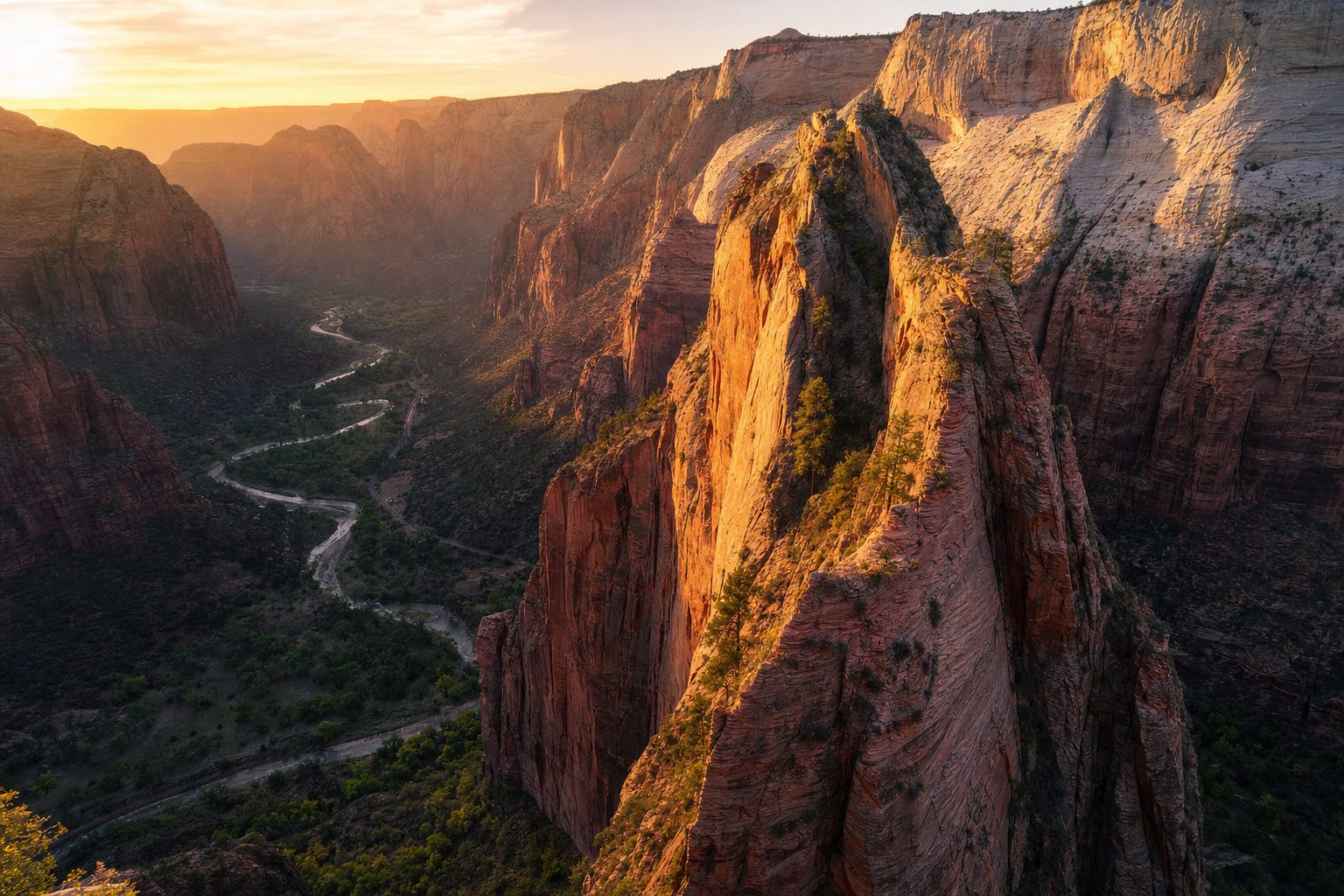
Cross the boundary south and the mood changes utterly. There are no foothills to soften the Tetons — they simply leap out of the sage flats along a fault line, which is exactly why they photograph like a fantasy. The classic drive threads the valley on the Teton Park Road, stringing together the postcard viewpoints: Oxbow Bend, where the Snake River doubles back beneath Mount Moran; Schwabacher Landing and Snake River Overlook at first light; the serene bowl of Jenny Lake.
Grand Teton itself rises to 13,775 feet, the highest peak in the Teton Range, with a dramatic prominence of about 6,530 feet above the valley floor. [3]
Jenny Lake is the park's beating heart and the best place to trade the car for your feet. A shuttle boat ferries hikers across the lake to the trailhead for Hidden Falls and Inspiration Point, a short, rewarding climb; the more ambitious push on into Cascade Canyon, where the peaks close in on either side and the crowds fall away with every switchback. Rent a kayak or take a scenic float down the Snake River for a moose's-eye view of the range, and stop for the almost obligatory huckleberry milkshake somewhere along the way.
You can stand in one park and watch the ground boil, then drive an hour south and watch fourteen-thousand-foot peaks catch fire at sunset. Nowhere else in the country asks so little of you and gives back so much.
— Wyatt Sorenson

Grand Teton is also the more forgiving park for those who want scenery without a full expedition. The Multi-Use Pathway runs paved and flat along the base of the range, perfect for a rented bike; the short loop around String Lake or the stroll to Taggart Lake delivers alpine drama for modest effort; and the Jackson Hole Aerial Tram, just outside the park boundary, hauls you nearly 4,000 vertical feet to Rendezvous Mountain for a waffle and a view that spans the whole valley. Wildlife here skews toward moose in the willow flats, pronghorn on the sage, and, in the meadows at dawn, the occasional bear — the same rules of distance apply.
Whichever way you drive the loop, build in an evening or two for the human side of the trip. The town of Jackson, with its arches of shed elk antlers framing the square and its old wooden boardwalks, is touristy but genuinely fun; Cody, founded by Buffalo Bill himself, leans hard into its Wild West heritage with a nightly summer rodeo; and tiny Gardiner and West Yellowstone are working gateway towns where park employees and travelers share the same barstools. After a week of geysers and granite, a burger and a local beer in one of these towns is its own kind of summit.
Where to Eat
Dining on this trip splits neatly in two: the historic in-park lodges, where the setting does much of the work, and the gateway towns — Jackson, Cody, Gardiner, West Yellowstone — where a surprisingly serious food scene has grown up to feed hungry travelers coming off the trail. Reserve the marquee lodge dining rooms well ahead in summer, and treat the gateway spots as the reward at either end of a long day of driving.

The Dining Room at Jenny Lake LodgeFine dining / regional American
The crown jewel of dining inside Grand Teton National Park, a refined room within the historic Jenny Lake Lodge serving breakfast, lunch, and multi-course dinners.
Why it’s so good: The Grand Teton Lodge Company calls it the park's premier fine-dining experience; the combination of an elegant prix-fixe menu and its position beneath the peaks is unmatched inside the boundary.
Top picks: Five-course prix-fixe dinner · Trailside breakfast before an early hike

Mural Room, Jackson Lake LodgeRegional American
A grand dining room at Jackson Lake Lodge where local, seasonally driven entrees come with floor-to-ceiling picture windows framing the Tetons across Willow Flats.
Why it’s so good: The lodge company highlights the panoramic Teton views from every table — arguably the best dinner-with-a-view in either park, especially at sunset.
Top picks: Regional game and trout entrees · Sunset seating for the mountain view

Persephone BakeryBakery / breakfast & lunch
A James Beard-recognized bakery in the town of Jackson turning out ultra-flaky pastries made with European butter and crusty, old-world hearth breads.
Why it’s so good: Yellowstone Park's guide notes it's a James Beard semifinalist run by Le Cordon Bleu-trained owners and consistently ranks among Jackson's very best; the ideal fuel stop before a park day.
Top picks: Flaky morning pastries · Fresh baguette and stone-hearth breads

Hand Fire PizzaWood-fired pizza
Wood-fired pizzas served inside the historic stone Teton Theater in downtown Jackson, a WWII-era movie house worth visiting for the architecture alone.
Why it’s so good: Yellowstone Park's guide praises the open-kitchen, wood-fired pies and the striking historic setting; there are vegan options and a gluten-free crust, too.
Top picks: Sweet Italian Sausage pizza · Chew-Baca pizza with bacon, caramelized onion, and spicy honey

Wonderland CafeAll-day cafe / wild game
A locals' favorite in Gardiner, Montana, less than a mile from Yellowstone's Roosevelt Arch, with regional art for sale on the walls and hearty wild-game plates.
Why it’s so good: Yellowstone Park's guide says it's where park employees eat breakfast, lunch, and dinner — a reliable sign — with adventurous, satisfying cooking.
Top picks: Caldera Burger with roasted jalapeño and pepper jack · Wild game chili with jalapeño cornbread

Firehole Bar-B-QueCentral Texas barbecue
A West Yellowstone smokehouse running twin smokers nicknamed 'Cheech and Chong,' turning out Central Texas-style barbecue from a tight, sell-out-daily menu.
Why it’s so good: Yellowstone Park's guide notes it caught the eye of chef Guy Fieri and routinely sells out — come early; it's seasonal, open roughly May through October.
Top picks: Brisket · Buffalo sausage and St. Louis pork ribs
Two more gateway-town names worth knowing: Persephone's sister spot, Picnic, on Maple Way in Jackson, keeps the same James Beard-caliber baking in a more casual, all-day format, and in West Yellowstone the four-decade-old Ernie's Bakery & Deli — run by a French chef and consistently West Yellowstone's top-rated restaurant — makes an excellent croque monsieur and packs boxed lunches to take into the park. For a fast, cheap, joyful meal on the park's east side, Michael's Tacos in Cody serves ten tacos for around $25 and pours five-dollar house margaritas, and is reliably packed with locals for good reason.
A practical note: dining inside the parks is limited, seasonal, and popular, so pack a proper cooler with lunches, snacks, and far more water than you think you'll need. Distances are long, grocery options thin, and the altitude — much of the drive sits between 6,000 and 8,000 feet — dehydrates you faster than you expect. Some of the best meals of the trip will be eaten on a tailgate at a pull-off, a sandwich in one hand and the whole Teton Range filling the windshield.
Sources & further reading
- 1. National Park Service — Yellowstone Fees & Passes
- 2. National Park Service — Old Faithful (Explore)
- 3. Wikipedia — Grand Teton
- 4. Yellowstone National Park — 12 Best Restaurants Near Yellowstone
- 5. Grand Teton Lodge Company — Dining
- 6. National Park Service — Grand Teton Plan Your Visit
- 7. National Park Service — Places in Yellowstone