The line that brings most people here is simple: you can dive a shipwreck from around 425 BC. It is true, and more organised than the phrase suggests. Off the islet of Peristera, just east of Alonnisos in Greece's Northern Sporades, a Classical-era cargo ship lies on a sloping seabed under more than 3,000 wine amphorae. Since August 2020 it has operated as Greece's first underwater museum, with a fixed season, a ticket price, a daily cap on divers and a rulebook written by the Ephorate of Underwater Antiquities. It all sits inside the National Marine Park of Alonissos Northern Sporades, Greece's first marine park and the largest protected marine area in Europe.
That makes the decisions concrete. Do you hold the right certification, and is it recent enough? Can you be on the island between June and September, on a weekday, with a dive centre booked a week ahead? If you do not dive, is the island still worth the two ferries it takes to reach it? This guide answers them from the official operating regulation, the Ministry of Culture's fee schedule and the marine park's zoning rules.
What the Peristera wreck actually is
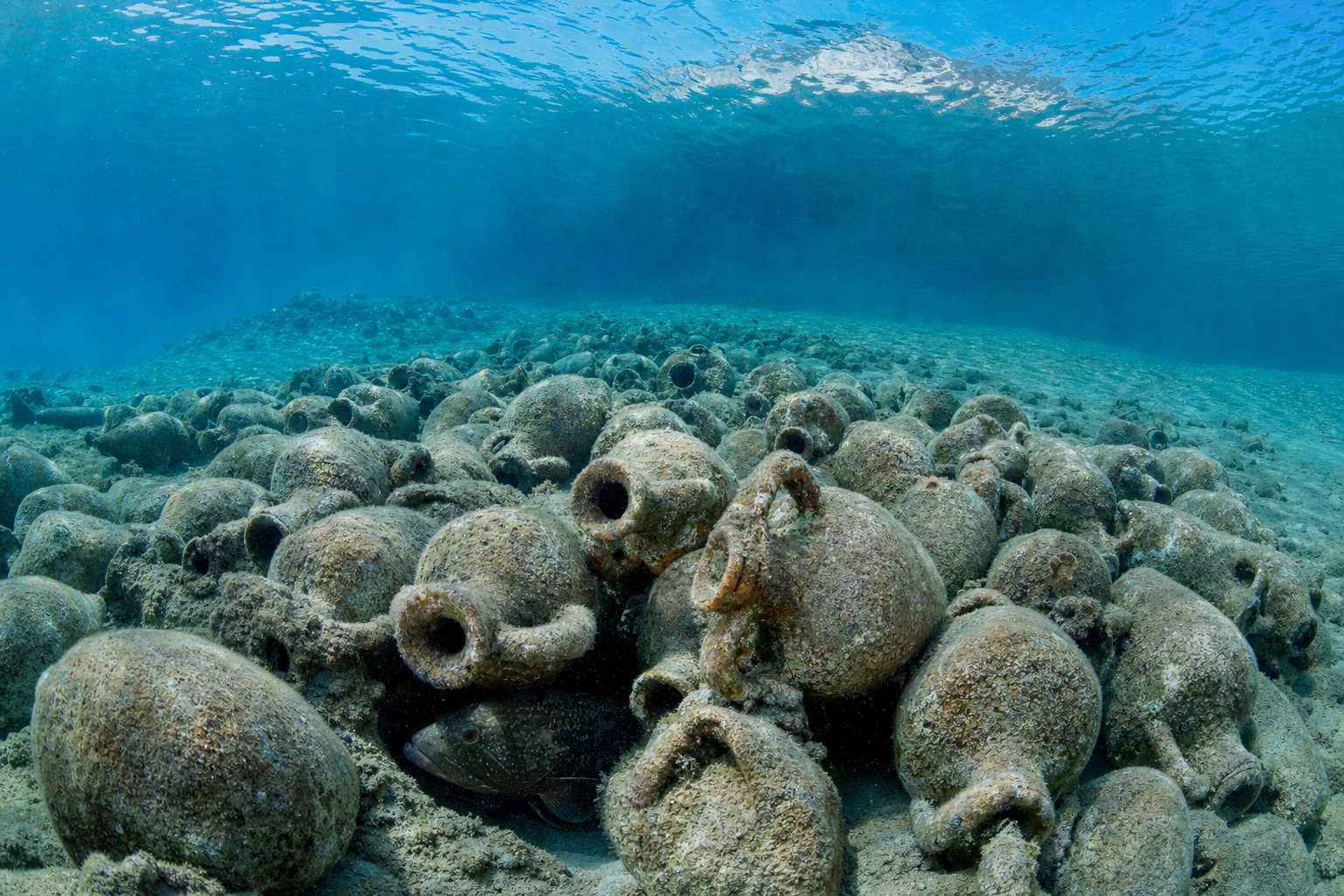
In 1985 a local fisherman, Dimitris Mavrikis, reported a mound of pottery on the seabed north of Kokkalia Bay, roughly 150 metres off Peristera's shore. Excavation through the 1990s revealed the largest merchant ship of the Classical period found to date: a hull estimated at 25 to 30 metres long, carrying a cargo that may have exceeded 120 tonnes. Most of it was wine, in amphorae from Mende in Chalkidiki and from Peparethos, the ancient name for neighbouring Skopelos, stacked at least three layers deep, with the crew's black-glazed cups, plates and cooking pots among them. The wood has mostly gone; the amphorae remain where they settled when the ship went down in the last quarter of the fifth century BC.
Archaeologists call it the Parthenon of shipwrecks, for its date and because so much of the cargo survived intact. What you see as a diver is not a hull but a field of pottery about 25 by 12 metres across, lying between roughly 22 and 30 metres deep, now colonised by groupers, moray eels, octopus and lobsters that use the amphorae as dens. Underwater signage leads you around the mound, and fixed cameras of a surveillance system called NOUS stream the site to the Ephorate around the clock, which is how Greece agreed to open a protected antiquity to recreational divers at all.
The Alonissos Underwater Museum dates the Peristera ship to roughly 425 to 420 BC and describes a vessel about 30 metres long and 10 metres wide carrying approximately 3,000 amphorae of wine from Mende and Peparethos. It was discovered in 1985 at a depth of 25 metres and opened to recreational divers in August 2020, running in pilot mode until October that year. [1]
The wreck lies about 150 metres off the coast of Peristera, north of Kokkalia Bay, at roughly 23 to 28 metres, and since 2020 has functioned as the first underwater museum in Greece, open to scuba and free divers on guided visits monitored by the Ephorate's underwater camera system.
— Paraphrased from the Ephorate of Underwater Antiquities' Peristera site page
Who is allowed to dive it
The operating regulation is unusually specific, and dive centres are obliged to enforce it. Because the amphorae lie deeper than 18 metres, you need a valid scuba or freediving certification rated to at least 30 metres. In recreational terms that means Advanced Open Water or its equivalent; the museum's own contact page calls this second-level certification mandatory. Divers rated only to 18 or 20 metres are not turned away outright, but must stay above 18 metres and may only visit at specific times agreed with the Ephorate's staff, so ask your dive centre early whether such a session exists during your stay.
Currency matters too. Scuba divers must show a logbook entry for a dive in the preceding days or complete a check dive with the centre first; instructors are exempt if they have logged a dive in the past year. Before boarding you sign a declaration confirming you have read the site's terms. Underwater, the rules are about distance: stay at least 1.5 metres off the seabed and one metre from any find, and touch nothing, whether amphorae, signage or cameras. Photography is for personal use only. Every group is led by a guide holding the Ephorate's specific accreditation, one for every four divers.
Under the Ephorate's operating regulation, guided dives deeper than 18 metres at Peristera require a certification valid to at least 30 metres, scuba divers must have a logged dive in the preceding days or complete a trial dive, groups are capped at eight visitor-divers per session with one accredited guide per four divers, and all embarkation and disembarkation takes place at Steni Vala on Alonnisos. [3]
Season, slots, tickets and booking
As checked in September 2026, the Ephorate lists the Peristera site as open from 1 June to 30 September, Monday to Saturday, 09:00 to 15:00 with the last dive at 13:30, and closed on Sundays and public holidays, including 15 August. Season and hours are set each year by ministerial decision, so confirm them on the Ephorate's Peristera page before booking flights. Sessions run at pre-scheduled times with a fixed bottom time, and only one dive centre may operate the site in any session, which is why capacity is so small: eight divers per session, with four sessions a day described in the editorial guide most centres point to.
The site ticket is separate from the dive itself. The Ministry of Culture's fee schedule, published in Government Gazette 1968/B/29-3-2024, sets the Peristera visit at 50 euros per person, paid by the dive centre to the state before you enter the water. The centre then charges its own fee for boat, guide and equipment; that price is set by the operator, so ask for the two figures separately. Standard Ministry of Culture free-entry categories apply, including EU citizens up to 25 and non-EU visitors under 18, though under-18s still need a certification rated to the depth.
The Ephorate's visitor information page states that, under Government Gazette 1968/B/29-3-2024, visiting the Peristera shipwreck costs 50 euros per person while all other accessible underwater archaeological sites in Greece are free, that the escort cost is set exclusively by the diving provider, and that underwater photography is permitted only for personal use. [4]
Booking runs through one of the accredited centres on Alonnisos; as checked in September 2026 the museum's contact page lists three: Alonissos Seacolours, Alonissos Triton and Ikion Diving. Because the centre must submit a named participant list to the Ephorate before each visit, book at least a week ahead, and earlier in July and August. The dive boat leaves from Steni Vala, a small fishing harbour on the east coast north of the main port at Patitiri, and must return there. Weather can cancel a slot at short notice: the site closes under a port-authority sailing ban or when local winds from the south or south-west reach five Beaufort, so keep a spare day.
The marine park around the wreck
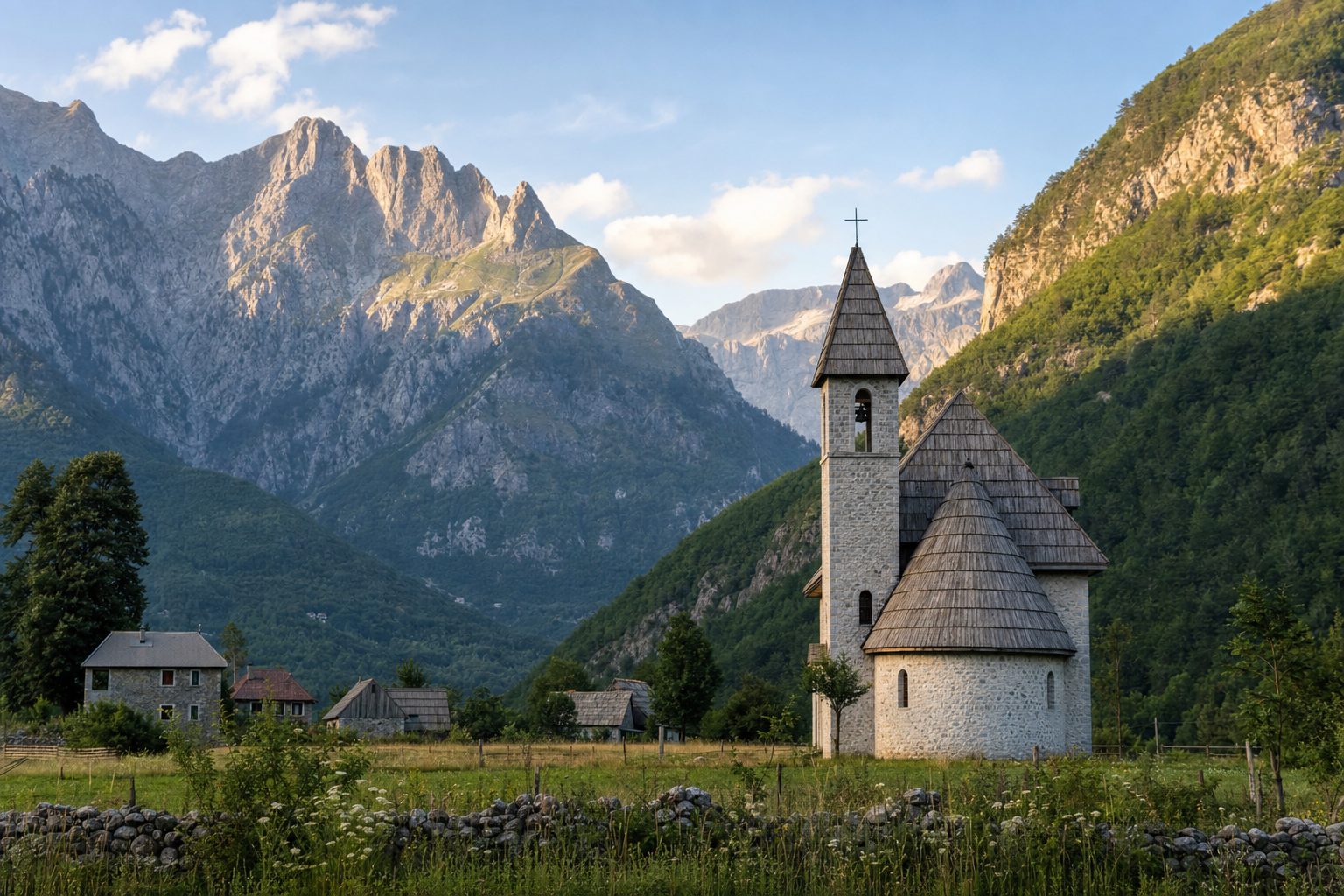
Peristera and Alonnisos sit in Zone B of the National Marine Park of Alonissos Northern Sporades, established by presidential decree in May 1992 and covering around 2,260 square kilometres of sea, one inhabited island, six larger uninhabited ones and more than twenty islets. Its reason for existing is the Mediterranean monk seal, Monachus monachus, one of the world's rarest marine mammals, which breeds in the sea caves of the outer islands; the park also holds red coral, Eleonora's falcons, Audouin's gulls and extensive Posidonia seagrass meadows. You are unlikely to see a seal on the wreck dive, but the park's rules shape almost everything else you do on the water.
The National Marine Park of Alonnisos Northern Sporades was founded by presidential decree on 16 May 1992 as Greece's first marine park, covers approximately 2,260 square kilometres, is the largest marine protected area in Europe, and is a primary habitat of the Mediterranean monk seal (Monachus monachus). [7]
Zone B, which includes Alonnisos, Peristera and the harbours of Patitiri, Votsi and Steni Vala, is open to ordinary recreation under national law, with two blanket prohibitions: no free camping and no fires anywhere on land inside the park. Zone A covers the outer islands of Kyra Panagia, Gioura, Psathoura, Skantzoura and Piperi and their waters, and is where the seals breed. Boats may land at a few named spots between sunrise and sunset, such as Monastiri beach on Kyra Panagia for the walk up to the monastery, but no vessel may come within three nautical miles of Piperi, spearfishing and scuba are banned throughout Zone A, and speed is capped at ten knots within half a nautical mile of any Zone A shore. The full text is on the management body's zoning page.
Most visitors see Zone A on a licensed day-boat from Patitiri that follows the permitted landing points. Whatever you are on, do not approach seals hauled out on beaches or in caves; disturbed animals abandon the site.
If you do not dive
Alonnisos has built a reasonable version of the museum for people who will never put on a tank. The Knowledge and Awareness Centre, run with the Ephorate, occupies the 1903 Old School in the Old Village, the hilltop Chora above Patitiri, and offers a virtual-reality dive on the actual Peristera wreck, 3D models of the finds, a VR game about underwater archaeology and augmented-reality exhibits; the municipality's information centre in the same building screens documentaries and displays replica amphorae, and its courtyard looks across the channel to Peristera. As checked in September 2026 the Ephorate lists admission at 4 euros full and 2 euros reduced; the museum's own pages give evening opening only, so confirm hours on the museum website before walking up.
The Ephorate's Peristera page also carries the live NOUS camera stream. Snorkelling the site is not an option, since it lies too deep and only guided visits by qualified scuba or free divers are permitted; freedivers rated to 30 metres are, however, explicitly included.
- Take a licensed marine park day-boat from Patitiri towards Kyra Panagia and the outer islands; these keep to the permitted landing points and offer a realistic chance of dolphins.
- Walk the island's signed paths linking Chora, Patitiri and the east-coast beaches, with pine shade for most of the way.
- Visit the Knowledge and Awareness Centre in the Old School in the evening for the virtual dive, then eat in Chora.
- Book an ordinary reef or wall dive with one of the three centres even if you cannot meet the Peristera requirements; the marine park's water is exceptionally clear.
Getting to Alonnisos and where to base yourself
Alonnisos has no airport. The nearest is Skiathos (JSI), with seasonal direct flights from many European cities and a ferry port a short taxi ride from the terminal. As checked in September 2026, Seajets and Aegean Flying Dolphins run services from Skiathos to Patitiri year-round, usually calling at Skopelos, in anything from about 50 minutes to a little over two hours depending on the vessel, with fares from around 15 euros; the mainland alternative is Volos, roughly three to five hours away, and there are summer-only fast boats from Agios Konstantinos, Mantoudi on Evia and Thessaloniki. Aggregators such as Ferryhopper show the live schedule; check it against the operator's own site before you pay, because Sporades timetables change between shoulder and high season.
Patitiri is the port and the practical base, with the dive centres, buses and most tavernas; Chora is a steep walk or short bus ride above it. Steni Vala, where the Peristera boats leave, is quieter and smaller and suits divers who want to avoid an early taxi. Allow two clear days for one wreck dive, three if you also want the marine park boat, so a windy day does not cost you the reason you came.
Deciding whether it is worth the trip
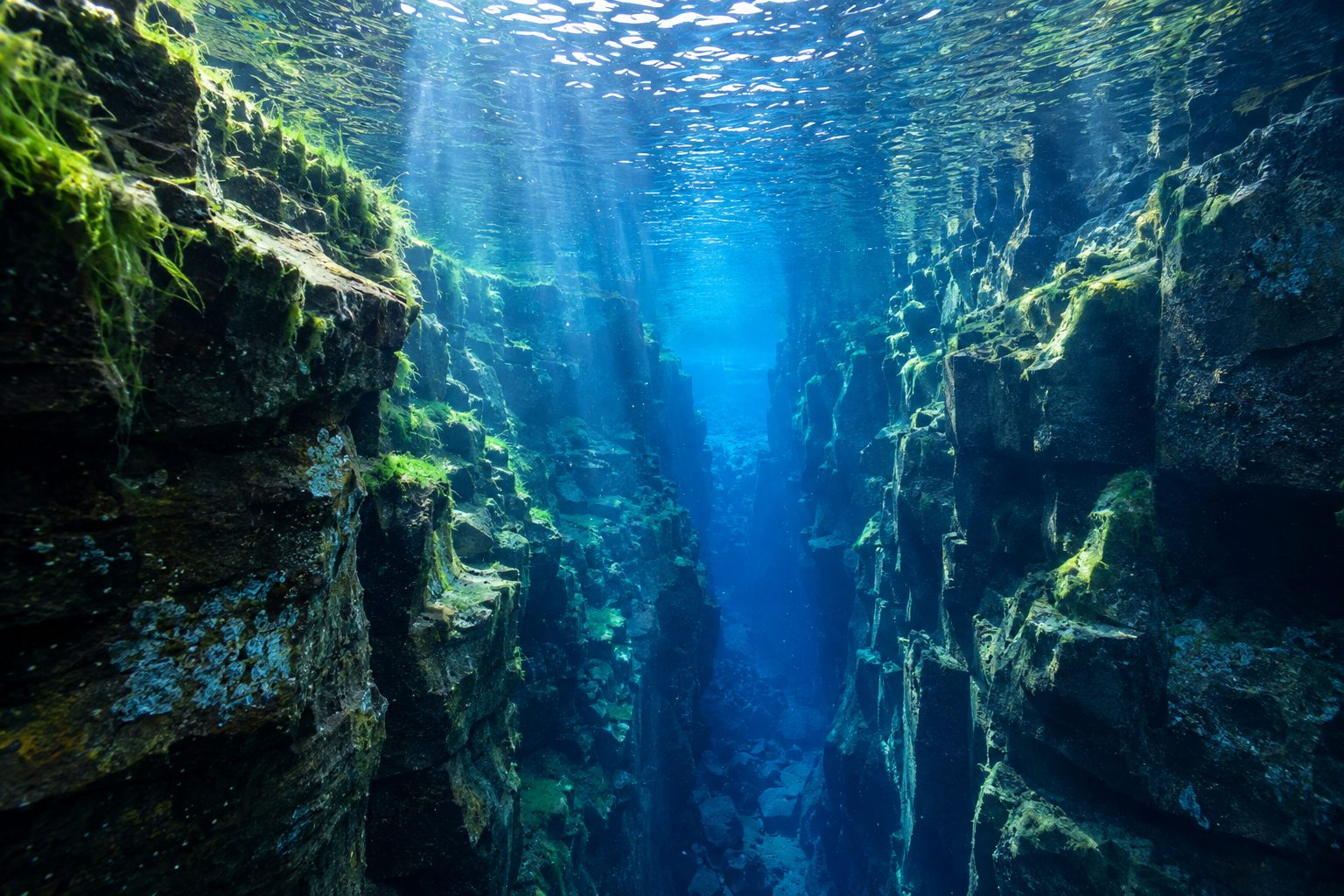
Add it up honestly. You will pay the 50 euro site ticket plus the dive centre's fee, two ferry legs each way and at least two nights on an island with a short season. In return you get a single guided dive over the largest known Classical cargo ship in a protected sea with almost no other boat traffic, which for a certified diver who cares about history is a strong return. For a diver who mainly wants big animals or dramatic topography, the Aegean's fish life is modest and trips such as the Great Blue Hole in Belize or Silfra's glacial rift in Iceland may suit you better.
For non-divers, Alonnisos still works as a slow, green Greek island with an unusually good story attached, but it is a long way to come for the VR headset alone. Pair it with Skopelos and Skiathos on the same ferry line, or with a run to the monasteries of Meteora inland from Volos. If you want the whitewashed-island version of Greece, our guide to Santorini and the Greek islands covers it; the Sporades are pine, limestone and seals rather than caldera views.
Sources & further reading
- 1. Alonissos Underwater Museum — About the museum and the Peristera shipwreck (Municipality of Alonissos)
- 2. Ephorate of Underwater Antiquities — Accessible Underwater Archaeological Site of Peristera, Alonissos (season, hours, ticket)
- 3. Ephorate of Underwater Antiquities — Operating Regulation for the Peristera site
- 4. Ephorate of Underwater Antiquities — Information for Visitors (fees and free-entry categories)
- 5. Ephorate of Underwater Antiquities — Knowledge and Awareness Centre of Alonissos
- 6. Management Body of the National Marine Park of Alonissos Northern Sporades — Zone A and Zone B rules
- 7. Wikipedia — National Marine Park of Alonnisos Northern Sporades
- 8. Greece Is — A guide to diving on the Peristera wreck (editorial)