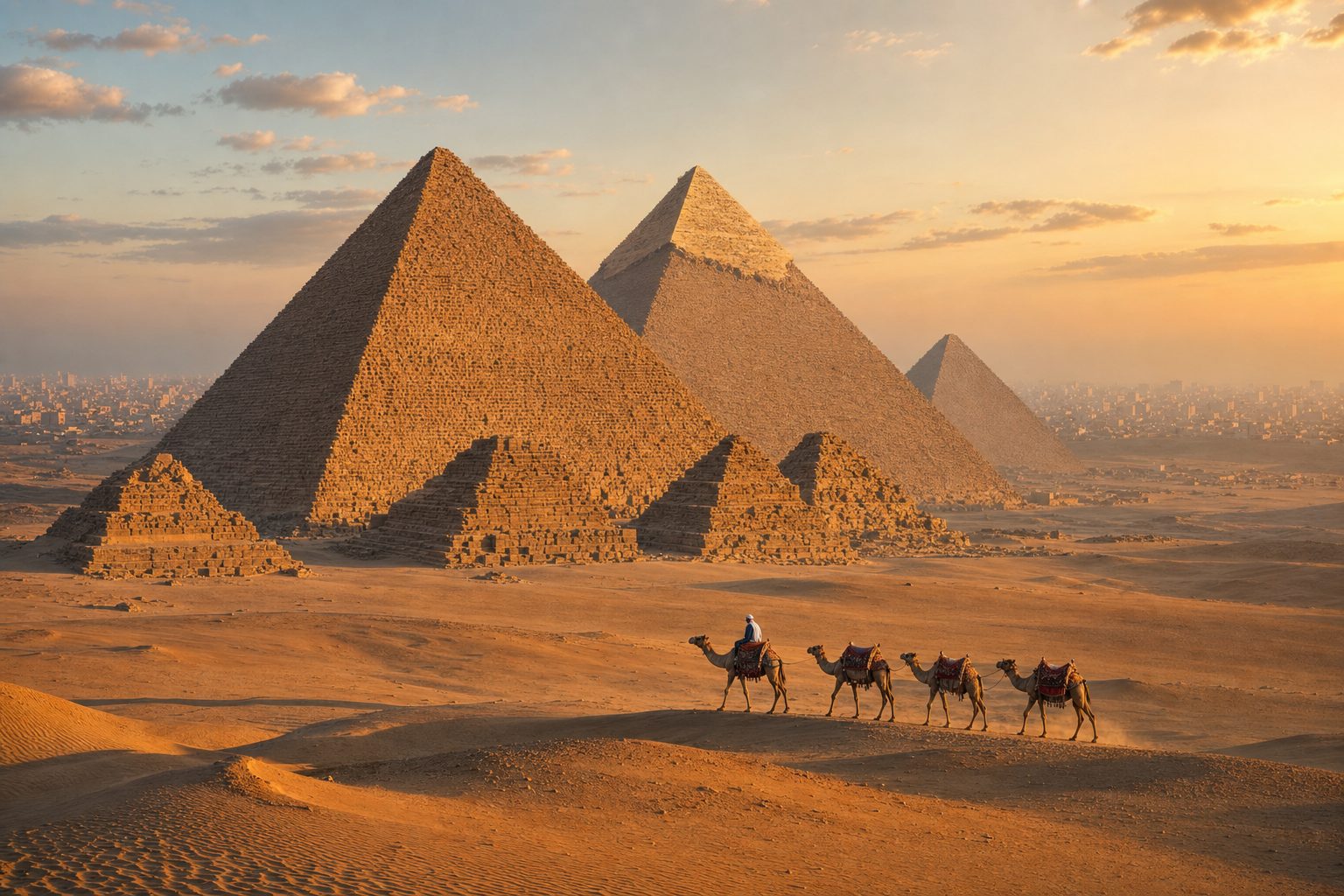
The Pyramids of Giza are not a single admission or a single photograph. They are a large, exposed archaeological landscape with a separate decision hiding behind the obvious one: whether the Great Pyramid’s interior is important enough to organise the morning around it. Add the Grand Egyptian Museum (GEM), where timed online entry has replaced walk-up sales, and the day becomes a question of priorities rather than a simple taxi ride from Cairo. The useful plan starts by choosing what must happen before the coaches, heat and sold-out add-ons make that choice for you.
This is a guide to the access reality behind the reel: the base ticket shows you the plateau, not the inside of Khufu; an animal ride is optional, not transport; and the museum across the road needs its own pre-booked slot. As checked in August 2026, fees, hours and booking rules can change. Recheck the official monuments booking page and the official GEM ticket site before paying, then build enough slack into the day for security, walking and Cairo traffic.
Choose the ticket tier before you choose the route
The general plateau ticket is the right purchase for most first visits. It allows the exterior circuit: Khufu, Khafre and Menkaure from outside, the Sphinx area and the changing scale of the plateau as you walk between them. It does not turn into an interior ticket at the door. Treat entering a pyramid as a separate, physical experience—narrow passages, close air, steps and a much smaller space than the landscape outside—not as a mandatory upgrade simply because this is Giza.
As checked in August 2026, foreign-adult entry to the Giza Plateau is 700 EGP and the student rate is 350 EGP with valid ISIC identification. Every pyramid interior is a separate paid add-on; the Great Pyramid of Khufu interior is about 1,500 EGP. [2]
If Khufu’s interior is the reason for coming, buy or secure that add-on first and make the exterior route fit around it. The price is only one filter. The interior is a confined climb through a historic structure, so it is a poor choice for anyone who knows that heat, steep movement or claustrophobia will overwhelm the visit. A traveller who is unsure will often get more from an unhurried plateau circuit, a knowledgeable licensed guide and time at the Sphinx than from forcing an experience that does not suit them.
There is no need to purchase every optional interior in the hope of making the visit “complete”. The practical hierarchy is simple: general entry is essential; Khufu is a deliberate, early-morning choice; other interiors should be considered only if time, physical comfort and live availability make them sensible. Keep the ticket confirmation and a payment card accessible. The government platform advises arriving well before closing and notes that students must show valid ID and be no older than 24 for the concession.
Read Giza as one extraordinary funerary landscape rather than three isolated monuments: its pyramids, temples, tombs and settlements record the power, beliefs and architectural achievement of ancient Egyptian civilisation.
— Paraphrased from the UNESCO World Heritage listing for Memphis and its Necropolis – the Pyramid Fields from Giza to Dahshur
Make the Great Pyramid interior the first move
The most important booking lesson is not to arrive at Giza and then decide about going inside the Great Pyramid. Only around 150 visitors a day are admitted, and the limited supply is the point. In the popular October–April period, walk-up places can disappear by mid-morning. That makes a late start false economy: it preserves a quiet hotel breakfast but risks losing the one part of the day that cannot be recovered in the afternoon.
Great Pyramid interior access is capped at roughly 150 visitors a day. As checked in August 2026, the 1,500 EGP add-on regularly sells out by mid-morning in the October–April high season; the Ministry platform is the safer route when the interior is non-negotiable. [2]
Plan to be ready for the published opening rather than merely leaving the hotel then. The official Giza page currently gives 07:00 opening and 16:00 last entry in both summer and winter, with an 08:00 opening and 15:30 last entry during Ramadan. Other visitor-facing pages may display different seasonal closing times, so the live government listing should win. The constant is the sensible one: arrive at opening for Khufu, and treat any later interior availability as a bonus rather than an entitlement.
As checked in August 2026, the official government listing gives Giza Plateau opening at 07:00 with last entry at 16:00, changing to 08:00 and 15:30 during Ramadan; it also advises arriving at least an hour before closing.
Use the plateau as a walk, not a rush between icons
Giza is bigger and more tiring than a telephoto photograph suggests. The Sphinx, the three main pyramids and the panoramic desert-side viewpoint pull in different directions, with sand, uneven surfaces and little shade. A workable half-day is usually enough for the exterior circuit and one interior; a more detailed visit needs longer. Start with the ticket-critical item, then allow the site to unfold on foot rather than trying to reproduce every viewpoint before midday.
From central Cairo, use a pre-arranged driver, a reputable tour or an app-based ride rather than assuming a quick map distance means a quick transfer. The plateau is about 13 kilometres south-west of central Cairo according to the visitor information site, and traffic can dominate the calculation. Pack water, sun protection, a charged phone and shoes that cope with sand and uneven ground. October to April is generally the kinder season for walking: Cairo’s average maxima range from 19.2°C in January to 29.9°C in October, while June to August sit around 34.5–35.1°C.
Dress for movement and local context rather than a costume change at the gate. Light layers that cover shoulders comfortably, sturdy footwear and a scarf for sun or dust make a more respectful and practical combination than precarious shoes or clothes chosen only for a picture. Keep valuables as you would at any crowded landmark. A calm, firm “la shukran” is useful when declining offers; do not let a polite conversation become an unwanted detour.
- Buy the plateau ticket only from the official channel or official booth, and keep a second card available in case the first payment fails.
- If Khufu is essential, secure its separate interior ticket before committing to a guide, camel ride or long photo stop.
- Carry water, sun protection and shoes for sand and uneven ground; assume the Sphinx-to-pyramid distances will take longer than they look.
- Use a licensed guide booked through a hotel or reputable operator if interpretation and vendor management are worth more than spontaneous bargaining.
- Keep the GEM booking confirmation offline and allow a full day if combining both sites rather than treating either as a 90-minute stop.
Handle camel and horse offers on your terms
A camel or horse ride is an optional viewpoint experience, not the only way across the plateau. The newer free shuttle and the designated activity areas mean there is no need to accept the first approach at the entrance. If an animal ride matters, begin at the designated Panorama Viewpoint zone or use a pre-booked fixed-price operator; either is preferable to following a stranger who promises a vague “special price”. The choice should also be an ethical one: look at the animal, decline if its condition concerns you, and do not feel obliged to buy a ride for the photograph.
The crucial rule is agreement before mounting. Say the total price, currency, duration, route, number of riders and whether the figure is per person or for the group; include the photo stop and the return or dismount. Put it in a phone note if there is any ambiguity, and pay only once everyone is back on the ground. Official-zone presence does not make an unclear verbal deal safe, while a pre-booked product gives a genuinely fixed price. The same discipline applies to horse carts, photos and “free” scarves.
Treat the Grand Egyptian Museum as a second reservation
The GEM changes Giza from an outdoor landmark visit into a two-part ancient-Egypt day: monuments in their original landscape, then objects and context under cover. Its formal inauguration was on 1 November 2025 and public entry began on 4 November. The practical news is not the ceremony date but the access rule that followed: the museum is a timed, online-only visit. Do not arrive expecting to buy a ticket at the door, and do not use a similarly named reseller site when the museum itself identifies its own ticketing portal as the sole official seller. Ahram Online’s opening report records the public-opening details.
As checked in August 2026, GEM’s policy remains online-only: from 1 December 2025, online booking became the exclusive way to buy tickets, with visitors required to reserve in advance and arrive in their selected time slot; on-site ticket counters halted sales. [6]
As checked in August 2026, a foreign-adult GEM ticket is roughly US$30, commonly listed as 1,450 EGP; the booking page shows the live category and date-specific availability. Budget for a rise if travelling from 1 November 2026: the Tourism Ministry announced a US$5 increase for foreign visitors. That makes the museum a reservation to make before finalising flights or hotel plans, not an improvised rainy-day alternative. The official timetable currently gives galleries 09:00–18:00 on regular days, extending to 21:00 on Wednesday and Saturday, with last entry one hour before gallery closing.
As checked in August 2026, the Tourism Ministry has announced that GEM admission for foreign visitors will rise by US$5 from 1 November 2026. Check the official booking calendar for the exact date-specific price before purchase. [7]
The sites are about two kilometres apart, so a combined day works if it is designed around two real visits, not a checklist. Start Giza at opening, especially if Khufu is booked; take a short transfer rather than assuming there is a pleasant, shaded walk; then use an afternoon GEM slot. A traveller who wants every gallery should split them over two days. For a one-day trip, choose a focused museum route and accept that the complete collection cannot be absorbed in a sprint. This is also where a Marrakech medina guide offers a useful parallel: an historic place rewards a few intentional choices more than an attempt to cover every lane or gallery.
Build the season and the next stop into the decision
October through April is the clearest first-choice window: it combines less punishing walking weather with the highest demand for the Great Pyramid interior. Book or arrive earlier, rather than imagining the cooler season removes crowds. Summer can still work for travellers who accept the heat and make a ruthless early start, use the museum as the afternoon shelter, and keep the plateau route short. Whichever month you choose, check both official sites for Ramadan, public-holiday or conservation changes immediately before the visit.
The best Giza day is not defined by how many ticket upgrades it contains. It is a plateau ticket used slowly, one interior chosen on purpose, an animal ride accepted only on clear terms, and a timed GEM reservation that turns logistics into a coherent second half. If Egypt is part of a wider route through historic trade worlds and desert landscapes, continue with our Petra planning guide or Wadi Rum desert guide; both reward the same habit of booking the scarce access first and letting the rest of the day breathe.
Sources & further reading
- 1. Egyptian Ministry of Tourism and Antiquities — Giza Plateau booking page
- 2. Cairo Tourism Guide — Giza Pyramids tickets and prices 2026
- 3. Ahram Online — Grand Egyptian Museum public opening report
- 4. UNESCO World Heritage Centre — Memphis and its Necropolis
- 5. Grand Egyptian Museum — official ticketing website
- 6. Ahram Online — GEM timed-entry booking announcement
- 7. Ahram Online — GEM ticket-price increase announcement
- 8. UK Met Office — Cairo weather