Lord Howe Island does not work like most island destinations. There is no scramble for the cheapest flight first and accommodation later, because the island's own rules forbid it in practice: only 400 tourists are permitted on Lord Howe at any one time, a ceiling set by the local board decades ago and still enforced through a fixed pool of licensed visitor beds. That single fact reorders every other decision a first-time visitor makes, from when to go to how to get around once there. This guide works through those decisions in the order they actually need to be made: bed first, then flight, then season, then how to spend days without a car or a phone signal.
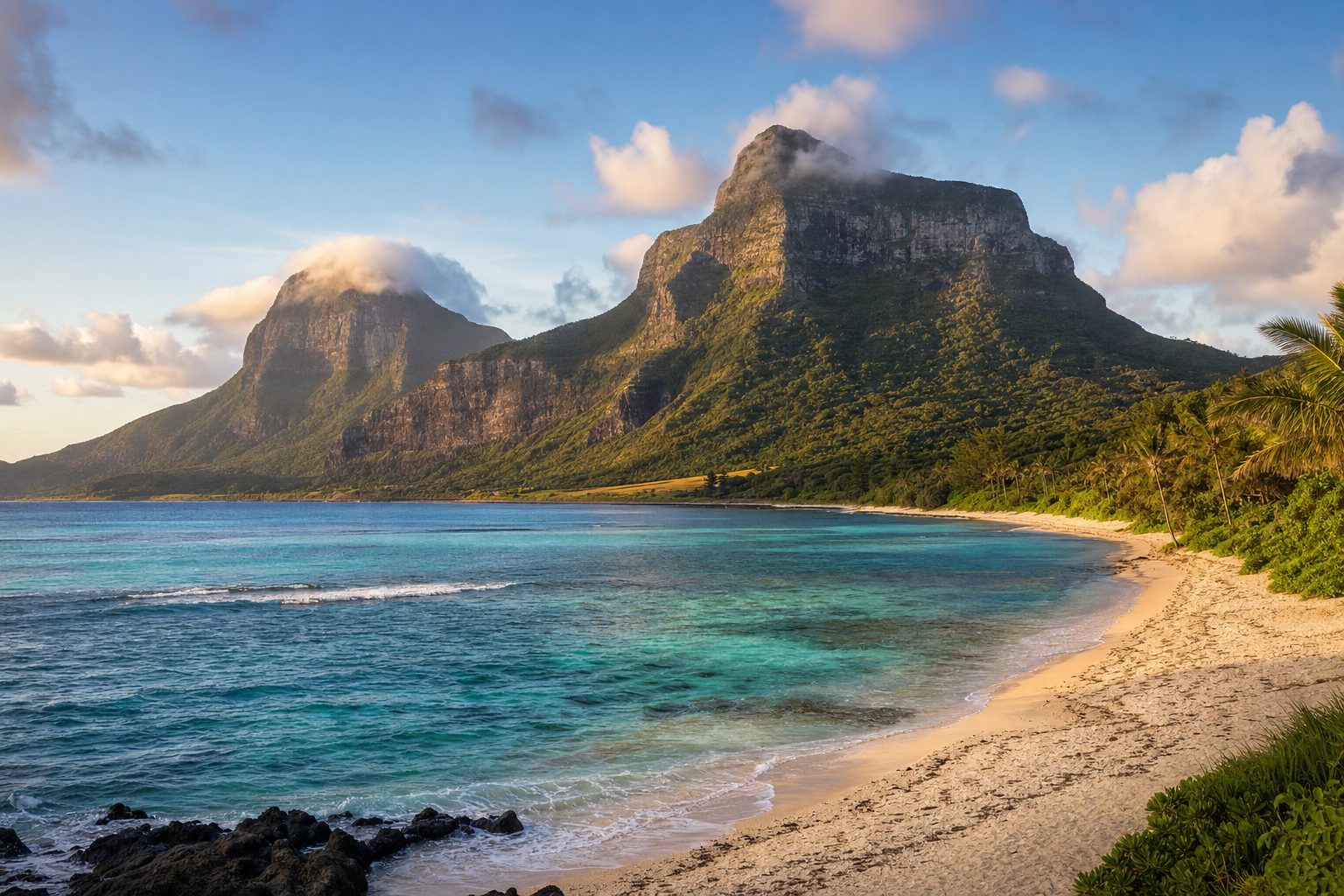
The island sits roughly 700 km northeast of Sydney, a crescent of rainforest and twin peaks wrapped around the world's southernmost coral lagoon. It has been managed as a controlled-access destination since the early 1980s, which is also why it still looks the way it does: no cruise ships, no high-rise hotels, no traffic beyond a scatter of bicycles. Understanding the cap, the flights, and the etiquette before booking anything is the difference between a smooth trip and a wasted non-refundable fare. None of this makes Lord Howe difficult to visit; it simply means the sequence of decisions runs in the opposite order to a typical beach or city trip, and getting that sequence right at the outset avoids most of the friction later.
Why the visitor cap decides everything else
Only 400 tourists are permitted on Lord Howe Island at any one time, a limit the Lord Howe Island Board has maintained for more than four decades to protect the island's environment and permanent community of roughly 350–450 residents. [3]
The cap is not a soft target or a marketing line; it is enforced through the number of licensed tourist beds the island's lodges are permitted to sell, so when those beds are full, there is functionally no more room regardless of flight availability. Lord Howe Island's official tourism site and Tourism Australia's guide both give the same instruction in almost the same words: confirm accommodation before buying airfares. Many discounted fares carry change or cancellation restrictions, so booking a flight first risks being unable to find a licensed bed to match it, or being stuck with a non-refundable ticket if a booking falls through.
Getting there: the only way in is by air
Short of arriving by private yacht, flying is the only realistic way onto the island. QantasLink operates year-round scheduled services from Sydney, a flight of under two hours on a pressurised turboprop, with connections available from other Australian capitals. As checked in August 2026, seasonal or limited scheduled air services also link the island to Port Macquarie, Newcastle and the Gold Coast on regional carriers, though frequency on those routes varies through the year, so travellers relying on them should check current timetables directly with the airline before finalising plans.
QantasLink flies to Lord Howe Island from Sydney year-round, with a flight time of under two hours; connecting flights are available from other Australian capital cities. [2]
There is no budget carrier on this route and fares are seasonal, rising through the September-to-February high season. Because the visitor cap keeps demand consistently ahead of supply in peak months, it is worth building in flexibility: travel insurance is routinely recommended by both the airline and the tourism board given the non-refundable nature of many fares and the possibility of weather delays on a short runway serving a remote island.
Choosing a season: what changes between the two halves of the year
Lord Howe's high season runs roughly September to February, when warm weather makes lagoon swimming, snorkelling and water sports comfortable and the island's beaches, walking trails and dive operators are all in full operation. June to August is the quiet counter-season: mild rather than cold, better suited to bushwalking through the island's forests, but with some restaurants, tour operators and smaller lodges reducing hours or closing altogether. Anyone planning a winter trip around a specific activity, whether that is a boat charter, a particular restaurant, or a guided walk, should confirm operating days directly with that business rather than assuming a high-season schedule applies.
High season on Lord Howe Island runs from September to February and low season from June to August; birdwatching, including the return of shearwaters at dusk, is best from September to May. [2]
Shoulder months either side of the main season offer a middle path: fewer crowds within the 400-person cap, milder temperatures, and most operators still running, though it is worth checking with individual lodges given how variable off-peak hours can be.
Getting around: bikes and boots, not a hire car
Cars exist on Lord Howe, but they are mostly reserved for residents who need them, and the settled part of the island covers only a few square kilometres crossed by around 13 km of narrow roads. Visitors overwhelmingly get around on foot or by bicycle, which most lodges provide or arrange, and cycling here means quiet, largely flat lanes under palm canopy rather than anything resembling traffic. A small number of rental cars exist for those who want them, but most visitors never need one across a typical stay.
- Hire or borrow a bicycle from your lodge on arrival; it is the default way to reach the lagoon, the museum and the general store
- Walk the graded network of tracks in the island's north for half-day outings such as Transit Hill or Malabar Hill without a guide
- Book a licensed guide well ahead for the full-day Mount Gower trek, since independent ascents are not permitted
- Bring cash or a card that works with limited EFTPOS access, since the island has only two banks
- Pack for a digital break: confirm Wi-Fi calling with your provider rather than expecting mobile signal
Mount Gower: the island's hardest walk, and why it needs a guide
At 875 metres, Mount Gower is the island's highest point and, by the local tourism board's own description, its hardest walk: a demanding return trek of roughly 14 km with rope-assisted sections and steep, unmarked terrain that climbs from coastal forest into a moss-draped cloud forest near the summit. The Lord Howe Island Board requires that anyone attempting it go with a licensed guide, both for safety on the exposed sections and to limit impact on threatened species, including nesting seabirds that have no natural predators on the mountain.
The Mount Gower walk is rated the hardest on Lord Howe Island, covers roughly 14 km return with an ascent to 875 metres, and by Island Board rule can only be undertaken with a licensed guide. [7]
Guided departures typically run early to make the most of daylight and cooler temperatures, take around eight hours return, and should be booked well in advance through a lodge or a licensed operator such as those listed on VisitNSW's tour directory. For a lower-commitment day, the island's graded network of shorter walks in the north, and the lagoon itself, cover most of what makes the island worth visiting without the full ascent.
The lagoon, the reef, and why cruise ships and camping are not options
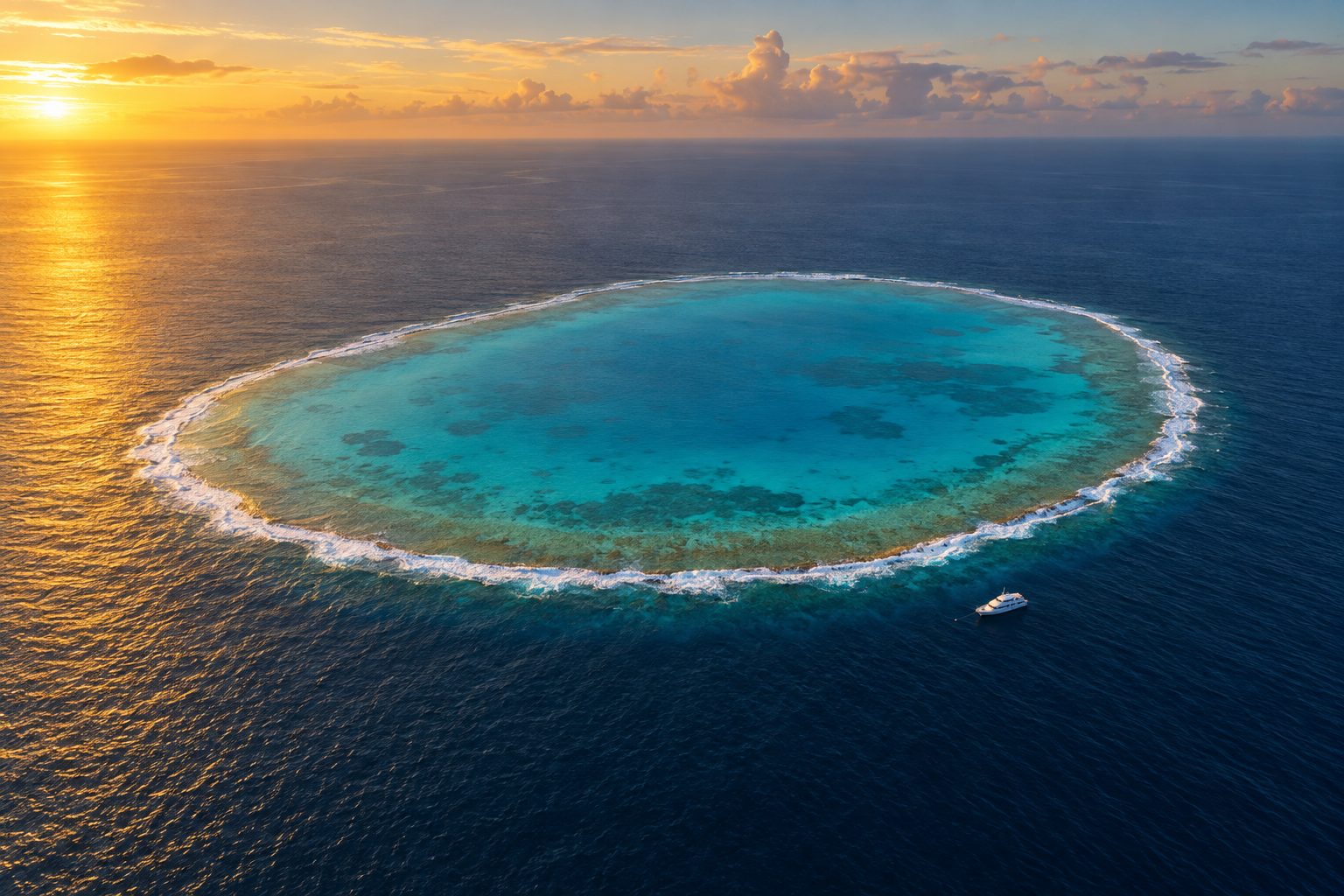
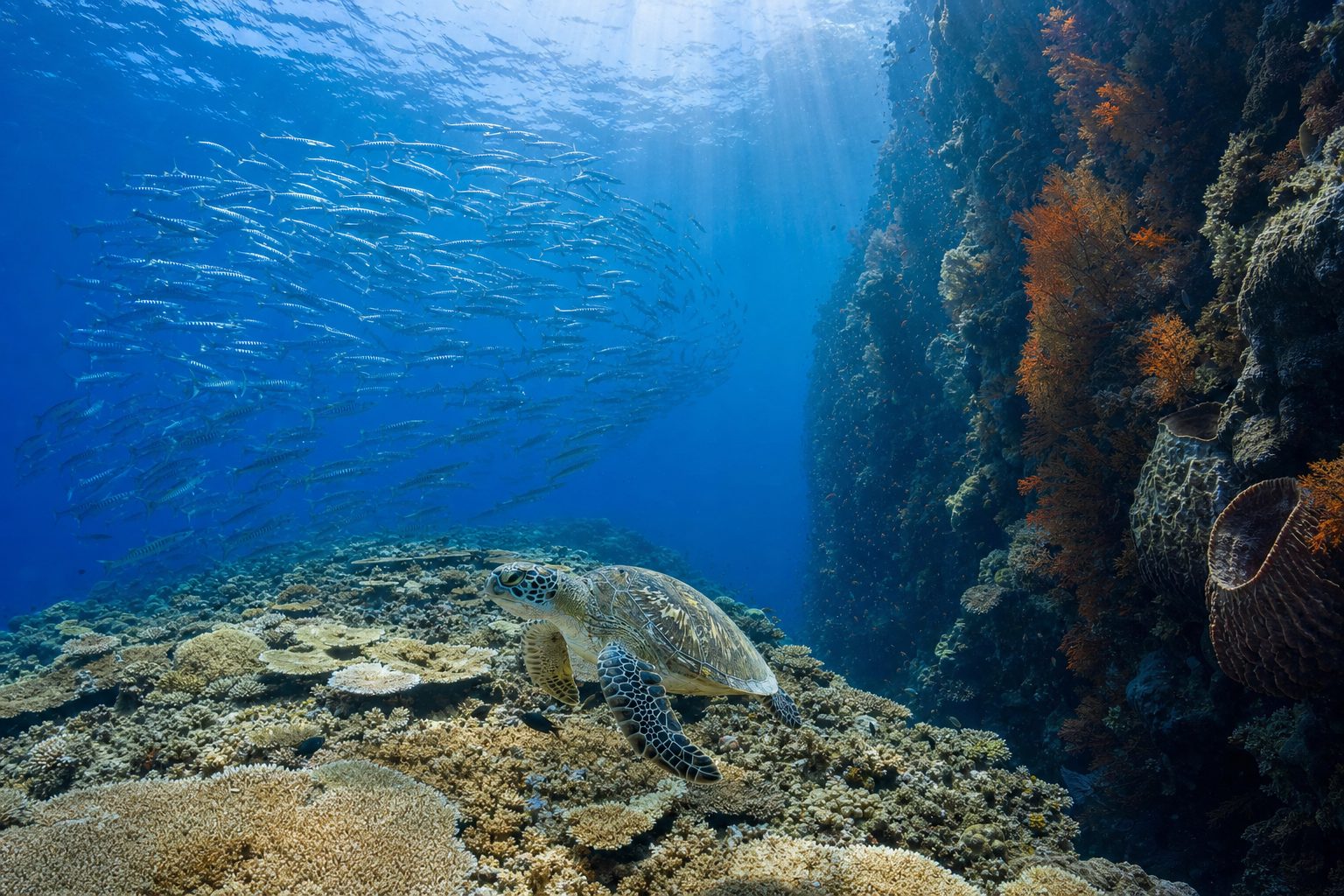
Lord Howe Island Group was inscribed on the UNESCO World Heritage List for its volcanic origins, its concentration of endemic species, and for hosting the world's most southerly true coral reef, all packed into a small land area. The lagoon on the island's western side is the easiest way to experience that reef directly, with snorkelling straight off several beaches and no motorised transfer required for most spots. Two rules shape how visitors experience it: cruise ships are banned from calling at the island, a policy locals have voted to maintain, and there is no camping permitted anywhere on Lord Howe, so every visitor stays in one of the licensed lodges that make up the bed cap in the first place.
The Lord Howe Island Group was inscribed on the UNESCO World Heritage List for its outstanding volcanic island landscapes and its high concentration of endemic species, including the world's most southerly true coral reef. [4]
Paraphrased from the UNESCO World Heritage listing: the Lord Howe Island Group is presented as an outstanding example of oceanic islands born of volcanic activity, prized both for its dramatic topography and for a concentration of endemic plants, birds and marine life found nowhere else.
— Paraphrased from the UNESCO World Heritage Centre listing for Lord Howe Island Group
That protective posture extends to smaller details: there is no mobile phone network on the island, so travellers should expect to rely on lodge Wi-Fi and confirm ahead of time whether their provider supports Wi-Fi calling. As checked in August 2026, this remains unchanged despite periodic proposals for a limited mobile microcell, and it is worth treating the absence of signal as a planning constraint rather than a novelty, particularly for anyone needing two-factor authentication codes while away. Several public payphones scattered around the settlement provide a fallback for calls, and most lodges keep landlines that guests can use, so the practical effect is less about isolation than about resetting expectations before arrival.
Budgeting and behaviour: what the cap means for cost and conduct
Because bed numbers are fixed rather than expandable, Lord Howe has never developed a hostel or budget-camping tier, and accommodation, food and guided activities all sit at a mid-to-upper price point relative to mainland Australia. The upside of the cap is a genuinely uncrowded experience: beaches with only a handful of other visitors even in high season, and a community that has organised itself for more than 40 years around keeping it that way. Visitors are expected to follow the same low-impact habits locals do, from not disturbing seabird burrows on walking tracks to respecting sanctuary zones in the surrounding marine park where fishing and anchoring are restricted.
For travellers weighing Lord Howe against other capped-access island trips, the underlying trade-off is the same one that shapes a booking strategy for the lagoons of El Nido in Palawan: fewer visitors permitted at once means better-preserved reefs and quieter beaches, but also a firmer requirement to plan lodging, guides and transport well ahead of arrival rather than improvising on the ground. Travellers assembling a broader Pacific itinerary might also look at Sydney and the Blue Mountains as a mainland bookend before or after the flight out to the island, since Sydney is the main gateway airport for Lord Howe's QantasLink service.
Sources & further reading
- 1. Lord Howe Island — Getting There (official)
- 2. Tourism Australia — Guide to Lord Howe Island
- 3. BBC Travel — Lord Howe: Australia's Most Exclusive Island?
- 4. UNESCO World Heritage Centre — Lord Howe Island Group
- 5. Wikipedia — Lord Howe Island
- 6. VisitNSW — Mount Gower Trek
- 7. NSW Government — Mount Gower