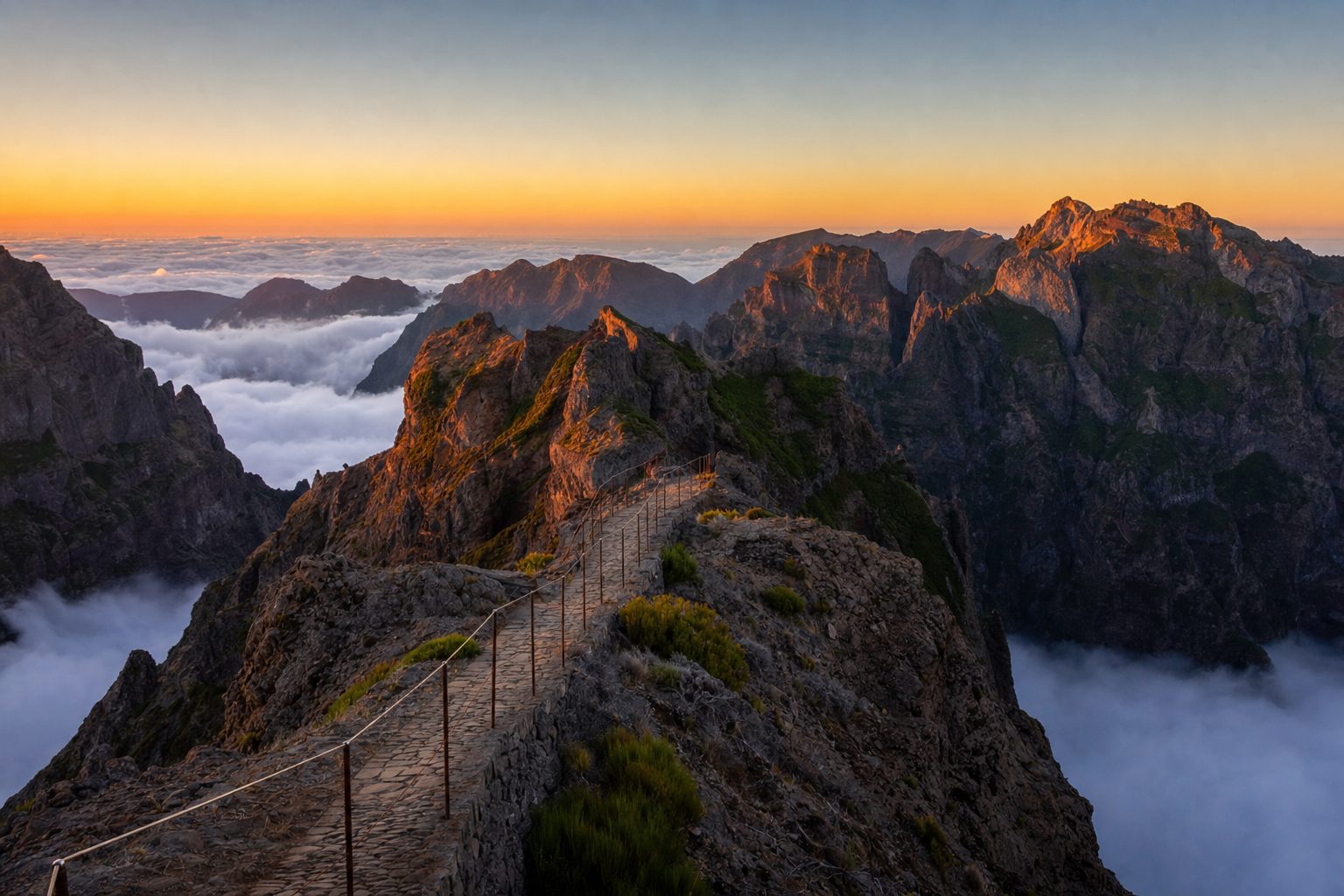
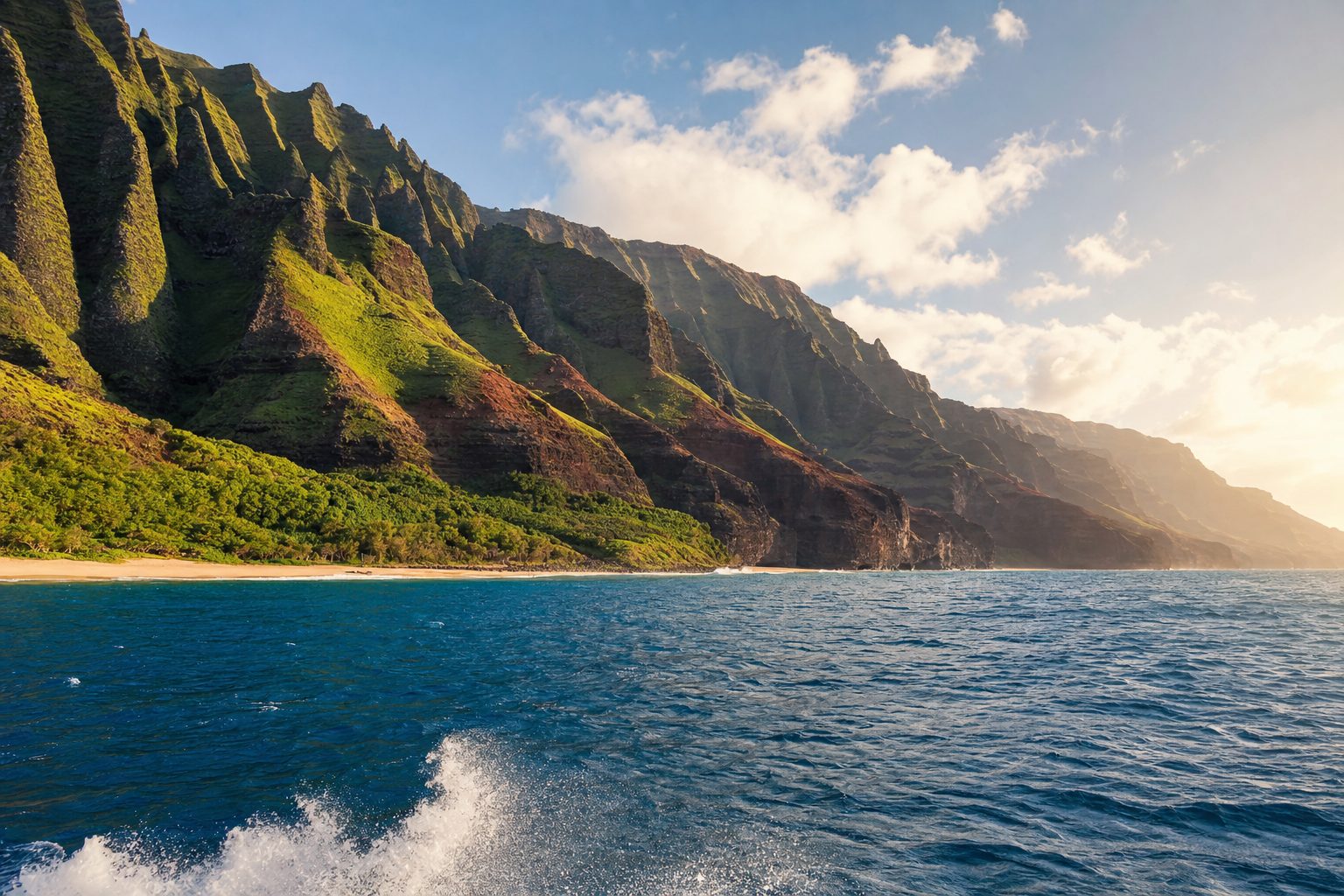
The Nā Pali Coast is the stretch of Kauai's north-west shoreline where paved roads simply stop and roughly 6 kilometres of fluted green cliffs drop straight into the Pacific, reachable only on foot, by boat, or from the air. Before booking anything, a first-time visitor has to settle four separate questions: whether they can even get into the trailhead park, how far up the Kalalau Trail they are legally allowed to walk, whether a boat tour will run from the side of the island they are staying on, and what the surf is doing that week. None of these are matters of preference. Each one is gated by an official reservation system, a permit quota, or a seasonal safety rule that changes what is physically possible on a given day.
This guide works through those decisions in order, using the state park system's own current guidance rather than older trip reports, since Kauai's access rules for this coastline have changed substantially over the past few years and continue to be adjusted.
Why you cannot just drive up and walk in
The only road access to the eastern end of the Nā Pali Coast is through Hāʻena State Park, home to Kēʻē Beach and the trailhead for the Kalalau Trail. Since a 2019 reopening that followed catastrophic 2018 flooding on Kauai's north shore, the park has operated under a strict access-management system: non-residents cannot simply drive up and park. Every non-resident visitor needs either a Park Entry Reservation, a Parking Reservation, or a valid camping permit for Nāpali Coast State Wilderness Park, booked in advance through the park's own portal.
As checked in July 2026, Hāʻena State Park requires every non-resident visitor to hold a Park Entry Reservation ($5 per person) or a Parking Reservation ($10 per vehicle, which also requires an entry reservation), bookable up to 30 days in advance; Hawaii residents enter free with valid state ID. [1]
Reservations are sold through GoHaena.com, the park's dedicated booking site, which offers three products: Shuttle + Entry Pass, Parking + Entry Pass, and Entry Pass Only for anyone dropped off or arriving on foot or by bike. The site itself warns that parking is limited and reservations sell out quickly, and independent trail guides note that the 30-day booking window opens at 12:01am Hawaii Standard Time and that slots for popular dates are often gone within minutes of release.
The shuttle alternative if parking is full
Hāʻena's parking allocation is small relative to demand, so the park also runs a shuttle from two pickup points on the north shore: Waipā Park & Ride in Hanalei, with free all-day parking and departures roughly every 20 minutes through the morning, and a walk-up stop at the Princeville Makai Golf Club with no parking of its own. Both are booked the same way, through GoHaena.com, and the shuttle pass includes the park's entry fee. For travellers who cannot secure a parking slot, or who would rather not deal with the single-lane, flood-prone road out to Hāʻena, the shuttle is generally the more reliable option, not simply a fallback.
As checked in July 2026, the Hāʻena shuttle departs Waipā Park & Ride roughly every 20 minutes from 6:20am to 12:40pm with free parking at the pickup point, and separately from Princeville Makai Golf Club at 7:00am and 9:00am with no parking supplied there. [2]
How far you can actually hike without a permit
A Hāʻena State Park entry or parking reservation buys access to Kēʻē Beach and the first section of the Kalalau Trail, as far as Hanakāpīʻai Valley, roughly two miles in, with the side trip up to Hanakāpīʻai Falls making the full round trip about eight miles. This is the legal limit for day hikers. The Nāpali Coast State Wilderness Park's own rules state plainly that anyone continuing past Hanakāpīʻai, whether toward Hanakoa or the trail's end at Kalalau Beach, must hold a valid overnight camping permit, even for a single-day out-and-back attempt with no intention of camping.
The park's guidance states that day hiking the Kalalau Trail without a camping permit is permitted only as far as Hanakāpīʻai Valley, two miles from the trailhead, and that proceeding beyond that point requires a valid camping permit regardless of whether the hiker intends to camp overnight.
— Paraphrased from the Hawaii DLNR camping reservation system FAQ
Camping permits for Nāpali Coast State Wilderness Park are issued through the state's online reservation system, are valid for Kalalau Beach at the trail's 11-mile end point (with one stopover night each way permitted at Hanakoa, roughly six miles in), and cap out at five consecutive nights. As of early 2026 the state has begun migrating new bookings to a platform called Explore Outdoor Hawaiʻi, so travellers who used the older camping.ehawaii.gov system on a previous trip should expect to create a new account rather than reuse old login details.
As checked in July 2026, camping permits for Nāpali Coast State Wilderness Park cost $25 per person per night for Hawaii residents and $35 per person per night for non-residents, can be booked up to 90 days in advance, and allow a maximum of five consecutive nights with no more than one consecutive night at Hanakoa. [3]
- Book a Hāʻena State Park entry or parking reservation at GoHaena.com if hiking only to Hanakāpīʻai Beach or Falls (up to 8 miles round trip, no camping permit needed).
- Book a Nāpali Coast camping permit separately if going beyond Hanakāpīʻai to Hanakoa or Kalalau, even for a single long day; a valid camping permit also covers Hāʻena park entry.
- Reserve overnight parking at Hāʻena separately from the camping permit once the permit is confirmed, since the two systems are not linked.
- Check trail status before travelling; the Kalalau Trail beyond Hanakāpīʻai is periodically closed for weather, rockfall, or feral animal control.
- Carry a printed or downloaded copy of any reservation or permit, since rangers check them at the park gate and on the trail.
Seeing it by boat instead of on foot
Most visitors never walk past Hanakāpīʻai; they see the coast's dramatic mid-section, including the sea caves and Kalalau Valley itself, from the water. Boat tours run out of Port Allen and Kikiaola Small Boat Harbor on the south-west side of the island year-round, but the north-shore option, departing from Hanalei Bay directly beneath the cliffs, is strictly seasonal. Calmer trade-wind conditions and settled swell make the north and west shores workable roughly from May to September, and several operators run their full sea-cave itineraries only within that window, since winter swell can make the cave entrances impassable and shuts down Hanalei-side departures altogether.
Winter is not a write-off for boat access, though it changes shape: some south-side operators keep running through the cooler months by leaning on the more sheltered south shore and Kikiaola's shorter run out to the cliffs, and winter trips add a reasonable chance of spotting humpback whales, which are absent in summer.
Winter surf and why Kēʻē Beach closes without warning
Kēʻē Beach, the trailhead beach itself, is unguarded and faces north into exactly the swells that build through the winter months. Kauai's county ocean safety office has repeatedly closed the entire north-shore corridor, from Larsen's Beach to Kēʻē and along the Nāpali Coast, during high surf warnings, when forecast wave heights on north-facing shores have reached the 20 to 40 foot range. Even outside a formal closure, the reef that keeps the bay swimmable in summer stops offering meaningful protection once a north swell is running, and currents generated by waves breaking over that reef pull directly along the base of the cliffs, where there is no easy way back to shore.
As checked in July 2026, Kauai's Ocean Safety Bureau has closed all north-shore beaches from Kaʻakaʻaniu (Larsen's) to Kēʻē, and the Nāpali Coast, during high surf warnings with forecast waves of 22 to 40 feet on north-facing shores, and advises against entering the water anywhere in that zone under those conditions. [4]
A visit built around calm-water swimming or snorkelling at Kēʻē is therefore a summer plan more than a winter one; travellers set on a winter trip should treat the beach primarily as scenery and a trailhead, and check county or National Weather Service surf advisories the morning of any visit rather than assuming access. The same seasonal logic applies to swimming anywhere directly on the north shore's exposed beaches outside the summer months.
Waimea Canyon: the view for anyone without a permit or a boat slot
For travellers who cannot get a Hāʻena reservation, do not want to hike, or are visiting in a season when boats are not running from the side of the island they need, Waimea Canyon and the adjoining Kōkeʻe State Park offer the only road-accessible view into the Nāpali Coast's interior. A paved 19-mile drive up Highway 550 from Waimea town climbs through Waimea Canyon Lookout at mile marker 10, past Puʻu Hinahina, and up to Kalalau Lookout and Puʻu o Kila Lookout near miles 18 and 19, both looking directly down into Kalalau Valley and out toward the coast. Cloud cover builds through the day, so arriving before roughly 10 or 11am gives the best odds of an unobstructed view.
As checked in July 2026, Waimea Canyon State Park charges non-residents $5 per person entry and $10 per vehicle parking, with Hawaii residents free with ID, and both fees are collected at the lookouts rather than reserved in advance. [5]
Road and lookout construction has affected this drive on and off since mid-2025; check the park's own notices before setting out, since individual lookouts along Waimea Canyon Drive and Kōkeʻe Road have been temporarily closed for safety upgrades even while the rest of the route stayed open.
Putting a visit together
The practical shape of a Nā Pali Coast trip depends on which of these constraints matters most: a hiker fixed on reaching Kalalau Beach should be booking a camping permit up to 90 days out well before touching the Hāʻena reservation system at all, while a family wanting Kēʻē Beach and the Hanakāpīʻai round trip only needs the 30-day Hāʻena window and a summer date if swimming matters. Anyone building the visit around a boat tour should fix the departure port to the season, not the itinerary photos on a tour operator's homepage. And for the days when none of that lines up, the Waimea Canyon lookouts remain open on ordinary drive-up terms, weather and roadworks aside.
Kauai rewards this kind of sequencing more than most Hawaiian islands, since so much of its signature coastline is deliberately hard to reach. Travellers mapping a longer Pacific itinerary around this kind of tightly managed wilderness access might also find useful parallels in planning a Pacific Coast Highway road trip, where the driving is unrestricted but the coastal detours still reward the same habit of checking official access rules before, not after, booking flights, or in general adventure travel planning built around permits and seasonal windows rather than fixed itineraries.
Sources & further reading
- 1. Hāʻena State Park (official DLNR page)
- 2. GoHaena.com (Hāʻena reservation and shuttle portal)
- 3. Special Permit Rules for Nāpali Coast State Park (DLNR)
- 4. North Shore Beaches Closed Due to High Surf Warning (County of Kauai)
- 5. Waimea Canyon State Park (official DLNR page)
- 6. Nāpali Coast State Wilderness Park (official DLNR page)
- 7. Hawaii Camping Reservation System FAQ
- 8. Capt Andy's Nā Pali Coast Boat Tours FAQ