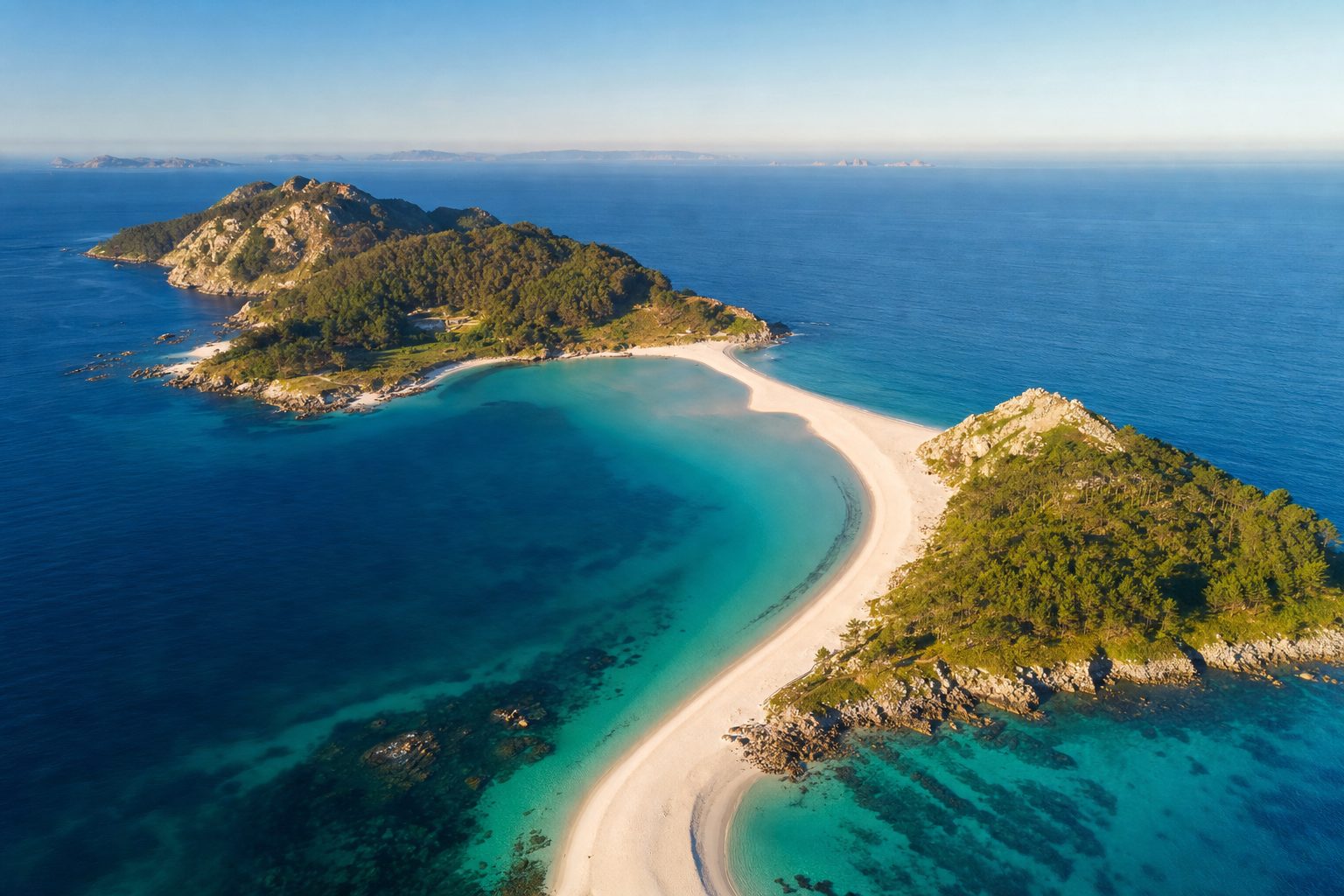
The reel that brings most people to the Cíes Islands is a single aerial shot: a white crescent of sand joining two green islands, a pale lagoon trapped behind the bar, and the deep blue of the open Atlantic beyond. The caption is usually some version of the same warning — permit first, ferry second, paradise third — and for once the caption is the useful part. You cannot simply buy a ferry ticket to the Cíes. Before any operator will sell you a seat in high season, you need a free visitor authorisation from the Xunta de Galicia, the regional government, and once that authorisation is issued the clock starts running on your ticket purchase.
None of this is difficult, but the order of operations is strict, and the archipelago's daily visitor cap means the best summer dates disappear months ahead. This guide works through the decisions in the sequence the system imposes on you: how the authorisation works, which mainland port to sail from, what to do with your hours on the islands, whether to stay the night at the only accommodation there is, and how to behave in a national park that has quietly become Spain's reference case for managing crowds.
Why you cannot just buy a ferry ticket
The three islands of the Cíes — Monteagudo, Faro and San Martiño — sit at the mouth of the Ría de Vigo in Galicia, in Spain's far north-west, and form part of the Atlantic Islands of Galicia National Park. Protection here is not decorative. The archipelago hosts important seabird colonies, a fragile dune system and cliffs that drop more than 150 metres into the ocean on the exposed western side, and the regional government decided years ago that unlimited summer landings were incompatible with keeping any of it intact.
The daily visitor cap on the Cíes Islands is 1,800 people in high season, which runs from 15 May to 15 September, and drops to 450 people a day for the rest of the year. [7]
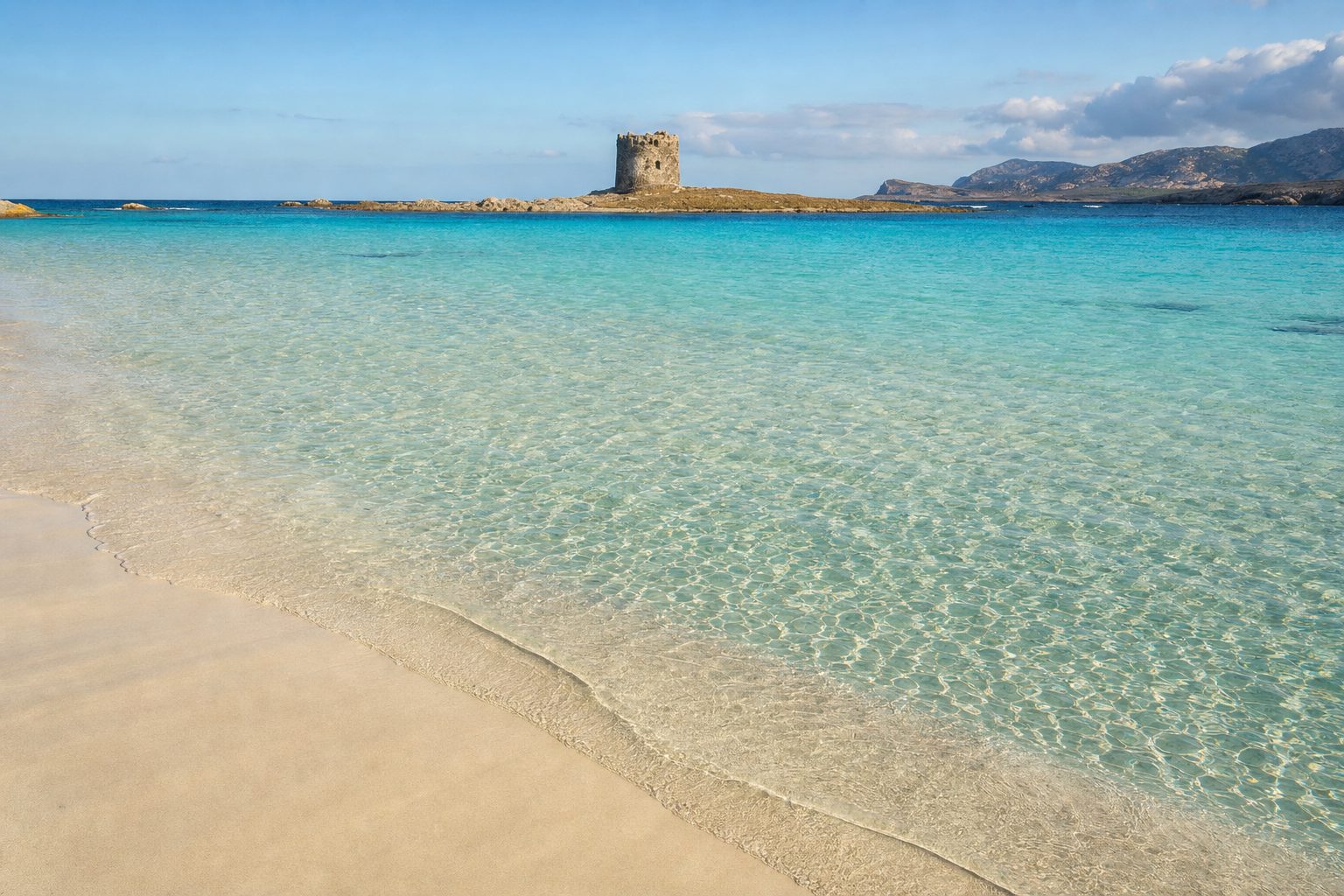
The cap, introduced in 2017, changed how people plan. Where day-trippers once turned up at the port of Vigo and bought a same-day ticket, summer visits are now organised up to three months in advance, and arrivals have spread across the year rather than piling into July and August. If you have read about the booking systems at La Pelosa in Sardinia, the logic will feel familiar: a hard daily number, a booking portal and a calmer beach as the result.
There were simply too many people before the limit came in; visitors now recognise why the cap exists and respect it, and the sense of scarcity has, if anything, made the islands more appealing — conservation is what protects the very asset the region's tourism depends on.
— Paraphrased from the national park director's remarks to the Guardian, September 2024
The permit: how the authorisation actually works
During Holy Week and the high season from 15 May to 15 September, every day visitor arriving by scheduled ferry must first obtain the free administrative authorisation at autorizacionillasatlanticas.xunta.gal. The form takes four steps — reservation details, applicant details, the name and ID number of every visitor in your group, and confirmation — and issues a provisional pre-reservation code. Outside those dates, you do not use the portal at all; the authorised ferry companies arrange the permit directly when you book with them.
The pre-reservation code issued by the Xunta portal is valid for two hours; if you have not bought a ferry ticket from an authorised shipping company within that window, the code expires and you must repeat the whole authorisation process. [1]
As checked in August 2026, authorisation requests open 90 days before the travel date, and an issued authorisation can be cancelled up to 15 days before the visit through the same portal. The two-hour rule is the step that catches people out: request the permit only when you are ready to pay for the boat immediately afterwards. Once the ticket is bought, the final authorisation arrives by email, usually as a QR code, and you should keep it on your phone for the crossing. Note that campers follow a different route entirely — the campsite processes the authorisation on your behalf once your pitch is confirmed.
- Choose a date and check ferry availability from your preferred port before touching the permit portal.
- Request the free authorisation at autorizacionillasatlanticas.xunta.gal with ID details for everyone travelling.
- Buy your ferry ticket from an authorised operator within two hours of receiving the pre-reservation code.
- Save the final authorisation email and QR code, and carry ID that matches the names on it.
- Recheck the sailing the day before you travel, as schedules depend on Atlantic conditions.
Ferries: choosing your port on the Ría de Vigo
Access is only by sea. In summer and at Easter, authorised operators run daily crossings from Vigo, Cangas and Baiona, with additional seasonal departures from Sanxenxo and Portonovo further up the coast, all landing at the pier on Monteagudo. Vigo has the most frequent departures and the easiest connections if you are arriving by train; Baiona is the shortest crossing and a handsome harbour town in its own right; Cangas suits anyone staying on the Morrazo peninsula.
The crossing takes approximately 40 minutes from Vigo and about 35 minutes from Baiona, while boats from Cangas take around an hour when they call at Vigo en route. [5]
As checked in August 2026, a standard adult return from Vigo costs roughly EUR 25 in high season, with children travelling for about half that; exact fares vary by operator and port, so confirm the current price when you book. The Rías Baixas tourism board keeps a list of authorised shipping companies, which includes Mar de Ons, Nabia and Cruceros Rías Baixas among others. Build slack into your plans: these are open Atlantic waters, sailings run weather permitting, and operators can cancel crossings when the sea state turns rough, particularly outside midsummer.
Rodas Beach, the lagoon and the lighthouse climb
Praia de Rodas is the image that made the islands famous: a kilometre-long curve of pale sand that acts as a natural bridge between Monteagudo and Faro islands, with the sheltered lagoon of O Lago — the Lagoa dos Nenos — pooled behind it and a protected dune system at its back. It is a short, flat walk from the ferry pier, which is precisely why it fills first on busy days. The water is glassy, genuinely turquoise in sunshine and cold: the sea around the islands averages about 14°C, so swims tend to be brisk rather than lingering.
Escaping the crowd is straightforward because most visitors never leave Rodas. Praia de Figueiras, a few minutes north of the pier, and the cove of Nosa Señora on Faro island are quieter alternatives, and four waymarked trails cover the walkable archipelago. The classic is the 3.5-kilometre route up to the Faro de Cíes lighthouse on the highest point of Faro island, a steady switchback climb with views over the sandbar, the lagoon and across to San Martiño; shorter options run to the Alto do Príncipe viewpoint (1.7 kilometres) and the Faro do Peito lighthouse on the wilder northern shore (2.5 kilometres). Between the beach and one long walk, a day trip fills itself.
The Cíes archipelago has been protected as a natural park since 1980 and designated a Special Protection Area for birds since 1988, with western cliffs rising more than 150 metres above the Atlantic. [2]
When to go: the case for the edges of the season
July and August deliver the reel — the warmest air, the bluest lagoon and the fullest ferry timetable — but they are also when the 1,800 daily places are under the most pressure and the campsite is at its busiest. June and the first half of September keep the high-season sailings while easing the competition for dates, and Galicia's light stays long into the evening. Outside 15 May to 15 September the calculus changes entirely: the cap falls to 450, the portal switches off and permits run through the ferry companies, and crossings become sparse and more exposed to weather, but you will share Rodas with almost no one. Whatever the month, plan for Atlantic moods rather than Mediterranean certainty — this is a corner of Spain where a bright morning can turn to sea mist by noon, and where the weather changes quickly enough that a cancelled sailing is a real, if occasional, possibility to hold in your itinerary.
Staying overnight: one campsite and nothing else
There are no hotels, no apartments and no holiday lets on the Cíes. The only way to sleep on the islands is Camping Islas Cíes, the regulated campsite on Faro island, which operates from May to September with pitches for your own tent and pre-erected rental tents, plus a restaurant, café, mini-market, hot showers and lockers. Its great advantage is time: campers keep the beaches and trails after the last ferry leaves, when the islands empty and the light goes gold, and gulls replace people as the dominant presence on Rodas.
Booking works through the campsite's own website, and — usefully — the campsite handles the Xunta authorisation for the nights you have reserved, so overnight guests skip the day-visitor portal. You still need to book your ferry, and you still need to plan ahead: summer weekends and the weeks around mid-August sell out well in advance.
Rules, rubbish and the island you cannot ferry to
The park's rules are few but firm, and the one that surprises people most is the absence of infrastructure: there are no rubbish bins anywhere on the islands, and everything you carry in you must carry back to the mainland. Loud music is banned for the sake of the nesting birds, feeding wildlife is prohibited, and nothing — shells, plants, sand — may be removed. None of this is onerous on a day trip if you pack accordingly: take a bag for your waste, water, and food if you do not want to rely on the restaurant at the pier or the campsite shop.
San Martiño, the third and southernmost island, is a separate decision altogether. No scheduled ferry lands there; it is reachable only by private or chartered boat, anchoring in the park requires its own permit, and outside the ferry season a private boat is in fact the only way to reach any of the archipelago. For most first-time visitors the honest answer is to leave San Martiño for another trip and give Monteagudo and Faro the full day they deserve. If you do arrive under your own sail, the same conservation logic applies afloat as ashore: permits, restraint and a park authority that takes both seriously.
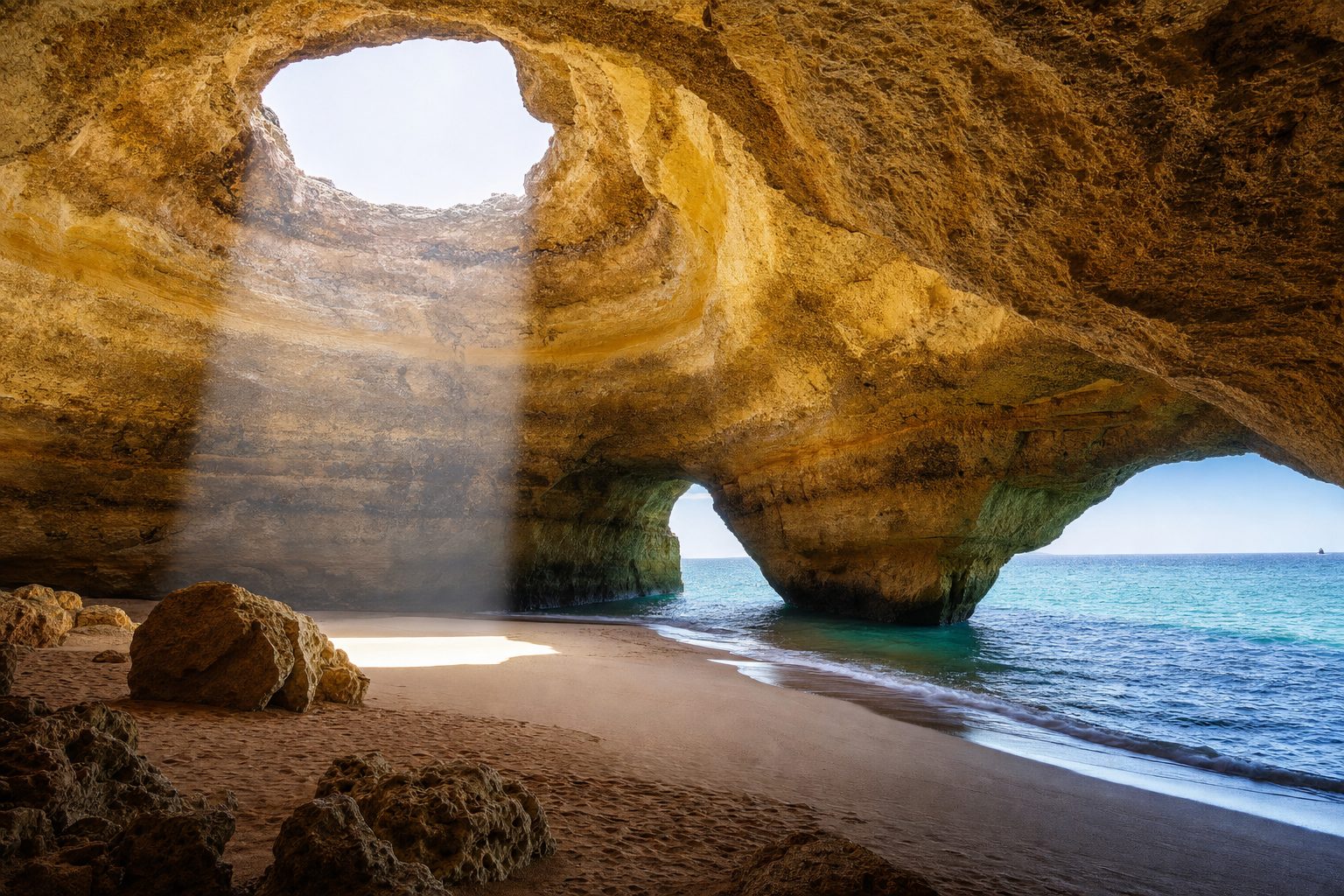
Seen from the lighthouse in late afternoon, the crowds the cap was built to manage are invisible: a scatter of figures on a very long beach, a pair of ferries idling off the pier, and the Atlantic doing the rest. The Cíes reward exactly the kind of traveller willing to do the paperwork in the right order, and they sit within easy reach of other coastlines that ask for similar discipline — the timed trails of the Cinque Terre, or the licensed-boats-only approach to Benagil Cave on the Algarve, a natural next stop as you work down the Iberian Atlantic coast.
Sources & further reading
- 1. Xunta de Galicia — Atlantic Islands visit authorisation portal (rules and FAQ)
- 2. Galician Atlantic Islands National Park — Cíes archipelago (official park site)
- 3. Turismo Rías Baixas — Cíes Islands (official provincial tourism board)
- 4. Turismo de Vigo — How to get to Cíes (official city tourism board)
- 5. Mar de Ons — Cíes Islands permit and crossing times (authorised ferry operator)
- 6. Camping Islas Cíes — the islands' campsite (official site)
- 7. The Guardian — How a Spanish eco-beauty spot tackled overtourism (September 2024)
- 8. Lonely Planet — A guide to Spain's Illas Cíes