Namaqualand’s wildflower season is not an attraction with a start time. It is a short, weather-led opening across a large corner of South Africa’s Northern Cape, and that changes the most useful question from ‘where is the best field?’ to ‘how can this trip stay flexible enough to notice what is happening today?’ That approach makes the journey kinder to both the traveller and the landscape.
This guide is for visitors who would rather build in room for a good day than race through a checklist. It links the main park stop with Nieuwoudtville’s botanical landscape, and it treats the bloom as a reason to slow down—not a reason to step into a field for a photograph.
Treat the calendar as a window, not a promise
The broad planning window is real: Namaqua National Park identifies early August and September as flower season, while SANBI’s Hantam guide places the Bokkeveld Plateau’s biggest displays from August to mid-October. Neither timetable can tell you what a specific roadside or valley will look like on a given morning.
Flower heads respond to conditions. South African Tourism notes that heavily overcast or rainy weather can keep the flowers from opening, so a spare day is more valuable here than another fixed stop. [4]
For an August or September trip, choose accommodation that allows an extra night and avoid building the whole visit around one afternoon. Check local information offices and the park before setting out; the useful update is the day’s conditions, not last week’s social post. Morning can be for driving and route-finding, with the decision to linger made when the light and weather cooperate.
Choose two bases rather than one heroic loop
Namaqualand is expansive. A sensible first visit divides the map into an inland flower day around Namaqua National Park and a plateau day around Nieuwoudtville and Hantam National Botanical Garden. That is not a claim that every traveller needs a week; it is a way to stop a six-hour drive from Cape Town becoming a rushed there-and-back chase for colour.
The official Wild Flower Route guidance puts Namaqua National Park roughly 495 kilometres from Cape Town and Hantam near Nieuwoudtville around 350 kilometres away. Use those distances as a cue to plan an overnight, not as an invitation to drive faster. If the itinerary begins or ends in the Western Cape, Meridian’s Cape Town and Garden Route guide is a useful separate read for the coastward leg.
Arrive ready for a working national park
A flower trip still needs ordinary park preparation. SANParks says a sedan or 2×4 can be used in inland areas, but that seeing more of Namaqua National Park calls for a 4×4. Its visitor information also notes that fuel and cash services are outside the park. Plan the vehicle, water, food and fuel before the gate instead of assuming they will be available once the flowers begin.
Namaqua National Park asks visitors to complete a gate registration and indemnity form and present identification; the park advises confirming current entry and exit times before arrival, because they may change. [3]
This is where a deliberately modest plan pays off. Keep the registration form, identification and booking details together; download maps while you have signal; and choose an entry point and turning-around time before you are tired. Visitors heading towards coastal sections should pay particular attention to the park’s day-visitor cut-offs rather than treating a map route as an all-day guarantee.
See the bloom without asking it to absorb you
The pleasure of a flower season can be surprisingly social: people at a lookout comparing notes, a ranger pointing out the route that is working, families stopping for a packed lunch. Those small exchanges are part of why it is worth leaving the schedule loose. But the scene works only if everyone accepts that the flowers are not a stage set. Stay on signed paths and designated stopping places, keep wheels where vehicles are permitted, and resist moving off-route for a closer frame.
Hantam’s official information describes a garden of more than 6,000 hectares with several habitats, and its spring visitor hours extend to seven days a week in August and September. It is a helpful counterweight to the desire for a single ‘superbloom’ image: a slower walk can reveal bulbs, annuals and the changing ground beneath them. For a different Southern African wildlife trip later in the year, see Meridian’s first Serengeti safari guide; it has a distinct seasonal rhythm and planning logic.
A four-night shape that leaves room for luck
- Night 1: arrive in a gateway town, check the next day’s local conditions and prepare park documents, fuel and water.
- Day 2: make Namaqua National Park the one non-negotiable day, but keep the route and duration responsive to the weather and your vehicle.
- Day 3: travel towards Nieuwoudtville with pauses only where they are safe and permitted; use Hantam for trails or a slower garden visit.
- Day 4: retain as the weather buffer. Revisit the area that had the better conditions, then begin the return journey without forcing a long final drive.
The point is not to engineer a perfect flower photograph. It is to make a trip that can respond when the landscape does: with time to wait, enough preparation to travel safely, and attention that leaves the season intact for the next visitor.
Sources & further reading
- 1. SANParks — Namaqua National Park flower season
- 2. SANParks — Namaqua National Park visitor tips
- 3. SANParks — Namaqua National Park entrance gates
- 4. South African Tourism — Wild Flower Route
- 5. SANBI — Hantam National Botanical Garden seasons
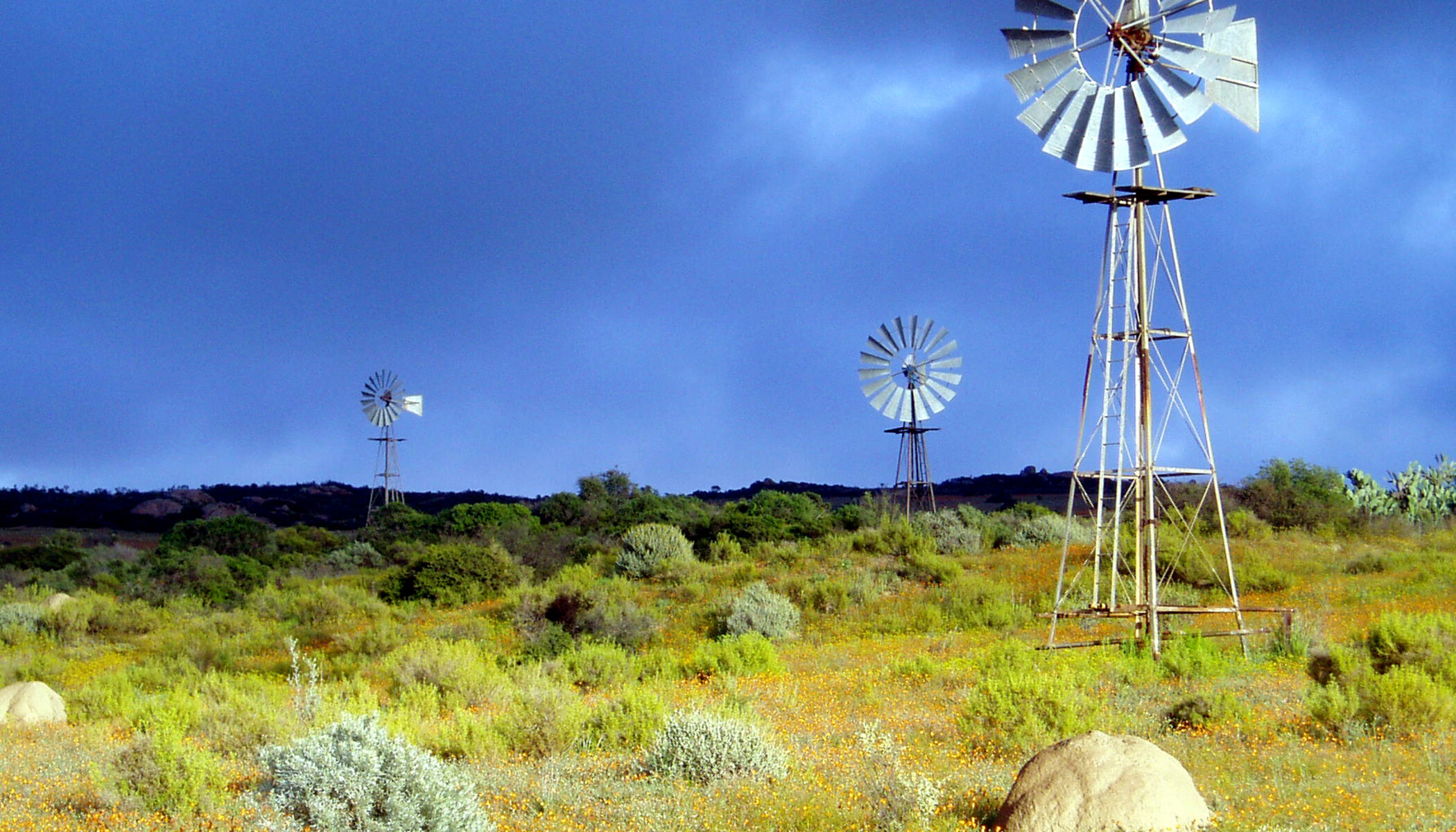
- 6. Image source — Namaqua park flowers pompes a eau
- 7. Image licence — CC BY-SA 2.0 FR