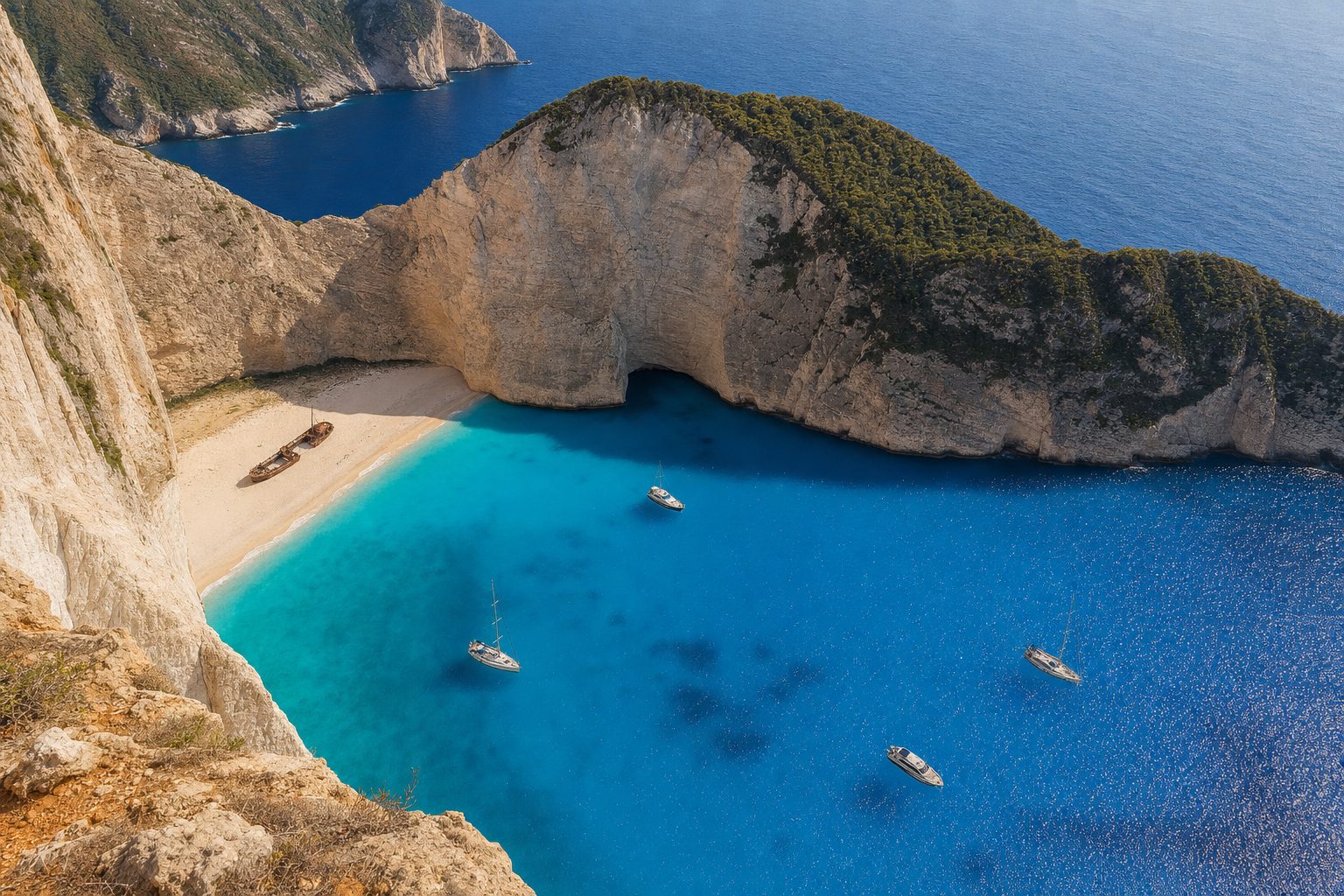
The photograph everyone recognises, a rusting hull on a crescent of white pebbles below sheer limestone cliffs, no longer matches what a visitor can actually do at Navagio. The beach has been closed to landings and swimming since 2022, and Greek authorities extended that closure again in mid-2026, through 31 October 2026. The planning question is not which path leads down to the sand; there isn't one you're permitted to use. It is whether to see the cove from the clifftop viewpoint above Anafonitria, from a boat that holds well offshore, or both, and how to fit that around the closure rules rather than around an old itinerary that assumes you can walk onto the beach.
This guide sets out what is currently allowed, what a redevelopment plan means for the site's future, and how to choose between the viewpoint and a boat tour from Porto Vromi, Agios Nikolaos or Zakynthos Town. As checked in August 2026, restrictions, fencing status and fees can change with each safety review, so confirm current conditions with the official closure reporting and the Municipality of Zakynthos before travelling, particularly if a specific viewpoint or boat route is the reason for the trip.
Understand why the beach is closed before planning around it
Navagio's closure did not begin as a single event. A cliff collapse injured seven people in 2018, and a magnitude-5.4 earthquake between Zakynthos and Kefalonia in September 2022 triggered further rockfalls that made the cove significantly more dangerous. Greece's Earthquake Planning and Protection Organisation (OASP) assessed the surrounding limestone cliffs, roughly 200 metres high in places, as carrying an ongoing risk of landslides, and that assessment is the technical basis for keeping the bay closed rather than a single administrative choice that could lapse quietly.
As checked in August 2026, a joint ministerial decision published in the Government Gazette bans all vessels from approaching or anchoring within 50 metres of the Navagio shoreline, bans swimming throughout the marine area between the two ends of the cove, and bans any approach to the beach or the plateau above it; enforcement sits with the Municipality of Zakynthos and Hellenic Police, and the measures run until 31 October 2026. [1]
That decision also draws a line around the wreck itself. Access to the free-access area nearest the ship is permitted only for emergency and rescue operations, not for sightseeing, and the Gazette leaves open the possibility of designated safe maritime zones in future, but only after a Port Authority decision and an updated OASP assessment. None of that exists yet, so treat any operator who claims you can step onto Navagio's sand in 2026 as making a promise the current rules do not support.
It is worth separating the two closures that get conflated online. The 2018 collapse was a discrete rockfall event that led to a temporary suspension while the slope was inspected. The 2022 earthquake and its aftermath are different in kind: they prompted a standing technical judgement from OASP that the cliffs above the cove carry an ongoing landslide risk, not a one-off hazard that clears on its own. That distinction matters for planning, because it explains why the ban has been renewed repeatedly rather than lifted once the immediate aftermath passed, and why the current joint ministerial decision reads as a safety instrument tied to periodic reassessment rather than a fixed-term inconvenience.
For a visitor, the practical effect is simple even if the underlying geology is not: nothing about the closure depends on how careful an individual visitor intends to be. The ban applies to the whole cove, to every vessel and to every point along the rocky slope and plateau above it, and it is enforced by the Municipality of Zakynthos and Hellenic Police rather than left to operators to interpret. Budget the trip on that basis rather than hoping a quiet weekday or an off-season visit will make an exception.
Choose the clifftop viewpoint for a free, land-based look
The viewpoint above the cove, reached by road near the village of Anafonitria, remains the most reliable way to see Navagio without booking a boat. It delivers the classic elevated view of the wreck and the cove in one frame and does not depend on sea conditions the way a boat trip does. The trade-off is distance: you are looking down from height rather than approaching the water, and the site can be crowded around midday tour-bus arrivals, so an early or late visit generally means a calmer platform and better light.
As checked in August 2026, the joint ministerial decision permits access to the upper viewing area via the existing observation platform only once fencing and protective infrastructure along the cliff edge have been completed; confirm current platform access with the municipality before travelling, since the fencing timeline is not fixed. [1]
Build the viewpoint into a self-drive day rather than a rushed stop. It sits well inland from the coast road network that also serves Porto Vromi, so pair it with the drive down to that harbour if a boat trip is also part of the plan, rather than treating the two as separate excursions on separate days. Parking fills quickly in peak summer mornings, and there is no shade at the railings, so bring water and sun protection for what is often a longer stop than visitors expect once the view holds their attention.
Getting to the viewpoint requires a hire car, taxi or organised tour, since there is no scheduled public bus running the final stretch of road to the platform. Many visitors combine the drive with a stop at Anafonitria itself, a small inland village with a historic monastery, which gives the outing a second purpose beyond the viewpoint and a place to have a coffee before or after. Because the platform sits at height above open water, wind can be noticeably stronger there than at sea level; a jacket in the car is a more useful precaution than it sounds on a hot Ionian morning.
Choose a boat departure point by time on the water, not just price
Since landings stopped, every boat option at Navagio is now a view-only pass through the cove: vessels hold outside the 50-metre line, circle for photographs, and move on. That changes the calculus for choosing a departure port, because the meaningful variable is total time on the water and the length of the crossing, not the promise of beach time that no operator can legally deliver.
Porto Vromi, a small harbour on the west coast near Anafonitria, is the shortest crossing to Navagio at roughly 15 to 20 minutes each way, and it is the practical choice if the shipwreck cove itself, not a full-day cruise, is the goal. Agios Nikolaos on the north coast takes longer, around 40 minutes, but most operators there combine the run with the Blue Caves at Cape Skinari, which suits a traveller who wants both sights in one outing. Boats from Zakynthos Town turn the trip into a longer day cruise, useful if Navagio is one stop among several rather than the sole destination.
Pricing follows the same logic as duration. Short group trips from Porto Vromi are generally the least expensive option because the crossing is brief and the boats are smaller, while full-day cruises from Zakynthos Town cost more because they bundle in multiple stops, longer time at sea and sometimes lunch. A private charter costs more again but buys flexibility on timing, useful for photographers who want the cove in a particular light rather than whenever the group schedule allows. None of these options currently include a swimming stop inside Navagio itself, so if a swim is part of the plan, ask the operator which separate cove or cave it happens at before paying.
Sea conditions also shape the decision more than most itineraries admit. The Port Authority can restrict or cancel Navagio departures at short notice in rough weather, since the cove's cliffs offer little shelter from swell arriving off the open Ionian Sea. Early morning departures tend to have calmer water and softer light for photographs, and they also reach the cove before the midday convergence of tour boats from all three departure points. Booking the first sailing of the day is a modest cost, if any, for a meaningfully different experience of the same 50-metre view.
Read the redevelopment plan as a multi-year project, not a reopening date
In mid-2026, Greek authorities unveiled a plan to physically alter the cove rather than simply wait out the cliff risk. The scheme, based on a study by the National Technical University of Athens, would extend the beach roughly 30 metres towards the sea using about 45,000 cubic metres of gravel and sand, pushing the shoreline further from the water to slow the erosion that is steadily damaging the MV Panagiotis, the freighter that ran aground here in October 1980 and gave the cove its English name, Shipwreck Beach.
As checked in August 2026, the beach-extension tender was valued at approximately €3.9 million before VAT, covering roughly 45,000 cubic metres of gravel and sand delivered by cargo ship, with a separate, later phase to conserve and restore the wreck itself estimated at around €2.5 million; reported totals for the combined programme range from roughly €4 million to €9 million depending on the source and phase counted, so treat any single figure as provisional. [6]
No construction start date or completion date had been confirmed as checked in August 2026, and restoration of the wreck itself is described as beginning only after the extension work finishes, so this is a multi-year programme rather than a fix that arrives before your next trip. Treat any online claim of a confirmed reopening date with scepticism until the Municipality of Zakynthos or the Region of the Ionian Islands publishes one; the safety review behind the current closure is repeated periodically, not fixed to a single calendar milestone.
The plan has also drawn criticism inside Greece, with some commentators questioning whether reshaping a protected natural cove to save a decaying, deliberately grounded 1980s freighter is the right use of public money, and whether the engineering will hold up against the same winter storms it is meant to blunt. That debate does not change the current rules for a visitor, but it is a useful signal that the redevelopment is not a settled, uncontroversial certainty; expect revisions to scope, budget and timeline as the tender process and construction proceed.
The extension is intended to hold the waterline back from the wreck so that seasonal storm waves stop striking the hull directly, buying time for a later conservation phase to stabilise what remains of the ship.
— Paraphrased from reporting on the National Technical University of Athens-based redevelopment study
Plan the logistics around a viewing trip, not a beach day
Because there is no beach access, drop anything from your packing list that assumes hours on the sand: no need for a full beach setup, and no realistic swimming stop at Navagio itself, since the marine ban covers the whole bay between the headlands. If swimming matters to the day, most boat operators build in a separate stop at a different cove or the Blue Caves rather than at Navagio, so check what is included before booking rather than assuming the itinerary matches an older description written before 2022.
Timing the visit against the island's wider calendar also helps. Boat tours typically run from April through October, with departures thinning out and eventually stopping for the winter, so a trip built around the water route needs to sit inside that window regardless of what the viewpoint's opening hours allow. If travelling in the shoulder months at either end of that range, confirm with the specific operator that Navagio departures are running that week, since schedules can contract with demand as well as weather. The viewpoint, by contrast, is accessible by road for as long as the site itself stays open, which makes it the more dependable half of a two-part visit if the trip dates are fixed and the weather forecast is uncertain.
- Confirm the current closure status and viewpoint fencing with an official or reputable local source before travelling, since both can change between safety reviews.
- Choose Porto Vromi for the shortest boat crossing, Agios Nikolaos to combine the trip with the Blue Caves, or a Zakynthos Town cruise if Navagio is one stop among several.
- Visit the clifftop viewpoint near Anafonitria early or late in the day to avoid the busiest tour-bus windows and bring your own water and shade.
- Do not book any operator that promises a beach landing at Navagio; the zero-landing policy and 50-metre boat limit are currently enforced by the Municipality and Hellenic Police.
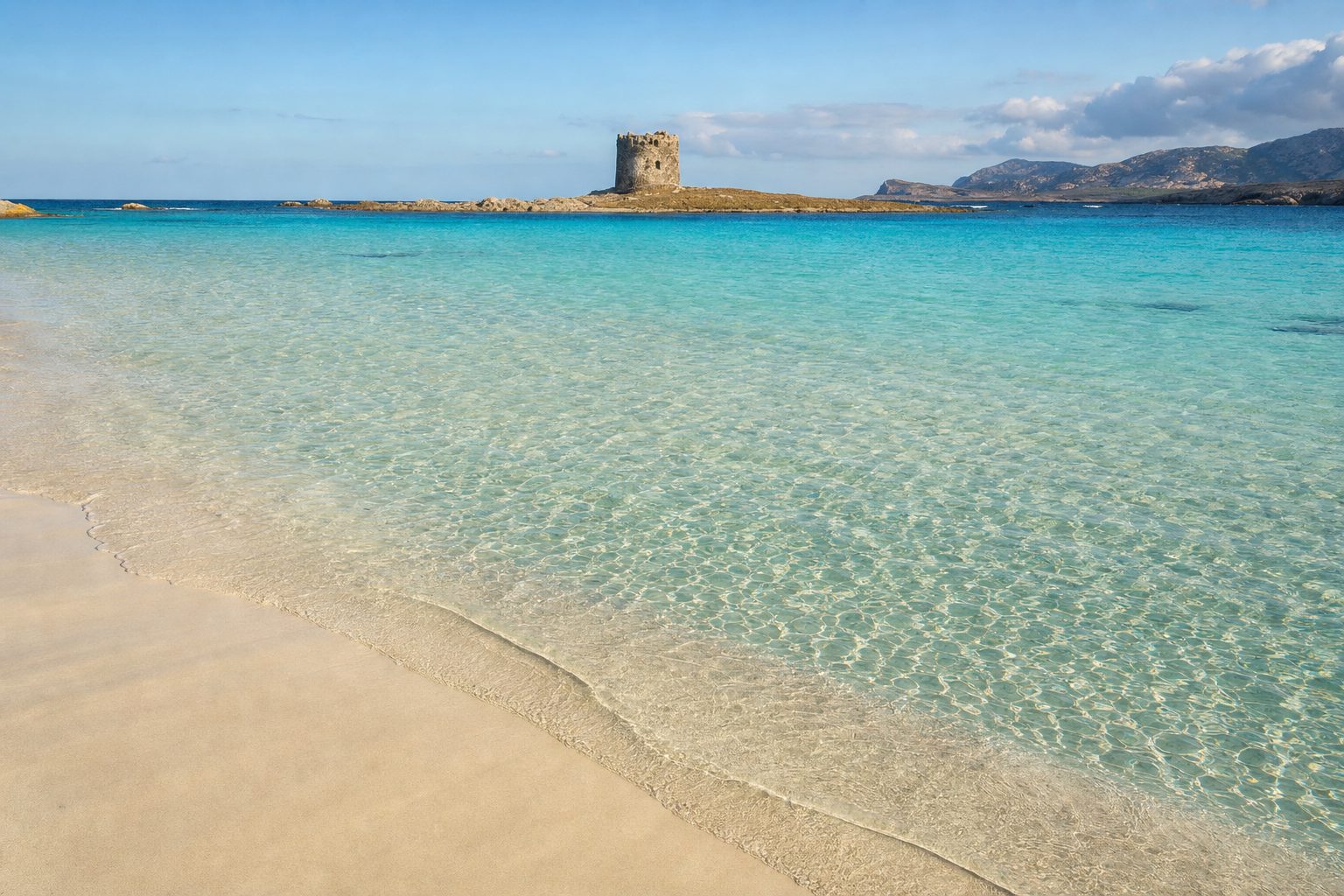
The wider lesson from Navagio applies to other overexposed coastal icons: a famous image can outlive the physical access that made it possible, and the responsible way to visit is to check the live rule rather than the reel. If a genuinely swimmable, boat-accessible white-sand cove is what draws you to this part of the Mediterranean, our La Pelosa planning guide covers a different island beach with its own access caps, and the Dubrovnik old town guide is useful if the same trip is combining Navagio with the wider Adriatic and Ionian coastline. For another beach shaped by a single hazard and a single management decision, see our Maya Bay guide.
Sources & further reading
- 1. eKathimerini — Navagio Beach to Remain Closed for One More Year
- 2. Athens24 — Greece Closes Zakynthos' Navagio Beach to Tourists Until October 2026
- 3. Euronews Travel — Greece's Famous Shipwreck Beach to Be Extended to Save Its Iconic Wreck
- 4. To Vima — Zakynthos Navagio Beach Access Curbs Extended Through 2026
- 5. To Vima — Zakynthos Shipwreck Rescue Plan Sparks Backlash
- 6. Keep It Greece — Navagio Beach Access & Restoration Plan (2026)
- 7. ZanteLocals — How to Visit Navagio Beach in 2026: A Local's Honest Guide