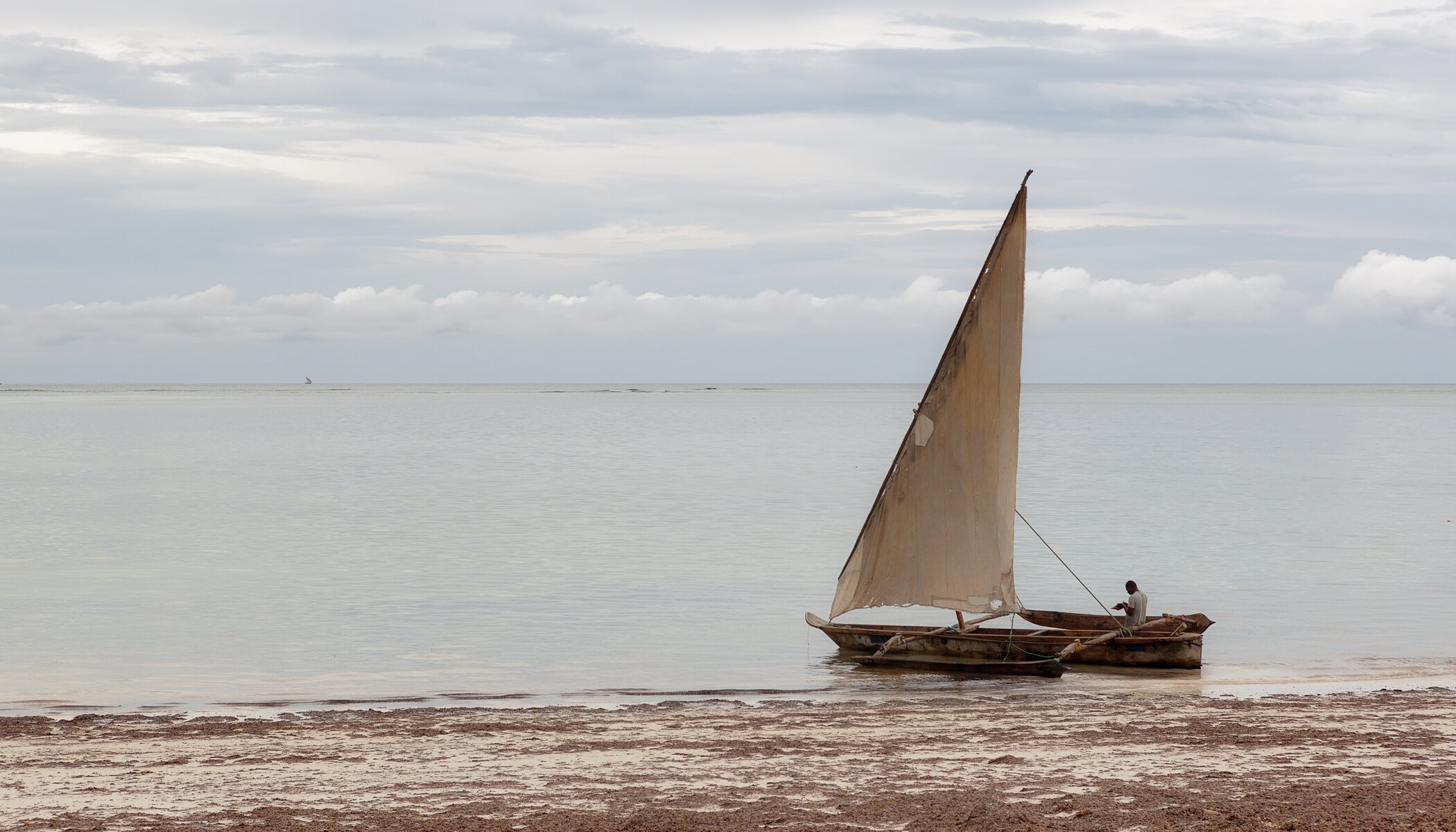

The south coast of Sri Lanka unspools like a single, sun-struck sentence: palm-shadowed beaches, fishing harbours, a Dutch fort on a promontory, and the warm bathwater of the Indian Ocean never more than a glance away. This is the island's easiest, most rewarding drive — a coastal loop that begins in the colonial lanes of Galle and runs east through surf towns and whale-watching harbours to the quiet sands of Tangalle, with the sea on your right the whole way.
It is a route that manages to be several holidays at once. There is culture in Galle's ramparts and centuries-old streets; there is adventure in the reef breaks off Weligama and the blue whales off Mirissa; and there is pure indolence in the string of beaches where the only decision of the afternoon is whether to order another king coconut. You can do it in a hurried three days or a luxurious two weeks, and it improves with every day you add.
Part of what makes the south coast so forgiving is its scale. The whole loop from Galle to Tangalle covers barely eighty kilometres, so nothing is ever more than an hour or two away, and you can happily base yourself in one place — a boutique hotel inside Galle Fort, say, or a beach guesthouse at Mirissa — and day-trip the rest. That compactness is a gift for the indecisive: you need not commit to a rigid plan, only to a general drift eastward, stopping wherever the beach looks good or the curry smells better. The coast handles both the flashpacker on a scooter and the honeymooner in a villa with equal grace.
Galle: four centuries on a promontory
Begin in Galle, on a small rocky promontory at the island's southwest corner. The fort is the star: a walled town first built by the Portuguese in 1588 and extensively fortified by the Dutch from 1649, now a living neighbourhood of cobbled lanes, colonnaded verandas, boutique hotels and cafes inside massive coral-and-granite ramparts. Unlike so many heritage sites it is not a museum but a working town — people live, worship, cook and trade within the walls — and the great pleasure of Galle is simply wandering it on foot.

The Old Town of Galle and its Fortifications was inscribed as a UNESCO World Heritage Site in 1988 and is considered the finest example of a fortified city built by Europeans in South and Southeast Asia, showing the interaction of European architectural styles with South Asian traditions. [1]
The essential Galle ritual is the rampart walk at dusk. As the heat softens, locals and visitors gather along the fortress walls and out at Flag Rock to watch the sun drop into the ocean, passing the cricket ground, the old lighthouse and a succession of bastions. Time your first evening for it; you will understand the town's rhythm immediately.
Give the fort a full day on foot. Its grid of streets — Church Street, Pedlar Street, Leyn Baan — is lined with Dutch-era merchant houses now turned to galleries, jewellers trading in the island's sapphires and moonstones, and cafes behind deep verandas built to catch the sea breeze. The Dutch Reformed Church of 1755 has a floor paved with the gravestones of colonial settlers; the Old Dutch Hospital, once a place to treat sick company employees, is now the fort's smartest cluster of restaurants and shops. Between them, ordinary life carries on — schoolchildren in white uniforms cutting through the lanes, a muezzin's call from the Meeran Mosque, washing strung between shuttered windows — and it is this braiding of the monumental and the everyday that gives Galle its particular spell.
Galle Fort covers roughly 52 hectares and is compact, largely car-free and best explored on foot or by bicycle; a loop of its ramparts and lanes takes around two hours, and it is home to Sri Lanka's oldest operational lighthouse. [2]
Getting there and getting around
Galle lies about 113 to 120 kilometres south of Colombo, and the Southern Expressway — the island's first motorway — has connected the two since it opened in 2011, cutting the drive to around 1.5 to 2 hours. The alternative is the coastal railway line, one of the world's great budget train rides, which hugs the shore so closely that spray sometimes reaches the windows; sit on the right-hand side for the sea views. Along the coast itself, distances are short — Weligama and Mirissa are within 30 to 40 kilometres of Galle — and a hired car with driver, or the ubiquitous tuk-tuk for short hops, makes the loop effortless.
Sri Lanka's Southern Expressway (E01), the country's first motorway, opened in November 2011 to link the Colombo region with the south coast, dramatically cutting the journey between Colombo and Galle from several hours to roughly 1.5–2 hours. [9]
The beach towns: surf, whales and slow afternoons
East of Galle the loop threads a chain of distinct beach towns, each with its own character. Unawatuna and neighbouring Talpe offer calm swimming bays and quiet rock pools away from the crowds. Weligama is the surf capital — a wide, forgiving beach with consistent, gentle waves that make it Sri Lanka's best place to learn, the swell most reliable from November to March. Mirissa is the whale-watching hub and home to the much-photographed Coconut Tree Hill, best reached before 7.30am if you want it to yourself. Tangalle, further east, is the endgame: wider, wilder and emptier sands where the loop finally slows to a stop.

On the south coast you plan your day around the tide and the light, not the clock — and by the third morning you have forgotten what day of the week it is.
— Nilmini Perera
Mirissa's whale season is the headline draw: from roughly November to April, blue whales and sperm whales pass close to the continental shelf here, and dawn boat trips out of the harbour give a genuine chance of seeing the largest animal that has ever lived. The waters just south of the island drop into a deep ocean trench within a few kilometres of shore, drawing the whales in close, which is why the boat rides are relatively short. Book a responsible operator that keeps its distance, and go early, before the wind gets up and the sea turns choppy.
Blue whale watching off Mirissa runs roughly from November to April, with December to March the peak for calm seas and the highest sighting rates — commonly cited at around 80–95% per trip in peak months; boats generally stop operating from May to October when the southwest monsoon brings rough seas. [8]
Beyond the beaches, the loop is dotted with worthwhile detours inland and along the shore. Just east of Galle, the stilt fishermen of Koggala and Ahangama — perched on single poles planted in the shallows — remain one of the coast's iconic images, though many now pose for a fee rather than fish in earnest. Further on, the sea-turtle hatcheries around Kosgoda and the mangrove lagoons of the Madu Ganga offer a gentler kind of wildlife encounter, while the little rock temple and dagoba above Weherahena reward anyone who tires of sand. None of it needs booking far ahead; the pleasure of the south coast is precisely that you can decide each morning over breakfast.
When to go
The south and west coasts run on the southwest monsoon, which means the dry season — and the good time to visit — falls from December to April, bringing calm seas, reliable surf and clear skies for the rampart sunsets. May to September is the wetter southwest-monsoon window, quieter and cheaper but with rougher water and more rain (and, notably, no whale watching). For the full coastal loop at its best — surf, sun and blue whales all in season — aim for December through March, which is also when Galle hosts its literary festival and the fort fills with an international crowd.
A coast that eats from the sea
Sitting right on the Indian Ocean, Galle and the south coast are seafood country — tuna and crab above all, whether grilled fresh or folded into a fiery curry. But the deeper pleasure is Sri Lankan rice and curry: a plate of red or white rice ringed by a constellation of small dishes — dhal, a fish or vegetable curry, a coconut sambol, a fried something — each cooked to its own logic and eaten together by hand. The fort's narrow lanes now hold one of the island's most exciting little dining scenes, where chefs who trained abroad have come home to cook.
Sri Lankan food is its own thing entirely, quite distinct from the Indian cooking it is so often lazily lumped with. It leans harder on coconut — milk, scraped flesh, oil — and on the sour tang of goraka, a smoked fruit that gives southern fish curries their dark, almost tamarind-like depth. It is also, dish for dish, among the spiciest cuisines in Asia, so the phrase to learn early is 'less spicy' if your palate is unaccustomed. Breakfast is its own delight: egg hoppers, the bowl-shaped rice-flour pancakes with a soft yolk in the centre; string hoppers with dhal and sambol; or a wedge of coconut roti with a fierce lunu miris chilli paste. Wash it all down with king coconut — thambili — sold from carts along every beach road for a few rupees.
The distinction that matters most on this coast is between the tourist kitchens and the rice-and-curry shops the locals actually eat in. The former do a competent, mild version of the national dishes for visitors; the latter, often no more than a handful of tables and a row of clay pots, serve the real thing at a fraction of the price. Follow the lunchtime crowds of office workers and schoolteachers, point at the pots, and eat what they eat — it is almost always the best meal of the day, and rarely costs more than a coffee back home.
Where to Eat
Galle Fort packs a remarkable range of good eating into a few cobbled streets, from fine-dining seafood to a rice-and-curry shack the size of a village kitchen. This is a spread across the fort and its beaches, drawn from local and international critics alike.

The Tuna & The CrabJapanese and Sri Lankan seafood
Celebrated chef Dharshan Munidasa's restaurant inside the Old Dutch Hospital, combining Japanese technique with Sri Lankan produce in a heritage building of arched verandas and teak beams. A sibling to Colombo's famed Ministry of Crab.
Why it’s so good: The most coveted table in Galle, where everything is made from the day's fresh catch; the crab and sashimi are exceptional and the setting is unbeatable.
Top picks: Fresh sashimi · Tekka (tuna) maki · Pepper crab

ElitaSeafood
A vibrant Galle Fort seafood spot with amber walls, arched blue doorways and traditional demon masks, run by local chef Krishantha Suranjith after more than a decade in European kitchens. Locals repeatedly name it the fort's best seafood restaurant.
Why it’s so good: Serves the freshest of the south coast's catch with real skill; the raw oysters and curries are standouts and the room has genuine character.
Top picks: Cold raw oysters · Butterfish in yellow curry · Red prawn curry

Coconut SambolSri Lankan rice and curry
A tiny eatery on Church Street modelled on a mud-built village home, seating about eight, serving a home-cooked rice-and-curry buffet with several vegan and vegetarian coconut-based curries plus a meat curry.
Why it’s so good: Described as perhaps the best rice-and-curry spot in all of Galle — the authentic, unfussy heart of Sri Lankan home cooking at a very fair price.
Top picks: Rice and curry buffet · Coconut-based vegetable curries · Pol sambol

Church Street SocialGlobal fusion
The restaurant of the restored boutique hotel Fort Bazaar, a contemporary space of lofty ceilings, Moorish tiles and arched doorways serving dishes that range across Sri Lankan, Middle Eastern, Pan-Asian and European.
Why it’s so good: The most versatile smart-casual table in the fort, doing a superb Sri Lankan black pork curry alongside globe-trotting plates; reliable for a longer, wine-fuelled dinner.
Top picks: Sri Lankan black pork curry · Lagoon crab salad · Baked sea bass

National Tea RoomsSri Lankan tea room
The oldest existing eatery in the fort, dating to 1932 and run by the third-generation Chirath de Silva, serving sugary ginger tea, peppery fish roti, classic short eats and rice-and-curry lunches amid rustic decor.
Why it’s so good: A living piece of Galle history and the perfect spot for a mid-wander tea and roti; unpretentious, atmospheric and genuinely local.
Top picks: Ginger plain tea · Fish roti · Rice and curry lunch

Poonie's KitchenSri Lankan / vegetarian
A long-standing, much-loved little kitchen on Pedlar Street serving home-style Sri Lankan cooking, with plenty for vegetarians, tucked through a garden setting in the fort.
Why it’s so good: A beloved local recommendation for honest, home-cooked island food away from the fine-dining prices — a reliable go-to for a relaxed lunch inside the walls.
Top picks: Sri Lankan rice and curry · Hoppers · Fresh fruit juices
Eat rice and curry with your right hand the way locals do, chase the fort's short-eats stalls for cheap fish rolls and samosas between meals, and finish an evening with a cocktail on a rampart-side terrace as the light goes. The seafood is freshest closest to the harbours — so on this coast, the nearer you eat to the boats, the better you eat.
Sources & further reading
- 1. UNESCO World Heritage Centre — Old Town of Galle and its Fortifications
- 2. Central Cultural Fund Sri Lanka — Galle Fort
- 3. Wikipedia — Galle Fort
- 4. Condé Nast Traveller India — Best restaurants in Galle
- 5. Ceylon Route — South Coast beach town itinerary
- 6. The Rofi Trip — Sri Lanka's best road trip routes
- 7. Around the World in Eighty Flavors — Where to eat in Galle
- 8. Yala Wildlife — Mirissa Whale Watching Complete Guide
- 9. BBC News — Sri Lanka opens its first motorway